Sydney's blog

Print Print Print: Luddites, Archives, Zines, and Stuff

A few months ago I met the luddites. What was supposed to be “open hours” at the small studio I worked at suddenly became the official meeting grounds for a hoard of stern-faced, plain-dressed philosophy students who liked how “old school” printing presses and typewriters were.

The focus they brought working on their “what is luddism” pamphlet took away from the usual convivial vibe. I would lament to my friends how I was now overly self-aware of my use of technology in presence . How I could no longer endlessly scroll on my phone instead of working on my art. How much I hated it so much they were engaged in their conversations instead of constantly shuffling through their pockets to check for a notification that never existed like me. The more I complained about them, the more I realized that maybe we have converging interests.

I detested modern digital culture. The texts I sent to my friends would likely be forgotten the next week even if they bothered to read it in the first place. Tweets would disappear from consciousness as soon as someone sent out another. Heartfelt updates from people I cared about would be algorithmically hidden between 30 posts from “influencers” and advertisements. If I could get people to actually hang out in person, their heads would always face down as they got sucked into another feed.

Like the luddites, I recognized how technology was detracting from the lives around me. What will we have to show for ourselves if most of our lives are documented through throw-away instagram stories that will cease to exist in 24 hours? How do we gain back meaning and intention in it all?

In 2025, I packed my life into a Toyota Camry. Since I stayed back, my friends were starting their “real” lives in cool cities while I spent most of my day:
1) Working the same job I had since freshman year.
2) Lounging around city parks long enough to see workers come and go from their apartments. 3) Watching whatever played at our local AMC.
4) Trying to stay awake during boring night classes in my pitch black room. I was aimless. So I left for a new program in Illinois.

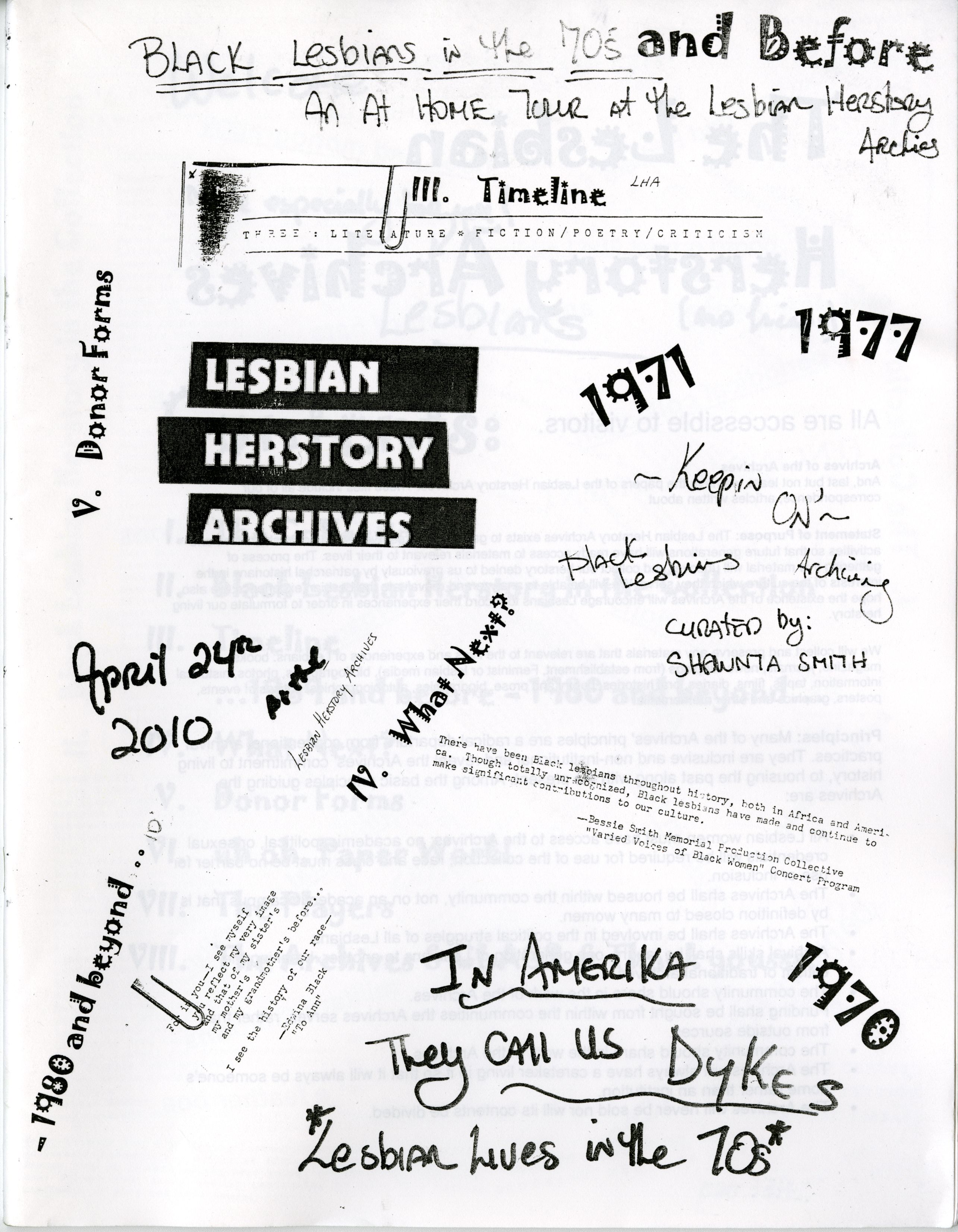
My original plan was to specialize in the preservation of queer audiovisual materials. I was a giant vintage film nerd at the time and had spoken already to a professor in the department who made me giddy at the prospect. Somehow, very soon, I would realize maybe this wasn’t the path for me. At my orientation I would hear our department’s historical printing presses be tangentially mentioned and a few weeks later I would find myself on the connected club’s board. Around the same time, I would land a couple of jobs: one at our art library, and one instructing with zines for the main library. My life solely became about print culture.

Of everything I did, my favorite part was looking through our vault of rare and special archival materials. The initial thrill was the novelty. In exchange for making library content, I got to spend hours looking at and sharing cool zines that most people didn’t know existed in our collection. I would always go out of my way to pick the coolest, craziest, most colorful pages. Over time, my fascination diverged to be less about the presentation and more about the actual content. A turning point was reading a zine from someone who was in my exact program in 1999. The experience she had mirrored mine, from loving Liz Phair down to her describing the same train ride to Chicago I also took to escape it all. It was a unique thing, having a time capsule of someone else's life.

In the classes I taught, I always mentioned the value of alternative publishing for expressing one’s own experience and the unexpected connections that it could create. Maybe her thoughts on our sleepy college town wouldn’t have found the space in a larger magazine. She could have put it on the 90s version of Instagram (LiveJournal?), but that would have made it super unlikely for me to stumble onto the content now. By creating her own physical zine on her own terms, her experience was able to be preserved. Once I realized this, I wondered how this could intersect with my own goals in promoting lesbian history.

I would make my first zine junior year of undergrad to document my trip down to the second installment of Florida’s “Sapphic Party” with some friends. I can’t say what exactly made me make it at the time (is it notable that I was “talking” with a campus zinemaker around that time?), but I know how it impacted me. It was cool to have a piece of media where my friends and I mattered; where I didn’t care if someone “got” the references that I put inside. I liked that it wasn’t just another set of relatively contextless photos to be posted on a feed. Most importantly, I liked that a part of my lesbian life was now tangible, to be held/shared/critiqued/archived for years to come. Weeks after finishing, I would drop it in a post office box to have a life outside of me.

About a year and a half later, I would get a strange request from a friend: to become penpals. Though I found the prospect quaint, I thought “why me?” When we were coworkers, we would pass the time exchanging campus lesbian gossip while I prayed no one would interrupt us by daring to ask a question. Time passed, she left, I was gossip partnerless, and we mostly stopped talking. Nevertheless, I sent her a letter.

I had always been a pretty guarded person. In my adolescence, I had learned that it was easier to approach most things in life with a sense of emotional detachment. Over letter, however, I found myself divulging everything: my optimism with my new program, the difficulties leaving my friends back home, and my anxieties with my burgeoning dating life. Writing the pages by hand forced me to fully immerse myself in expressing my feelings without being distracted by the constant notifications or endless apps I could easily switch to for swift dopamine. It was similar to the solace I would find at the press where I would need to use both hands and all my attention to make prints.

At the time I’m writing this, my life is overflowing with paper. There’s the mini zines I find in my pockets from friends and the letters covered in stickers I need to respond to. Before I file my hands through the folders in the archival boxes at work, I run to the mirror to see if there is any letterpress ink on myself from working on my art. I go to the post office to flip through the stamp book while speaking with the mail lady. It's stressful at times. Things would be easier to send in a pdf through email. It would be quicker to send my friend a text than a postcard. Though you can’t find texts secretly tucked in between the pages of a zine for someone in 40 years to find.

If this blog can be anything, I hope it will be a call to action. Make shitty zines about your friend group and share them wide. Send your friends super long letters and a couple extra goodies to make the super long wait even more worth it. Use your job’s button maker to spread the dyke agenda through decorations on the lapels of your whole friend group. Who knows where it could end up next?


Jade Smith is a humanities-loving, zine-making, lezbrarian-in-training femmedyke based in Illinois

The Quanties

“Guncle: A homosexual uncle. Every family usually has one of these.” - Urban Dictionary

The word Guncle seems to have worked its way into popular vernacular, yet I have not run into language capturing what I consider an equally important family role: the Queer Aunties, “Quanties” for short.

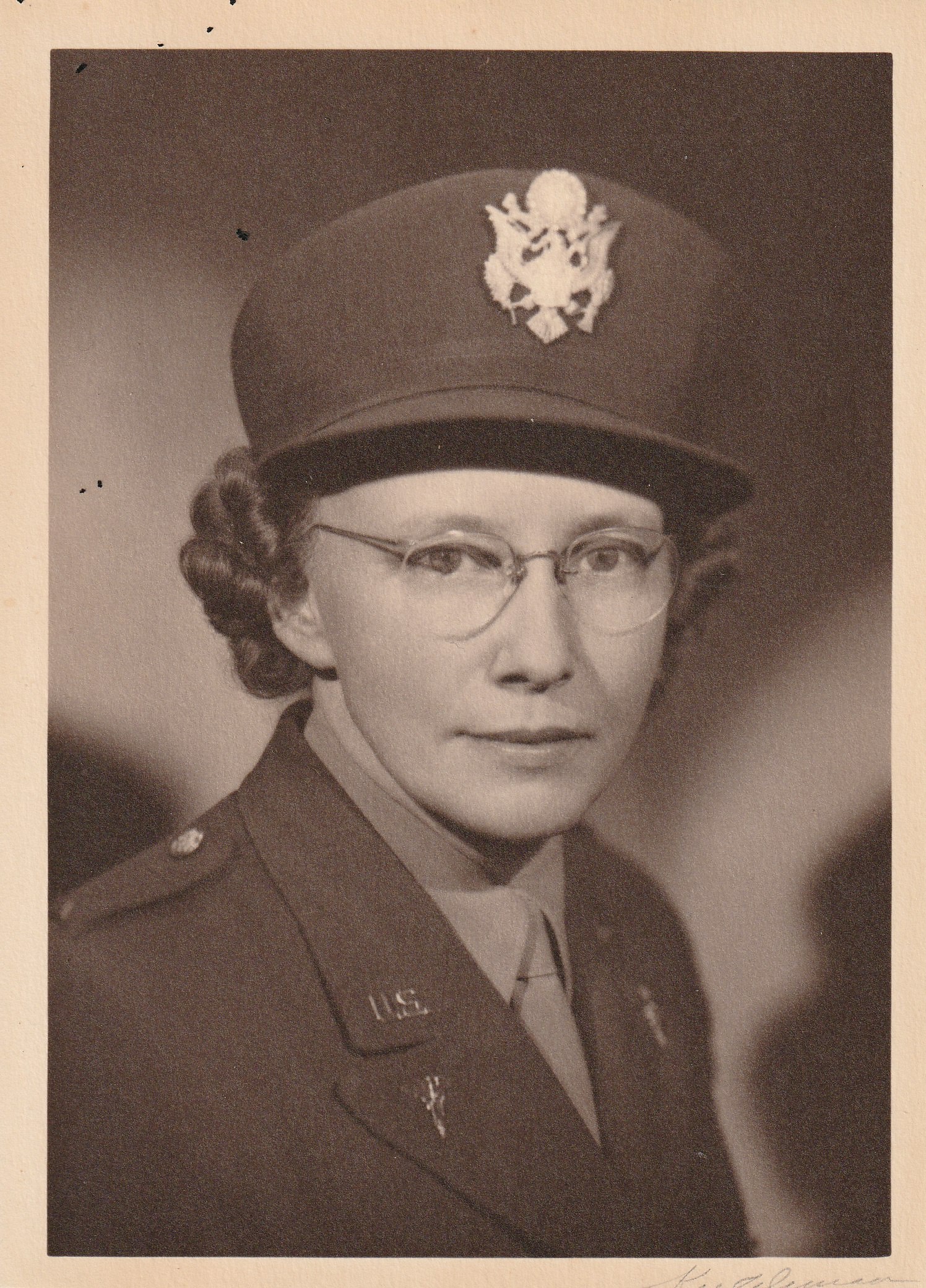
My mother, Donna, had several aunts and uncles, including my great Aunt Vi and her “friend” Martha.

Vi and Martha were nurses during the Korean War, working side by side to triage and treat soldiers in Mobile Army Surgical Hospitals, known as MASH units. They were fond of the TV show, MASH, which, to their view, realistically captured the chaos, danger, and camaraderie of their experience. Unaddressed by my aunts, or the TV show, was the air of secrecy and fear due to the harsh anti-homosexuality policies of the era, which led to the targeted harassment and dismissals of nurses and other service members suspected of sapphic leanings. Later, Vi and Martha lived together, indulged their curiosity and love of learning by taking a wide range of classes together at the local City College during their retirement, and took care of one another. Regardless of how they labeled themselves, it was clear to me they were life partners.

As a child, my siblings and I loved Aunt Vi and Aunt Martha. To us, they both belonged to our family. They were everything one might look for in Quanties. They were consistently delighted to see us when we visited, let us pick oranges in their backyard, and indulged our inclination to climb mismatched antique rocking chairs they collected and configured in a circle in the living room, as if awaiting a secret self-help meeting of unrepentant non-conformists. They even allowed us to adopt their dog, Snooks, a delightful, chubby mutt, whom all of us adored and hated to leave behind when we left their house after visiting.

In my late teens, I embraced my own queer identity and, in my early 20’s, I tagged along with my mother to visit the now octogenarian aunts. I finally broached the question of their relationship with my mom as we drove down the freeway between Santa Barbara and the San Fernando Valley, raising my voice to compete with the semi-truck next to us.

“Mom, do you think that Aunt Vi and Martha are lesbians?”

She paused for a moment before responding, “Well, we did wonder about it now and then.”

I thought, at that moment: how many families throughout time “wondered now and then” about aunts, sisters, or daughters who quietly made a life with partners who were not men?

I asked what Aunt Vi’s own sister and brother thought about her relationship with Martha. “Well,” she demurred, “they sometimes say that Martha is a bad influence on Vi.”

Martha?! The buoyant one who jumps to answer the door first, wears a scarf around her neck like a cravat tucked into her button-down shirts, and ties her hair back in a slick bun with a boyish side part, was apparently kept at a distance by her ersatz in-laws. The butch gets the blame again.

The degree to which Quanties, unmarried aunts, and gender-defying relatives are embraced in families varies wildly. The notion that Martha was never entirely accepted among Vi’s brothers and sisters stuck with me, particularly because this antagonism seemed to run counter to the acceptance and love I had seen from the same group. It made me ever grateful for the enthusiasm with which I was welcomed by my own siblings, nieces and nephews, and more recently, grandnieces and nephews.

When my sister’s three children were young, I was frequently greeted with opportunities to be leapt on under couch cushions, entombed then released in a space under the stairs, and invited to admire mischievous stories about all the different ways my napping partner at the time could be startled awake. When my sister was hospitalized for breast cancer surgery, the distraction of my multi-day visit was enough to diminish the children’s anxieties and divert them from diving onto her recovery bed. As the years passed, my Quantie deeds with children of both family and friends extended to non-judgmental pregnancy tests, general cheerleading, and occasional benefaction. My butch spouse has stepped in as chauffeur, tech support, apartment-hunting escort, and an excellent source for transforming distress into laughter by brainstorming wicked and whimsical ideas for punishing purported wrongdoers.

When I mention the Quanties in my own life to friends, I am nearly always gifted a story of an immediate or distant relative. This is generally a woman who everyone “wondered about” and whose life pried open the doors of possibility in the realms of profession, playfulness, love, or adventure. Even the Quanties who were vilified by family members are often named with curiosity and credited with upending social expectations of women. Whether invisible, beloved, or defamed, their tales frequently and quietly embedded seeds of hope, defiance, and imagination in the children and young adults whose lives they touched.

There is so much I will never know about Vi and Martha. I know they had other close friends who were nurses and teachers, and I wonder if those chosen family members, like mine, knew more intimately about their struggles, successes, and stories. Even with unanswered questions I wish I could pose to them now, I am grateful they are part of my own story, the story of my family, and the too often overlooked legacy of our lesbian ancestors.


Laurie Drabble is a semi-retired academic and active researcher, living in California. She has authored over 100 scholarly publications, mostly focused on advancing LGBTQ+ and women’s health. Laurie enjoys making colorful and quirky quilts; experimenting with creative nonfiction writing; mentoring the next generation of queer scholars; and meandering and sharing culinary adventures with her friends and partner.


Image: 

Then and Now: Did it Get Better?

The year was 1983 and I had come out as a lesbian in the past year. I was a doctoral student at the University of Iowa and got my healthcare at the Student Health Clinic. On this particular day, I was on the table with my legs spread open, feet in the stirrups as the physician sitting between my legs was about to begin my annual pap test. The paper gown crinkled and tickled my legs when she pushed it down out of her way so she could see my face.

“Are you sexually active?” she asked and then she lifted the large metal instrument from the basin of warm water on the metal stand next to her and squirted lubricant on it. I had a fleeting thought as I saw the wicked looking speculum—why couldn’t they make something a little smaller and less torture chamber-like? Really, no woman would have created such a monstrosity. This had to be a man-made device.

“Not with men,” I replied. “I’m gay.”

I heard a horrible clattering noise as the wheeled stool she sat on flew six feet away from the exam table and thumped against the wall. She must have involuntarily pushed off with her legs. Then she jumped up and bolted out of the room without a word. I was stunned, feeling exposed physically and mentally. What should I do? I was frozen for the moment in shock as I contemplated whether to extricate my legs from the stirrups and flee, or wait. There must be a reasonable explanation. I tried to talk myself into some excuse for her behavior that wasn’t related to my coming out to her.

Before I made up my mind, she returned to the room with a grim looking nurse in tow, pulled the stool back to the exam table, and finished the exam in a painful silence. The nurse hovered near the door. Was she there as a witness? Did the doctor think I would hit on her in the middle of a pap test? They rushed out the room, and this time I knew to dress and get the hell out of there.

I had been mostly lucky in my coming out disclosures and had rarely experienced negative reactions, but this one stayed with me for years. I had worked as a nurse in health care settings for ten years by this time and was appalled by the unprofessional behavior of this ob/gyn doctor. When I became a faculty member four years later in the College of Nursing, I was determined to teach students about LGBT issues. I came out in every class, taught students about LGBTQ healthcare issues, and proposed that they ask more open questions, such as “Are you sexually active with men, women, both, or neither?” and “What does being sexually active mean to you?”

I moved to San Francisco in 2005. The Gay Mecca, some called it, but I discovered that I had a more cohesive and larger lesbian community in Iowa City. Around 2010, I switched my healthcare plan and was meeting a new primary care doctor for the first time. She was asking the question in preparation for a pap test. “Are you sexually active?” she asked.

“I’m a lesbian,” I announced. I was about to add that I wasn’t currently in a relationship or dating, but she interjected in a matter-of-fact, no-big-deal tone of voice, “Well, make sure you thoroughly wash your sex toys between uses.” She proceeded with the pap test and I left thinking that as far as health care visits go, this one was fine.

But I pondered this exchange for days. Of course, it was better than my experience in the 1980s. My new doctor had seemed a little bit awkward, but not horribly uncomfortable like the one in 1983 had been. But she had made a big assumption about my sexual behaviors and that felt just weird. By this time, it was common knowledge that some lesbians had sex with men and some engaged in behaviors that carried risk for sexually transmitted infections. She didn’t ask those questions. Instead, she made an assumption.

Asking the simple “Are you sexually active,” is still a challenge for many lesbians I know. If you just say “yes,” you generally get the birth control lecture, at least if you are still young enough to be fertile. Heterosexuality is assumed. If you didn’t want that talk, you had to come out and say something like, “Yes I’m sexually active, but only with women” or some such response. One is forced into disclosure in a way that can feel awkward and forced.

My new doctor hadn’t asked any question that would be relevant to my sexual health. She didn’t ask if I actually used sex toys. She didn’t ask anything except the “sexually active” question. It seemed that we hadn’t really improved in terms of sexual history talk in all these years, at least in mainstream health clinics.

So yes, things were better in 2010, but they were still weird and awkward and incomplete. It’s still anxiety-provoking to come out in a health care setting, especially with your legs splayed open in stirrups awaiting penetration by a cold metal object. Come on, we can do better.


Mickey Eliason is a retired university professor and former teacher of sexuality studies and LGBTQ studies, first at the University of Iowa (1987-2004), then San Francisco State University (2005-2022). She has published several academic books and articles on LGBTQ issues, and now writes mostly creative nonfiction, memoir, and essays. Her favorite project was a book about the unique qualities of lesbian communities in her coming out era (the 1980s Iowa City lesbian feminist community), a humor book called The Dyke Dykinostic Manual (available on Amazon). She also dabbles in lesbian romance.

Image: 

Here's to Hellas and Hair Serums

Several weeks ago, as I stared out my bedroom window, my eyes landed on the rustic wooden frame perched on the sill. Looking back at me was my first dog, Russell, a sable-colored standard Pomeranian who resembled a miniature lion with a face that always asked, “What’s next?”

Russell was always ready for adventure. He was my best bud, my swimming companion, and hiking partner. He’d wait in the car while I sat through college classes, content just to be near me. His loyalty stretched across his long sixteen-and-a-half years, and through my twenties and thirties, his love lasted longer than any of my girlfriends. I suppose, back then, I half-expected women to love me with the same eager, unconditional devotion as my little lion-hearted Pomeranian.

Today, my wife and I are soaking in a hot tub overlooking the caldera, an active volcano surrounded by the bluest waters of the Mediterranean, just off the coast of Santorini, Greece. The island is impossibly beautiful, like we’ve stepped inside a postcard, white-washed yposkafa cave houses carved into cliffs, domed roofs the color of sapphire, like something straight out of Mamma Mia.

“You’ve broken the cast,” I say to Kim, finishing my last sip of espresso. “Before you, none of my relationships outlasted Russell.”

“And here we are, celebrating twenty years,” she says, leaning in for a kiss and holding on just a second longer. This trip is our gift to each other—a reset, a deep breath far enough from everyday life that stress can’t seem to find us. Here, our love feels like it did in the beginning, and we’re bringing that feeling home.

Later, wandering through Santorini’s winding streets and marketplace stalls, I stop—and I mean stop, because vendors here are professionals at whisking you into their stores before you realize what happened. One enthusiastic man insists he has the best extra-virgin olive oil in all of Greece. Curious—and channeling Russell’s enthusiasm for following wherever life led—I allow myself to be lured to the back of his shop. Moments later, he’s trying to convince me to ship an entire case of olive oil to the US.

Tempting, but excessive, I politely decline and make for the exit. Before I cross the threshold, he shouts, “Wait!” and thrusts a sleek box into my hands.

“For your curly hair—serum made of olive oil and. . . Something. . . your woman. . . she will go crazy.” His accent swallows the ingredient list, but I catch the important part.

And look, I’m a sucker for curly hair products under the best circumstances. Add in Santorini wind, Greek humidity, and the promise that my wife will go wild? Sold. Who needs a case of olive oil when you’ve got a bottle of that?

Later, without telling Kim, I slathered my neck, shoulders, and breasts with the so-called aphrodisiac serum and scrunched it through my wind-tossed ringlets. I sashay into the bedroom and. . .

Let’s just say it worked.

We’ve been having mind-blowing sex in Greece. Maybe it’s the olive oil. Maybe it’s the aphrodisiac hair serum. Maybe it’s being so close to the Isle of Lesbos, or the ancient Greek statues displaying their marble-carved enthusiasm for passion. Whatever it is, I’ll take a few more rounds.

Cheers to twenty years—and to love that grows richer, bolder, and yes, sometimes a bit wilder, with time.


Kara Zajac is a freelance writer, chiropractor, mother, wife, entrepreneur, and musician. Her debut, The Significance of Curly Hair: A Loving Memoir of Life and Loss, won the 2025 IPPY Silver Medal for Inspirational Nonfiction and was chosen for the Best Books We Read in 2024! by the Independent Book Review. Its follow-up, The Special Recipe for Making Babies, was a finalist in 2022’s Charlotte Lit/ Lit South Awards for Nonfiction. Kara’s work has been published in Bay Area Reporter, Lesbian.com, Voraka Magazine, Story Circle Anthology, Imperfect Life Magazine, Ripped Jeans and Bifocals, and Just BE Parenting. Kara keeps people laughing with her blog www.karaZajac.com and is happy to speak at book clubs and grief support groups. She resides in North Georgia with her wife, Kim, and daughter, Senia Mae.

Image: 
Subscribe to RSS - Sydney's blog

"Empowerment comes from ideas."

Gloria Anzaldúa

“And the metaphorical lenses we choose are crucial, having the power to magnify, create better focus, and correct our vision.”
― Charlene Carruthers

"Your silence will not protect you."

Audre Lorde

“It’s revolutionary to connect with love”
— Tourmaline

"Gender is the poetry each of us makes out of the language we are taught."

― Leslie Feinberg

“The problem with the use of language of Revolution without praxis is that it promises to change everything while keeping everything the same. “
— Leila Raven