





Sinister Wisdom Newsletter
Login (ONLY for SW staff)


Review of Fragments of Wasted Devotion by Mia Arias Tsang, illustrated by Levi Wells
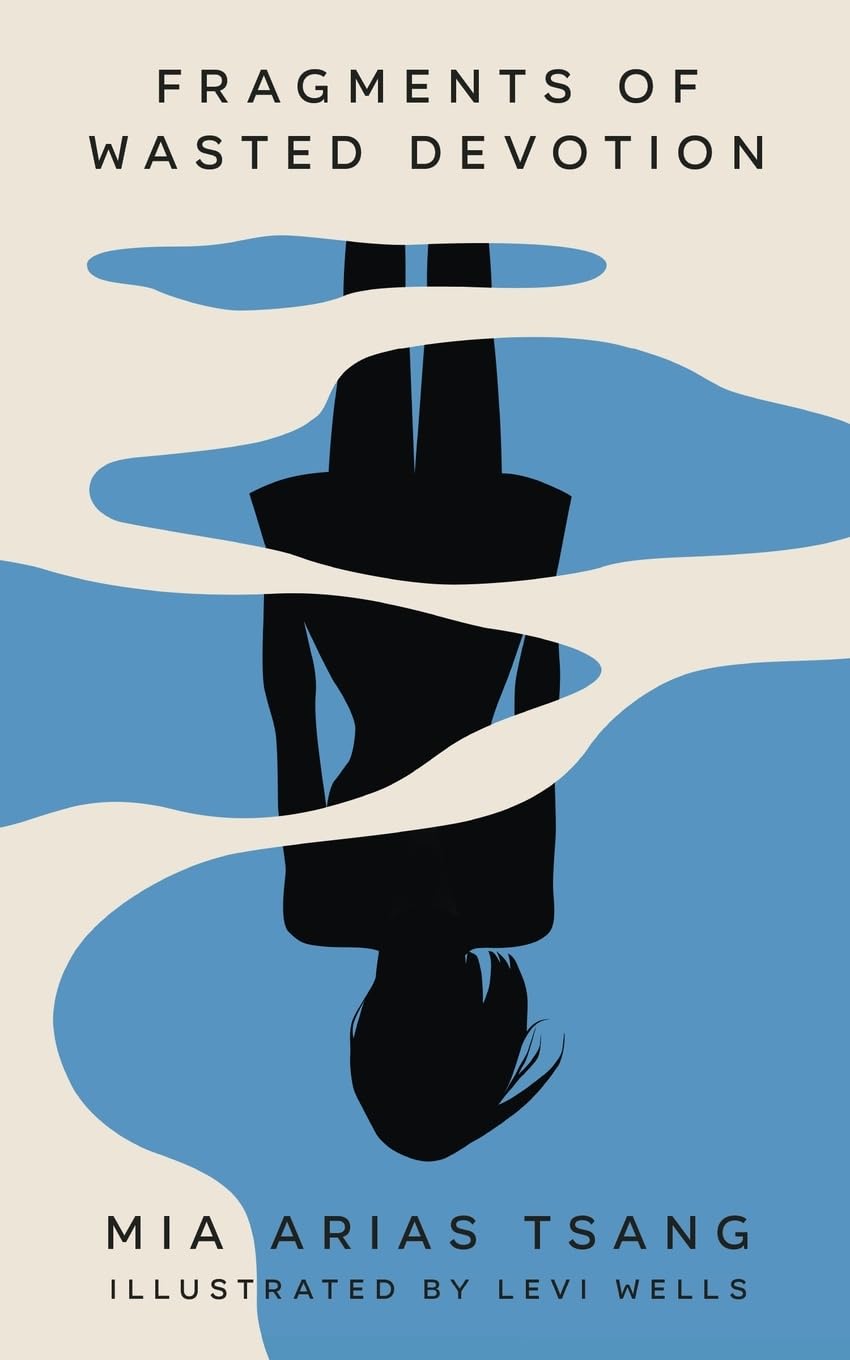
Fragments of Wasted Devotion
Mia Arias Tsang, illustrated by Levi Wells
Quilted Press, 2025, 144 pages
$16.00
Reviewed by Allison Quinlan
Fragments of Wasted Devotion is an incredibly self-descriptive title. Before reading, I assumed it was the poetic, hooking title that so many collections use (and then vaguely connect to one piece in the work), but no, this is simply a collection of Tsang’s fragments of wasted devotions. She sets the reader up to know the story won’t end well: “My heart was too young to be settled,” and she proceeds to become devoted anyway: “but I laid it down on your chest anyway” (1). From the first line, she presents the reader with the question: What does one do with unrequited devotion?
The ‘fragments’ aspect of the title rings true as well. Each work tosses you into a story with little to no context, and you certainly won’t find out the conclusion here, either. Readers see a fragmented narrative where the only throughline you can grasp is the devotion, again and again, no matter the person, place, or time. I struggled with this a bit, but I think that’s because I personally wrestle with more poetic vignettes like this work, not due to any flaw in the book. However, given that the fragments of Tsang’s wasted devotions are the heart of this collection, I found this fragmented presentation of vignettes clever and intriguing.
I deeply appreciated the honesty in her writing. Who hasn’t wondered how to hold someone in their heart if they can’t “eat my groceries before they rot?” (8). You don’t have to have your whole life together to love someone deeply. Tsang also dips into the complicated truth of loving someone who has hurt you (I’m also a firm believer in holding love and anger in your heart at the same time). “Melatonin Dreams” is a three-part piece where Tsang describes the pain of recurring dreams about her partner; a house in New Haven that’s long, brown, and green “like a shotgun. . . I’m ready for you to blow my head off again” (34) and then writes, “I am still trying to protect you from the rage of everyone who wants me to be happy” (35). Don’t we all know it—you have long conversations with family and friends, tearing apart someone for how they treated you, but you have that inexplicable urge to defend them (not their actions necessarily, just them). It can feel hard to hate someone you’ve seen humanity in, no matter how they left you. She finishes, “It’s hell to be trapped behind my own eyes, letting you happen to me when I’m supposed to have control here” (38).
How much these experiences are actually in Tsang’s control, I’m not sure. She writes, “I am on edge and I am breaking my life to get to you because that is what I do for what I love” (42), and she buys the bus ticket, crossing cities to reach someone one hundred and forty-three point three miles away. And again, she writes that the people she loves ask, in horror, “Why do you keep doing this to yourself?” (44). But Tsang answers her own questions, and mine, and those of the people who love her, when she writes, “I touch the feral creature of my heart and ask is there anything left to give and it howls yes yes yes forever” (42). “Longing Distance” was my favourite section of the collection because it replicates a feeling I think many of us have experienced, to some degree, of putting the world on hold to get to someone we love who doesn’t necessarily return the effort. “I shouldn’t have had to beg,” she writes, “I wish I could want anything else” (67–68).
So what does one do with unrequited devotion? The reader is welcome to find their own answer. Tsang, for her part, “fade[s] to black with a heart bursting with all the love you wouldn’t take and I know I’ll forgive you anything” (111).
Lastly, on page 15, there is an illustration of a little creature with a face like this: (•⤙•), and I love it. I didn’t write about all the illustrations, but every one was absolutely gorgeous, full of whimsy, and engaging.
Allison Quinlan is a PhD student in Scotland and might be the world’s slowest writer.
"Empowerment comes from ideas."
― Charlene Carruthers
"Your silence will not protect you."
— Tourmaline
"Gender is the poetry each of us makes out of the language we are taught."
— Leila Raven