





Sinister Wisdom Newsletter
Login (ONLY for SW staff)


Review of First Love: Essays on Friendship by Lilly Dancyger
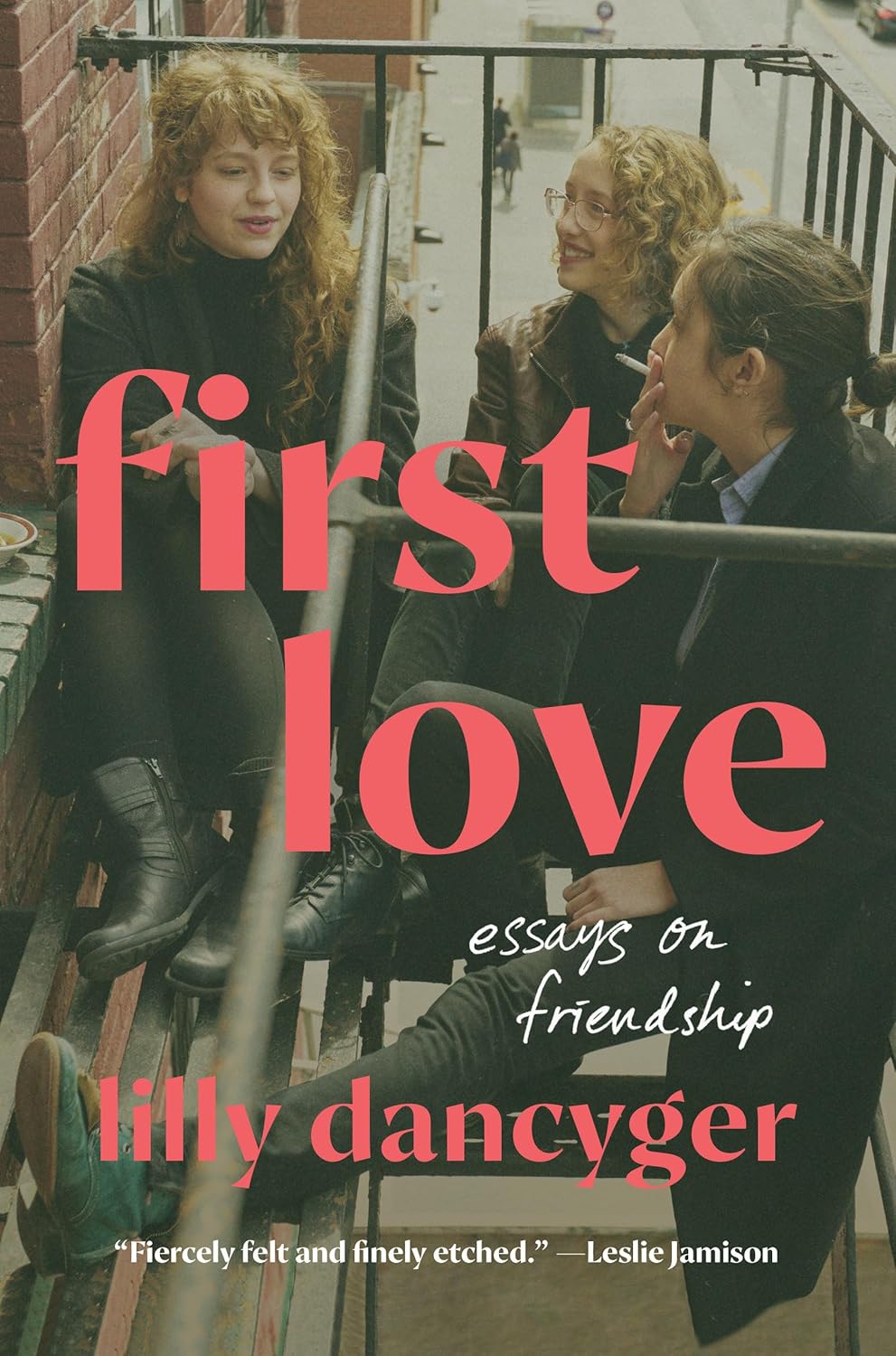
First Love: Essays on Friendship
Lilly Dancyger
The Dial Press, 2024, 224 pages
$30.00
Reviewed by Leslie Lopez
“To nurture and care for another person, to provide them with tenderness and emotional shelter from the world that mostly doesn’t give a shit about them. To love so fiercely and with such unrestraint that the recipient of that love feels sustained by it, and never feels fully alone in the world. This is what my closest friends give to me, and what I try to give to them” (138).
Lilly Dancyger’s First Love: Essays on Friendship is an honoring of female friendship and the ways these relationships become early sites of platonic intimacy.
Dancyger opens this collection by sharing that her cousin, Sabina, was her first love. From being children who created new words to describe their love for each other to spending time together at different points in their adolescence, each anecdote shows the connection between them remaining strong despite the physical distance and circumstances of life. It’s not a surprise that Dancyger comes to see friendship as synonymous with vulnerability, deep love, and belonging.
But First Love is also about grief. When Sabina is brutally murdered a few weeks shy of her twenty-first birthday, it’s the powerful friendships Dancyger has cultivated that keep her treading above water. These relationships are the basis for the fifteen essays, each one providing an additional cultural layer or personal memory that moves the collection along.
In “The Fire Escape,” Dancyger recounts living with her friend in a crammed East Village apartment. She goes on to describe how the rusted metal perch outside their kitchen window became a space for the friends to connect over cigarettes and alcohol, even after Sabina’s death. She goes on to say of her friends, “Not one of them tried to persuade me to come inside, and for that I loved them more than ever” (108). Thus, the fire escape provided Dancyger the freedom to grieve, exist, and be cared for in a time of tremendous pain.
Dancyger’s writing about friendship also includes a discussion of her fractured relationship with her mother and her indecision about becoming a parent. In “Mutual Mothering,” she shares, “What I do know is that when I imagine what kind of mother I would be, it’s the kind of friend I’ve been that allows me to see it clearly, and to believe I’d do it well” (161). It’s this honesty and unabashed importance of platonic relationships that feels refreshing, especially in a culture that puts romantic relationships on a pedestal and sells the narrative that traditional family is the only real source of care.
Reading First Love served as a reminder that grief can also be an exploration of what it means to have loved, been loved, and continue loving in a world as simultaneously scary and joyous as ours.
Leslie Lopez (she/they) is a Dallas-born, Chicago-based writer pursuing a Master’s of Science in Library and Information Science from the University of Illinois Urbana-Champaign. She can often be found crocheting (badly), laughing (loudly), and reviewing books on her Instagram, @anotherlesbrarian.
"Empowerment comes from ideas."
― Charlene Carruthers
"Your silence will not protect you."
— Tourmaline
"Gender is the poetry each of us makes out of the language we are taught."
— Leila Raven