subscribedonate


A Speculative History of the Sinister Wisdom Typography

By Julie R. Enszer

View previous newsletters and subscribe to the Sinister Snapshot!

If you look closely at the typography for the title Sinister Wisdom, you will see that there have been a lot of different typefaces used to render its name. For example, Sinister Wisdom 4 has a hand-lettered rendering of the name.


Sinister Wisdom 17 through 21 and Sinister Wisdom 26 all have a chunky, all-caps and bold rendering of the name.


Many of the issues published during Elana Dykewomon’s editorship (1987-1994) use the lowercase rendering of the name, as you can see for Sinister Wisdom 35 through 60.


Beginning with Sinister Wisdom 87, the current presentation of the name begins. I began editing the journal with Sinister Wisdom 81 and used the template from editor Fran Day. Six issues into my work, I designed the new rendering of the name on my computer. It uses Bodoni 72 Oldstyle as the title font. The tagline, “A Multicultural Lesbian Literary & Art Journal,” is set in the font Eurostile. Why did I make those choices? Quite simply, they pleased me. Although if you look closely at the font used for the name, you will note that it echoes with other presentations of the name in the past.

The presentation of the name that intrigues people the most—and is a throwback to our 1970s roots—is the stylization of Sinister Wisdom on the cover of Sinister Wisdom 3, which also features the iconic photograph by Tee Corinne.


This rendering of Sinister Wisdom appears in Sinister Wisdom 5 through 13 and returns in Sinister Wisdom 15. It is also in Sinister Wisdom 27, 28, and 31. It was clearly a favorite among the early editors.

From what I can tell, this is not a font that is currently in use anywhere. (We would be delighted to find it though if it is an active font!) My speculation is that someone designed and printed this rendering of the name, and it was pasted on the cover for Sinister Wisdom 3, then reused, that is, literally ripped and repasted, onto the covers for the other issues.

The current Sinister Wisdom fundraising committee is looking at that font presentation of the name and exploring how we might use it in our contemporary work.

What Sinister Wisdom font and presentation is your favorite? What meanings do you read into the covers and typeface of Sinister Wisdom as she evolves over the years?


Julie R. Enszer is the editor of Sinister Wisdom.


Continue reading the Featurette on the Sinister Wisdom Blog!

Image: 

Fighting for Feminist Spaces and Against Violence

by Sam Carter

View previous newsletters and subscribe to the Sinister Snapshot!


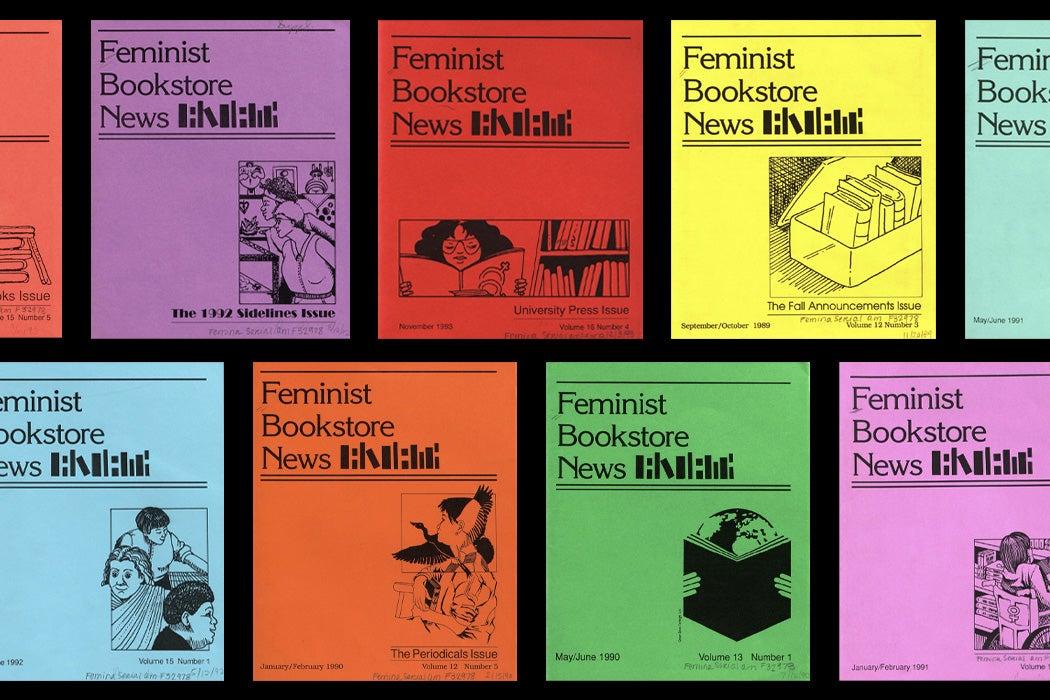
In cataloging books mentioned throughout numerous issues of Feminist Bookstore News (FBN), a trade publication providing exactly what its title suggests, I’ve been awed (and quite frankly, a little overwhelmed) by the sheer amount of books, publishers, and bookstores involved within each issue. Something particular that has struck me, however, is the similarly frequent open letters from bookstore owners and workers regarding break-ins! In 1991, Volume 13, Issue 6 of Feminist Bookstore News includes three depictions of robberies.

Although these may not seem like striking numbers, the inclusion of violent break-ins consistently disrupts FBN’s stream of book recommendations and reviews. These short, sometimes unsettling descriptions link the feminist, queer, and radical themes of featured titles with the physical spaces where such books are bought and sold.

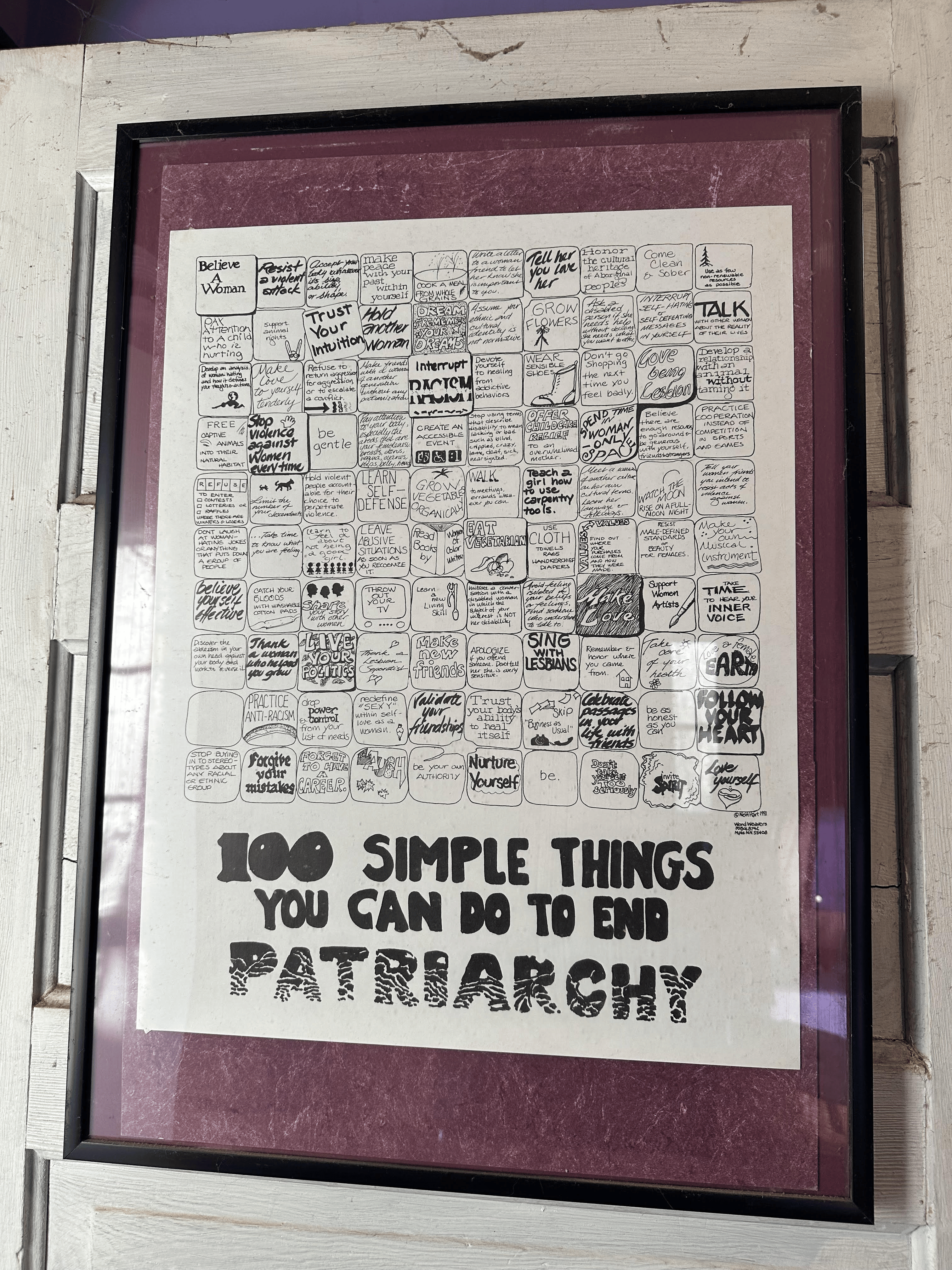
Nett Hart, the owner of a small storefront studio, described a particularly disturbing robbery, writing “there were several minutes any or all of us might not have survived,”(p23) as Hart, their sister, and former lover were attacked. After reading this jarring encounter, I began to wonder how one maintains a space’s integrity once it has been violated. In answer to this, Hart wrote “resistance to violence against women diminishes the power of violence” (p23), remaining sober but confident in their insistence on both relaying and denouncing forces of violence. However, Hart’s successful resistance against the perpetrator is not a victory. Instead, fighting back is a necessity to maintain one’s identity, “because whether he killed us or not he was not going to violate our sense of self” (p23).

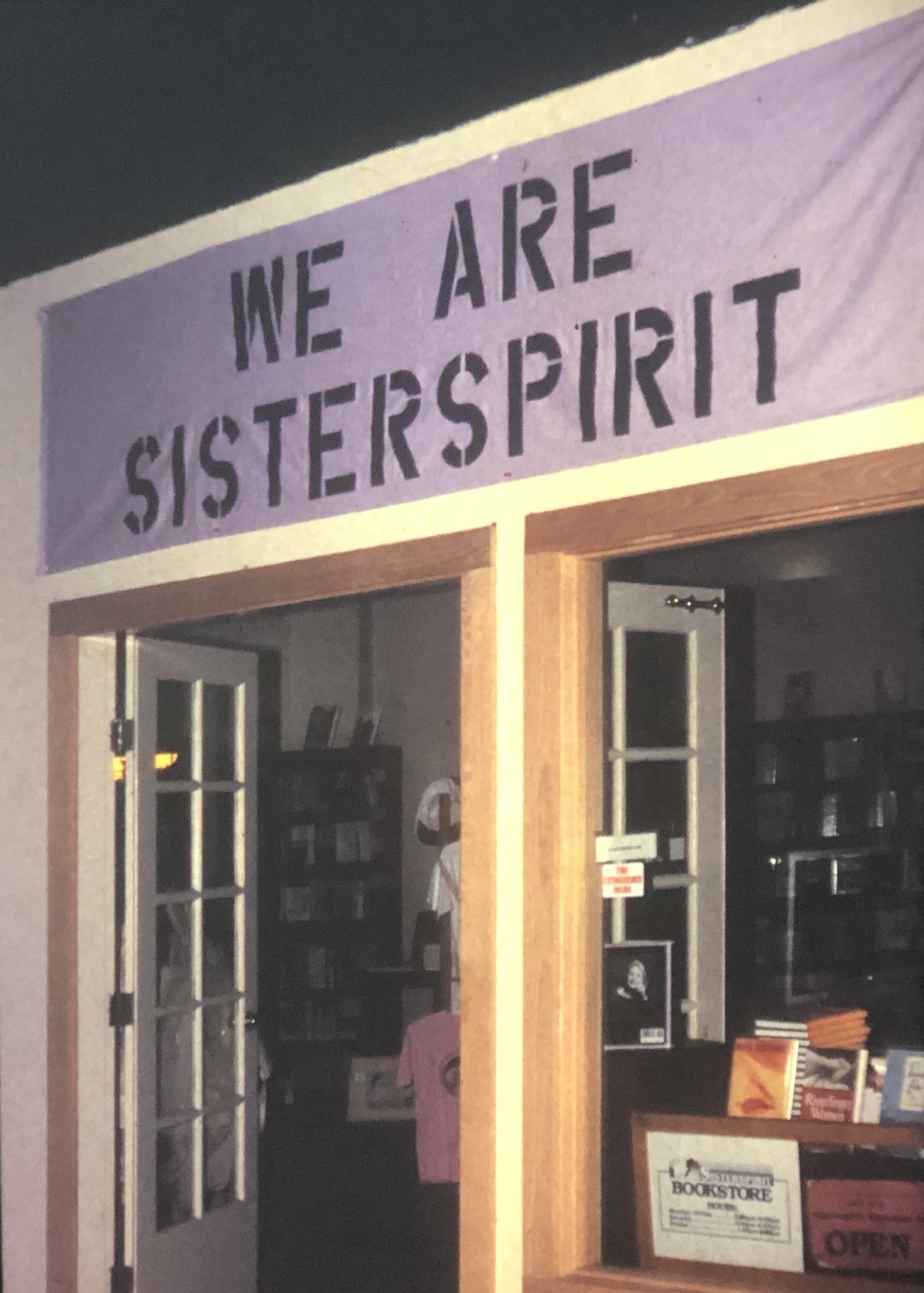
Another break-in at the feminist bookstore Sisterspirit in San Jose, California, offsets the robbery with a touch of humor, as bookstore proprietor Clarice laughs at the robbers with “a sack full of women’s music” (p17). Still, however, Clarice is shaken by the encounter as “when something like this happens you never feel quite safe again” (p17). Rather than a simple financial loss of stock, robberies within FBN are an affront to the self as well as a violation of community space. As Hart lamented, these spaces are fought for, and there is not one single battle defining an overarching victory.

These overt threats to feminist spaces thus imbricate readers both past and present and engage us beyond the growing list of titles we’ve added to our TBR (to be read). Instead, FBN issues encourage an affective relation between the numerous books recommended to readers and the physical bookstores they’re located in. The aggressors don’t have a face. Even when writers such as Hart directly encounter theft, they don’t spend any time configuring an image of the attacker. Robberies within FBN were not included to sniff out thieves through an international feminist network, but rather to lament and advocate for feminist bookstores and spaces. Regardless of the aggressor’s intent, the open letters serve as a call to action, reminding readers that we cannot remain passive in feminist circles. Violence inevitably occurs and must be fought against with community, humor, physical strength, or the occasional visit to your local bookstore.


Sisterspirit photo from Queer Silicon Valley


Sam Carter is a spring intern at Sinister Wisdom as well as an MA student at University College Dublin in Archives and Records Management. Her upcoming dissertation research will explore the significance of archival spaces and nostalgia within queer southern archives.


Continue reading the Featurette on the Sinister Wisdom Blog!

Image: 

Featurette Navigator


The Sinister Snapshot is Sinister Wisdom's biweekly email newsletter, full of lots of fun links to articles, events, and other captivating works. As of the second installment, the Sinister Snapshot begins with a featurette showcasing part of Sinister Wisdom's history, current happenings, or platforming other lesbian stories. May this archive of queer culture inspire, enthuse, and rouse you to lesbian actions!

Subscribe to the Sinister Snapshot for free!


Butchfemme representation through the television show Arcane

Featurette 103
By Sudeeksha Dasari


“When Someone Dies”: Lesbians and Memory Work

Featurette 102
By Julie R. Enszer


An Intergenerational Visit to Nett Hart

Featurette 101
By Ella Stern


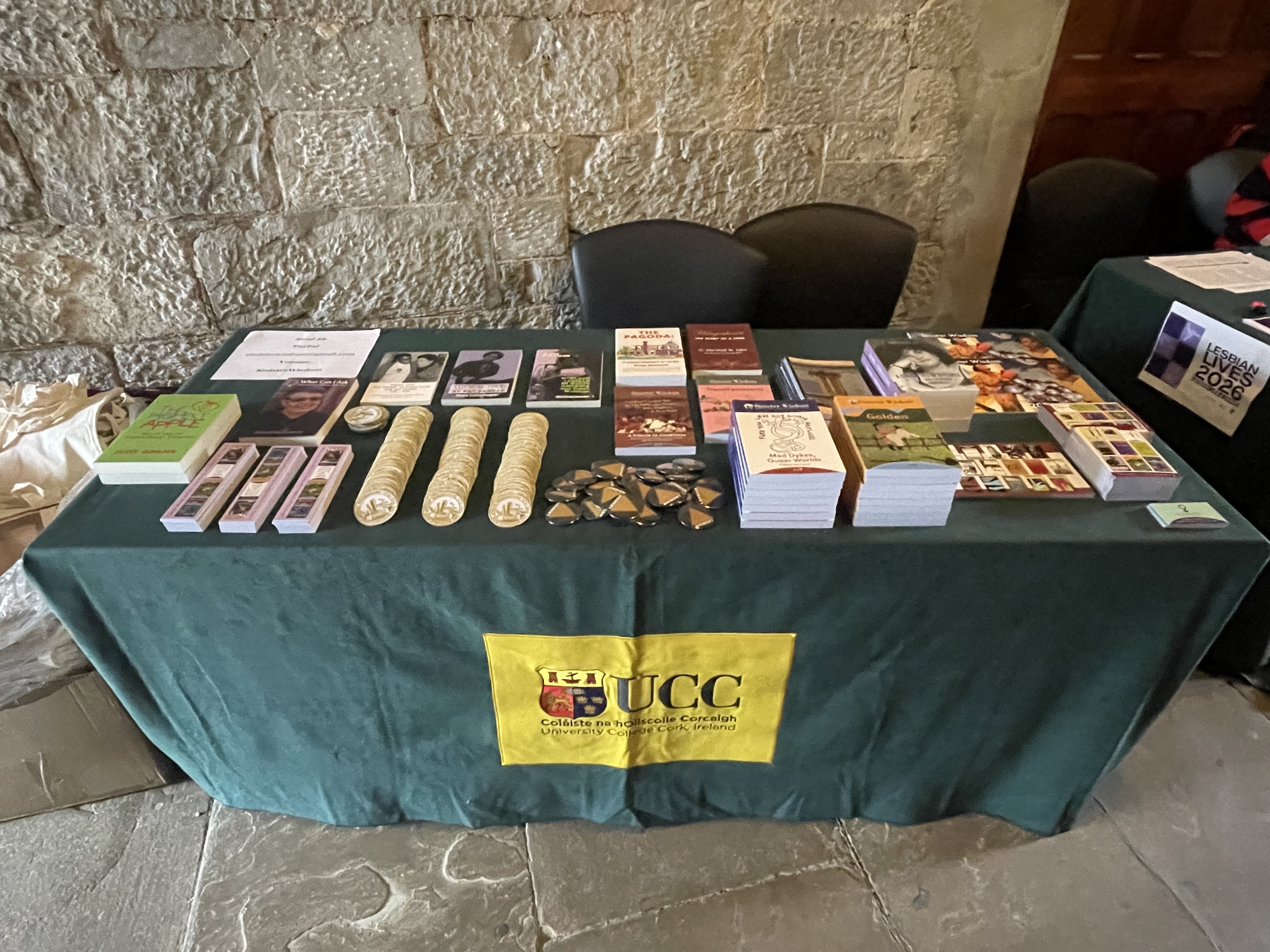
Report from Lesbian Lives in Cork, Ireland

Featurette 100
By Sam Carter


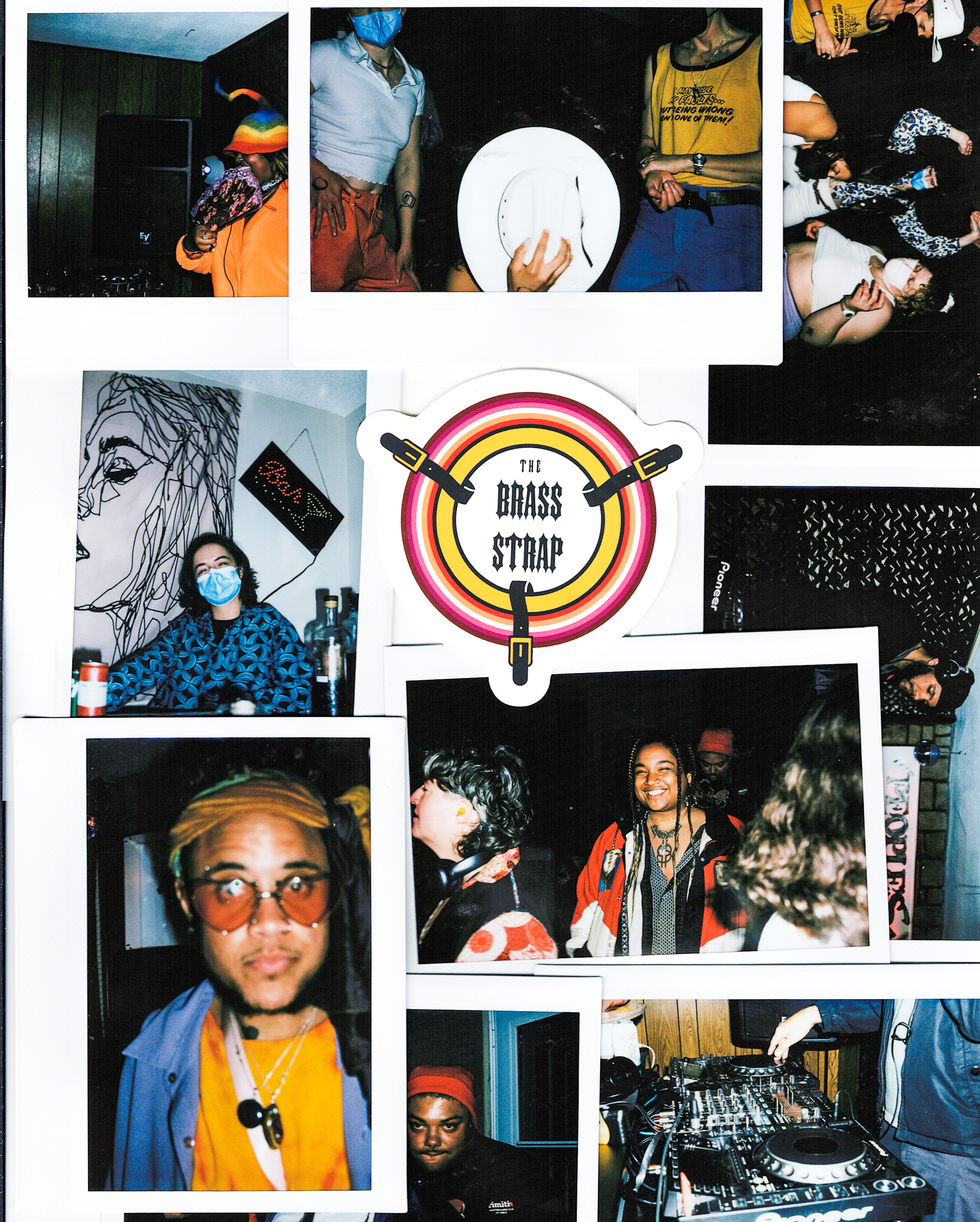
In Minneapolis, new lesbian bar aims to create community, inclusivity, and abundance

Featurette 99
By Ella Stern


Mandy Wallace: Artists with Early Work in Sinister Wisdom

Featurette 98
By Izzy Drake


Diving into 1980s Asian Lesbian Newsletters

Featurette 97
by Li-Anne Wright


A Speculative History of the Sinister Wisdom Typography

Featurette 96
by Julie R. Enszer


Fighting for Feminist Spaces and Against Violence

Featurette 95
by Sam Carter


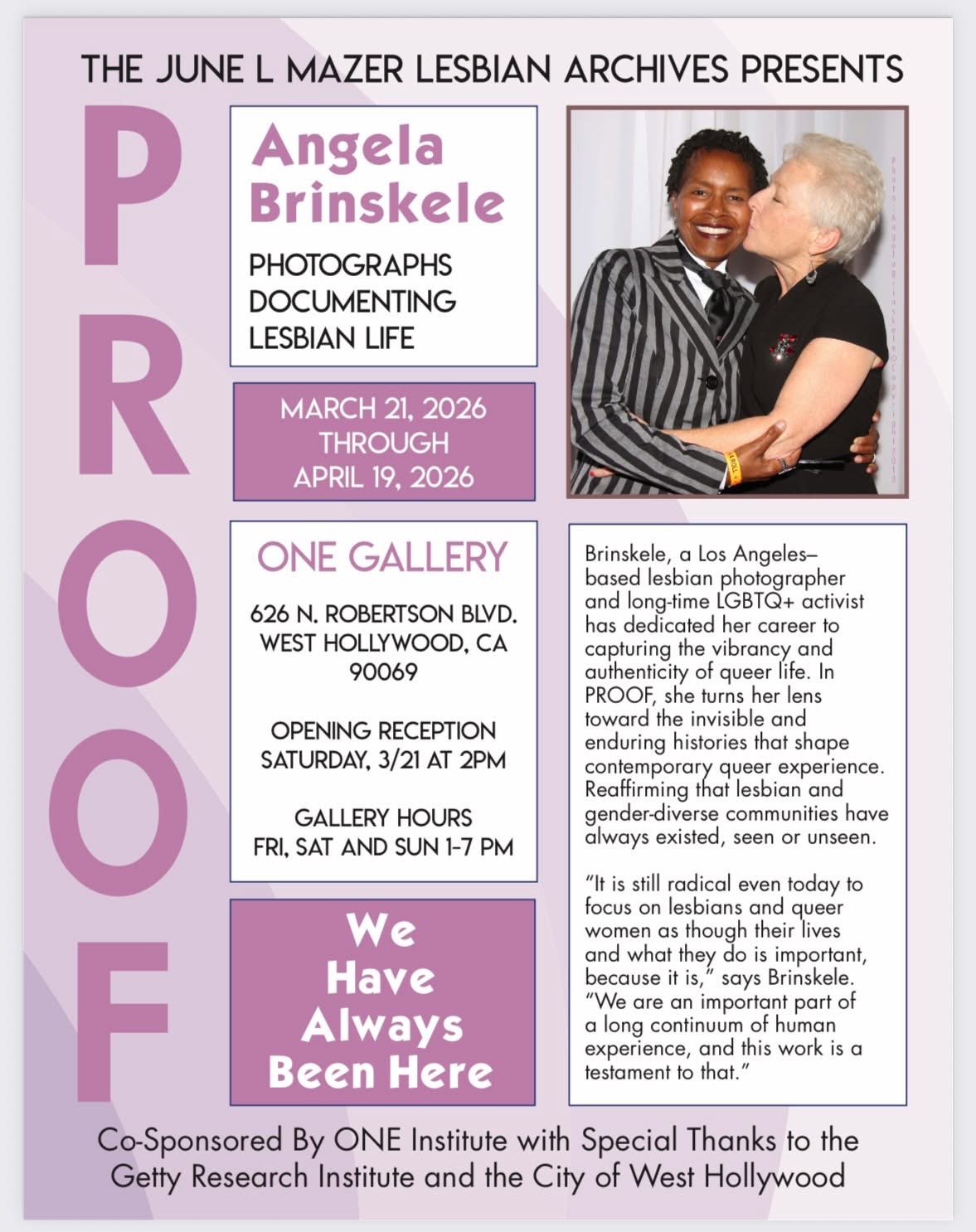
Angela Brinskele’s Proof at One Gallery

Featurette 94
by Bell Pitkin


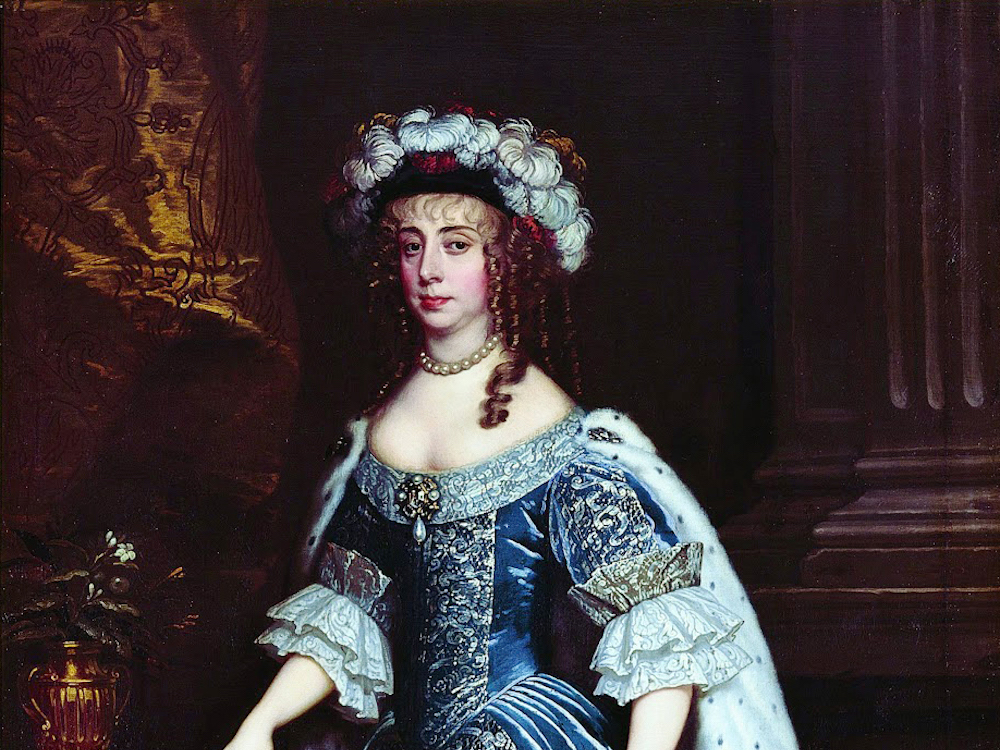
Margaret Cavendish: The Mother of Science Fiction

Featurette 93
by Rivaa Ubrani


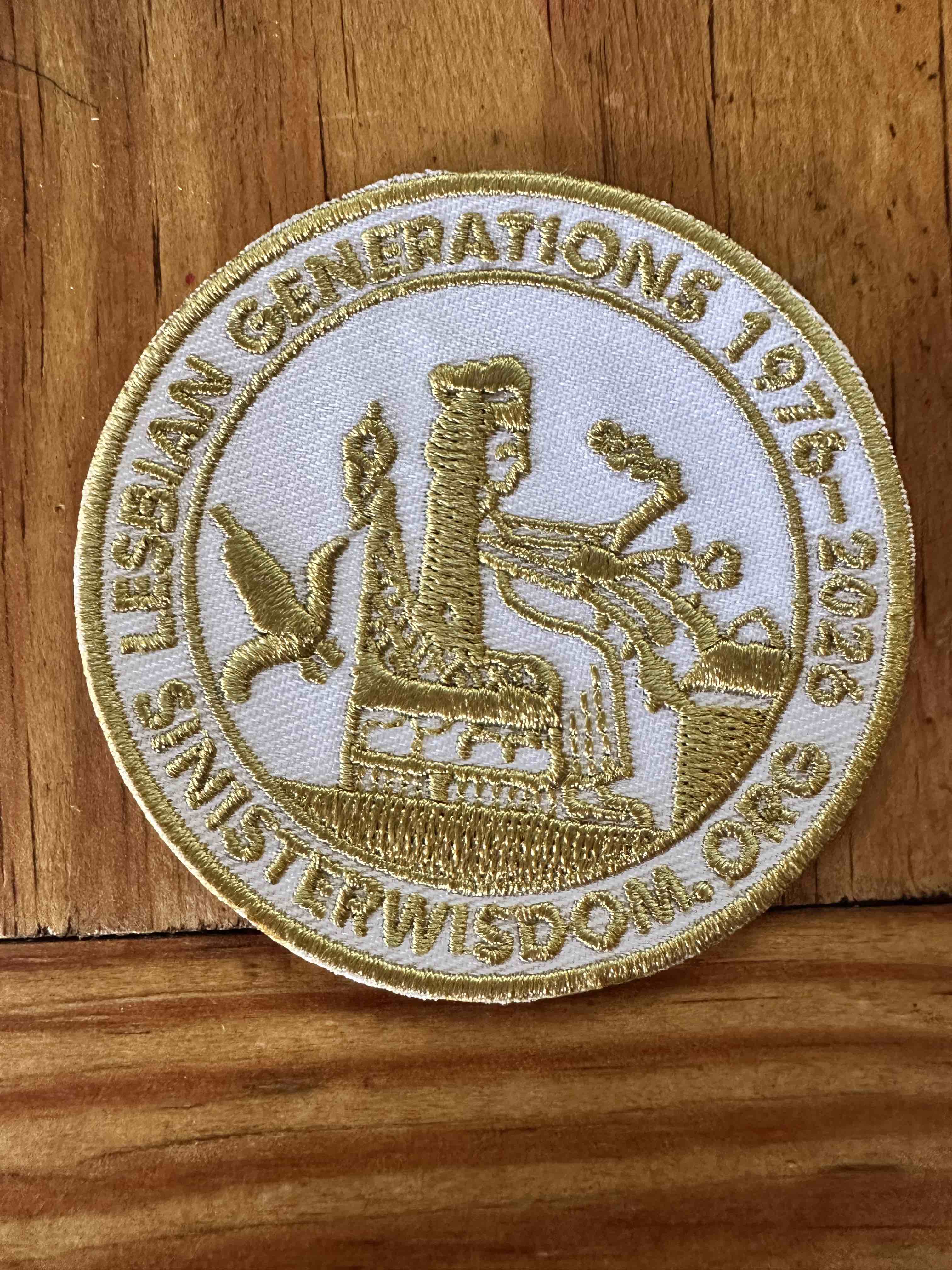
An Idiosyncratic History of the Round Sinister Wisdom Logo

Featurette 92
by Julie R. Enszer


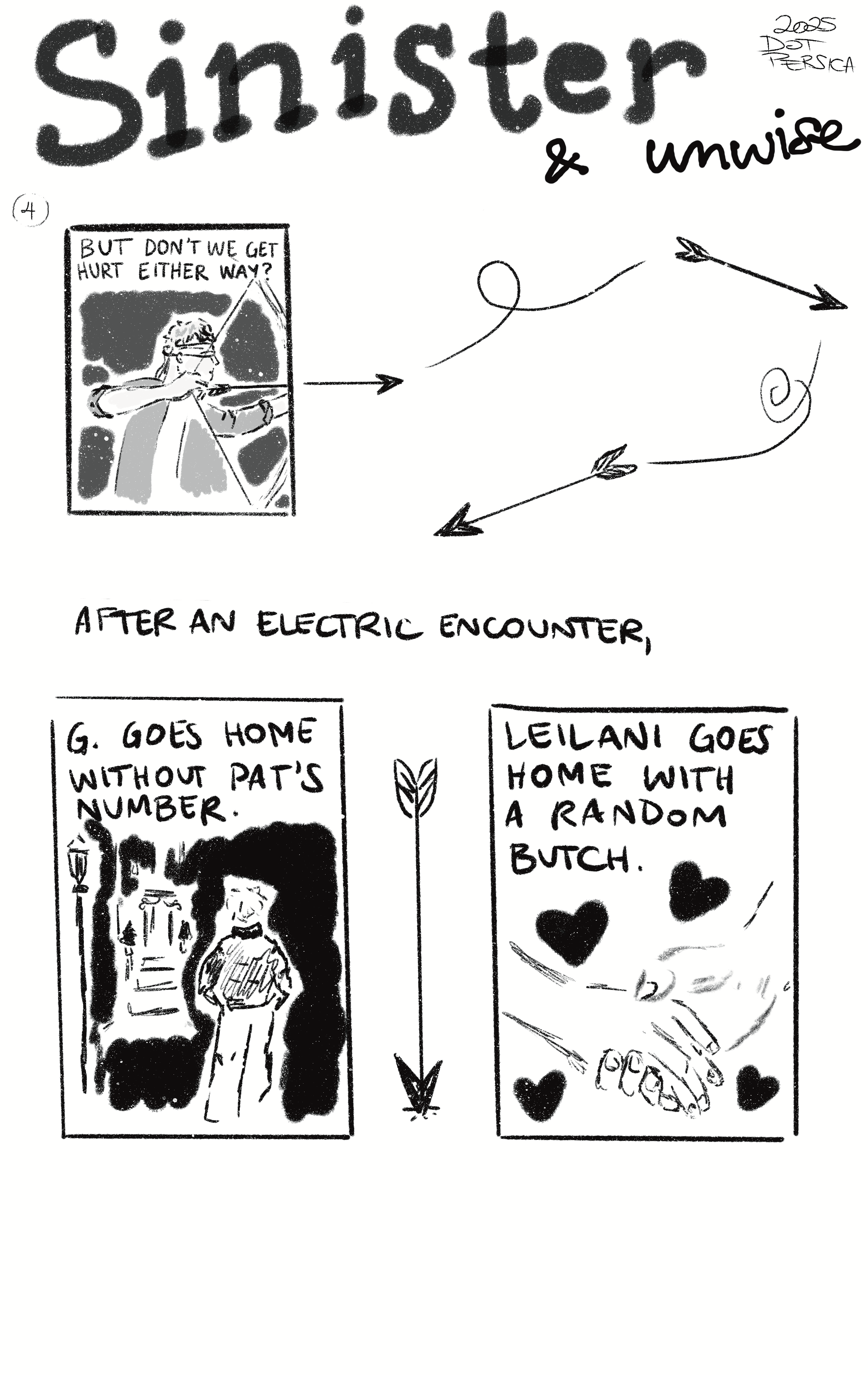
Sinister & Unwise

Featurettes 70, 73, 76, 87 & 91
by Dot Persica

Image: 

Diving into 1980s Asian Lesbian Newsletters

by Li-Anne Wright

View previous newsletters and subscribe to the Sinister Snapshot!


Caption: Asian Lesbian Newsletter, Issue 1 (May 1984).

I am lucky to have grown up in a time and place that made it possible for me to never know the fear that I might be the only queer Asian person in the world. By the time I had come to understand myself through the word "lesbian," I had access to the internet (where Hayley Kiyoko had released her music video "Girls Like Girls" in 2015, which I might suggest is a canonical text for Gen-Z queers) and had already met a number of Asian queers—in fact, most of them were my friends.

And still, it wasn't until my early twenties that I had a sense that Asian American lesbians might have a history or where to look for evidence of our past. I became very curious about newsletters like Anamika and Phoenix Rising because they reminded me a lot of the zine world I loved so much. (If you are unfamiliar with zines, I wrote a featurette on dyke zines for Snapshot #74. I also wrote a featurette on Anamika in Snapshot #46, and two issues of Anamika have now been digitized on SAADA.)

Recently, I’ve been working on a paper about Asian American lesbian newsletters and politics during the 1980s. I’ve been diving into a number of ‘80s newsletters that were published by Asian lesbians based in the United States/Asian American lesbians—so far, Phoenix Rising, ALOEC, and Shamakami. Did you contribute to any of these newsletters, or do you know anyone who did? I'd love to talk to you about them and what it was like for you to be an Asian lesbian during that time (you can just reply to this email, as I check the Sinister Wisdom email inbox every few days).

In the meantime, here’s a bit about Phoenix Rising, which ran for ten years between 1984 and 1994. This newsletter had a number of different elements—articles, editorials, news bits, book and movie reviews, an events calendar, classified ads, spot art, etc. Here are some of the more lighthearted tidbits.

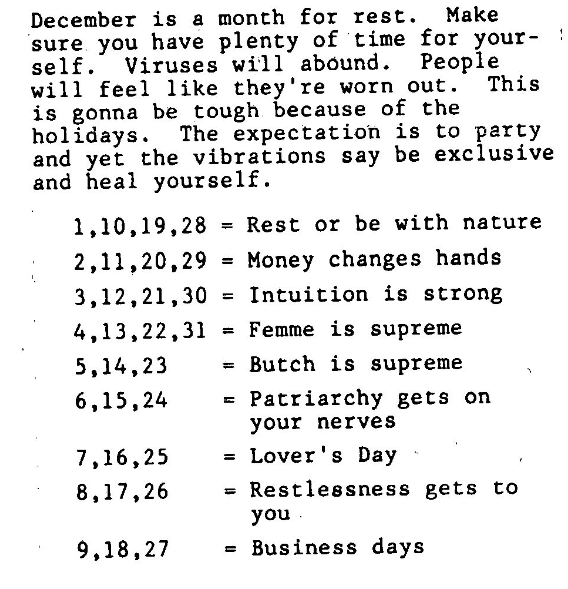
Some of the earlier issues had horoscopes by “Madame Ree”! Here was the advice for December 1985 that was published in Issue 8 (September–October 1985). Patriarchy getting on your nerves only three times in a whole month sounds like a pretty good month to me.

Not everything published in Phoenix Rising is related to lesbian topics. A number of issues had recipes, like this one in Issue 12 (August–September 1986) for “Chicken with Peanuts” by S. P. Kwong. Other useful tidbits in some other issues included reminders about taxes, photography tips, and requests for roommates.

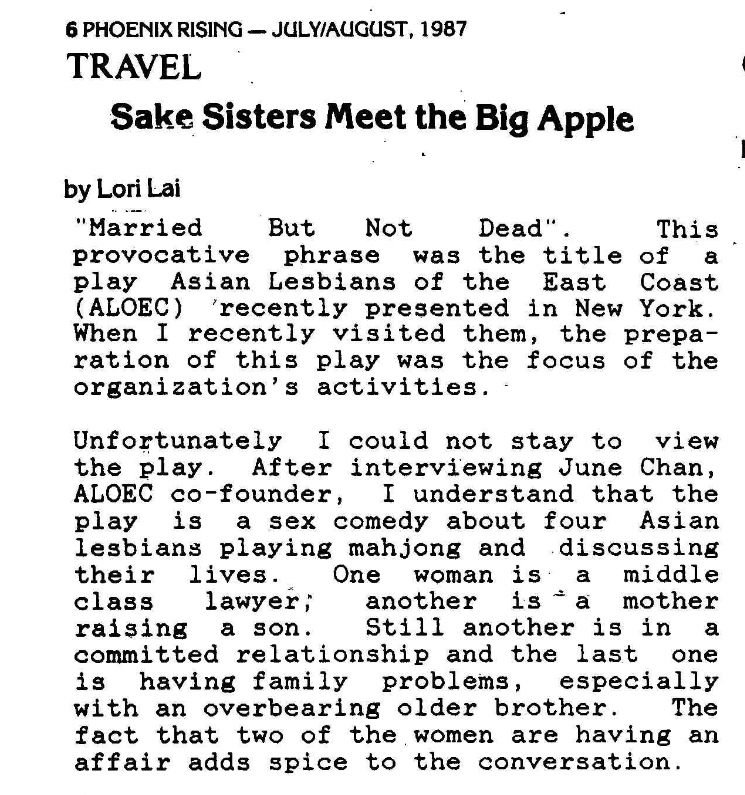
Lori Lai was one of the founders of Phoenix Rising and was involved for many years. In Issue 18 (July–August 1987), she wrote about visiting Asian Lesbians of the East Coast (ALOEC) and this play that ALOEC staged about “four Asian lesbians playing mahjong and discussing their lives.”

Despite the various difficulties of putting out a newsletter—not to mention the tensions of doing a project for a panethnic coalition with many different people and priorities—Phoenix Rising had an amazing run, with ten years and over 40 issues. Looking back on these newsletters as a young Asian American dyke certainly inspires me to think about how to build Asian lesbian coalitions in the present, both through print and otherwise!


Li-Anne Wright is a Chinese American dyke in Michigan; puts together the Sinister Snapshot every two weeks; and is enthusiastic about crochet, queer print culture, and Asian American queer history, among other things.


Continue reading the Featurette on the Sinister Wisdom Blog!

Image: 

A eulogy for Beth Marschak by her friend Mary Dean Carter
A eulogy for Beth Marschak by her friend Mary Dean Carter


When Beth Marschak died of smoke inhalation from a house fire in June 2026, Richmond, Virginia, lost a lifelong political crusader whose shoes will be hard to fill. Mary Dean Carter, her friend of over fifty years and collaborator in many lesbian feminist actions, gave this eulogy at a memorial held in Beth’s honor.

Beth Marschak and I were friends and colleagues for over fifty years. We first met in the early '70s as students at Westhampton College of the University of Richmond. Beth was organizing a Women’s Liberation group, and I attended one of the meetings. I was introduced to feminism and women’s rights through a class and wanted to know more.

Then, in 1975, we met again when Beth became a co-founder of Richmond Lesbian Feminists (RLF) and I was an original member. RLF is one of the longest lasting lesbian-feminist organizations in the country, and last year we celebrated our 50th anniversary. Beth was the glue that held it all together. She had extraordinary leadership and organization skills, as well as political savvy. It was frequently said that “no one could run a meeting like Beth Marschak.” She was an incredible problem solver, and helped RLF navigate many challenging times and situations. RLF was involved in political advocacy but also was a place for lesbians to know they were not alone. For many years we produced a monthly newsletter, held potlucks and women’s festivals, and hosted women musicians. Ours was a friendship of shared values and mutual interests.

Beth was a self-described “home-grown radical.” Most of you know or have read about her activism, honors, and many accomplishments in the realm of social justice, civil rights, human rights, women’s rights, and LGBTQ rights, so I’d like to share some personal reflections of Beth as a dear friend.

Beth was always there for me if I was going through any difficulties. Once when I was having an especially hard time in a job, she showed up at my home unannounced and asked me where I would like to go that would be a relaxing, peaceful environment. I told her Maymont. So she drove me over and we walked to the area near the waterfall and sat on a rock. She pulled out a little notebook and told me to make a list. I don’t really have a recollection of what that list was supposed to be about, but the point was she knew that was something that would help relieve my anxiety and overwhelm. And it did.

I really considered Beth a part of my extended family. She knew my mother and sister, and they loved her. She was there for me when my grandfather and parents died.

Beth was also a lot of fun. We enjoyed shopping at By Gones in Carytown for costumes to wear to the RLF Halloween parties. We went to flea markets, and many cultural events. Beth had excellent taste in books and movies, and I tried to follow up on her recommendations. She loved women the surrealist artists Frida Kahlo and Lenora Carrington. She was a huge fan of science fiction, and her favorite authors were Angela Carter and Octavia Butler. She enjoyed comic books and collected action figures of strong women. She loved Wonder Woman, and to my mind she embodied that archetype.

One of Beth’s eccentricities was her love of Coca-Cola Classic. She used to ride around in her car with cases of it in the back seat.

Beth had a great sense of humor and was funny, wise, and very stubborn. But most of all she was kind, compassionate, and loyal.

Even though she had a very public persona, she was very private about her personal life. Sometimes people would ask me questions about her romantic life or if I knew who she was dating, and I’d have to answer, I’ve got nothing.

One of her favorite musical groups was Sweet Honey in the Rock, an African American, all female, a capella music ensemble.

As I reflect on Beth’s life, I’d like to share a passage of the lyrics from “Ella’s Song”, from the words of activist Ella Baker, adapted by Bernice Johnson Reagon.

“We who believe in freedom will not rest until it comes.

I’m a woman who speaks in a voice and I must be heard.

At times I can be quite difficult,

I’ll bow to no man’s word.

We who believe in freedom cannot rest until it comes.”

Someone sent me the following unattributed quote recently, and I thought it appropriate to share here. “Be those things you loved most about the people who are gone.” When it comes to my friend Beth Marschak, that is a very tall order, but we can only do our best.

I loved Beth very much and she is missed.


For more about Beth Marschak’s political activism, see her interview for the Southern Lesbian Feminist Activist Herstory Project.


Image: 

“When Someone Dies”: Lesbians and Memory Work

by Julie R. Enszer


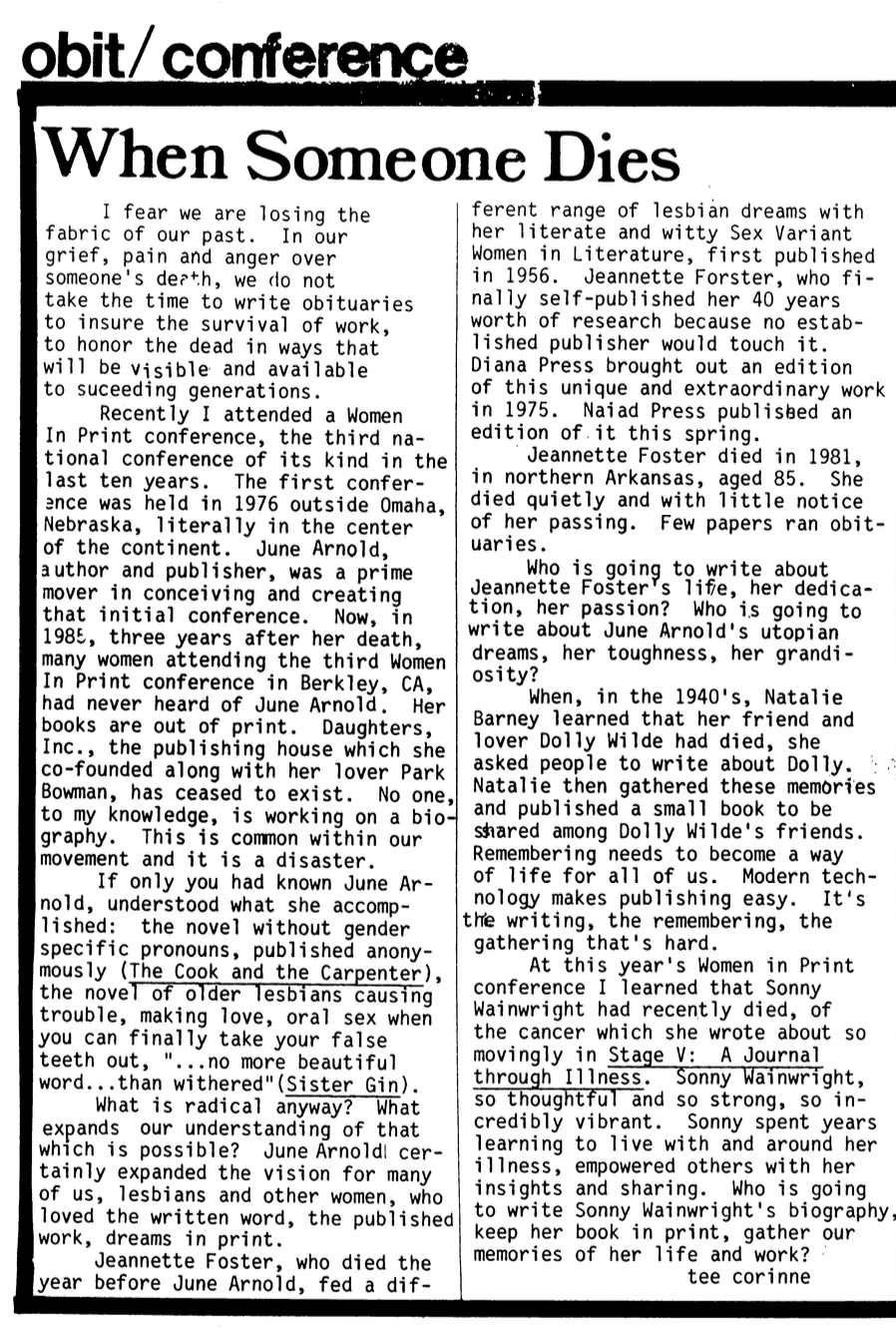
Caption: “When Someone Dies” by Tee Corinne, off our backs, Vol. 15, No. 8 (august-september 1985), p. 18.

In 1985, Tee Corrine wrote in off our backs, “I fear we are losing the fabric of our past.” She continued “in our grief, pain and anger over someone’s death, we do not take the time to write obituaries to ensure the survival of work, to honor the dead in ways that will be visible and available to succeeding generations.”


I reread this article recently and these sentences strike me as remaining true today. We collectively in lesbian and queer women’s communities are losing the fabric of our past, and there are not enough people dedicated to honoring our dead and doing the labor to continue their survival. There are many reasons for this situation—and many remedies. The loss of the ReviewLambdaLiterary.org now over two years ago means that there is not a public, highly trafficked website for obituaries of lesbian writers, and too often our luminary literary lesbians are not of interest to mainstream publishers of obituaries like The New York Times. At Sinister Wisdom, we publish obituaries and remembrances in the quarterly journal, but I know we do not dedicate enough pages or attention to this important work. Lesbian Connection is publishing obituaries valiantly. Their obituaries are wonderful and provide portraits of a wide range of lesbians and lesbian lives. If you are not receiving LC, I encourage you to sign up for either the print or PDF version of the magazine. It is a treasure trove of our past—and our present (and the futures we are creating).


Corinne misses not only obituaries but also a wide range of activities that keep a lesbian / queer woman’s life and work alive and meaningful to new generations. These activities include republishing books, excerpting books in new contexts, continuing to circulate art, and more. Corinne writes in the off our backs article “When Someone Dies” about June Arnold, who died in 1982, three years before the article was published. Corinne notes that many women attending the women in print conference in Berkeley, CA in 1985 “had never heard of” her and that “no one . . . is working on a biography.” There is still no biography of Arnold. Corinne continued, “This is common within our movement, and it is a disaster.”


One person doing extraordinary work to preserve our lesbian past particularly through biography is Tracy Baim who has published a biography of Vernita Gray and Barbara Gittings, among many other important lesbian history books. We need at least ten more Tracy Baims!


In the article, Corinne also mentioned Jeannette Foster, who Joanne Passet wrote about in the biography Sex Variant Woman, Natalie Barney, Dolly Wilde, and Sonny Wainwright. Corinne’s concluding words were, “Who is going to write Sonny Wainwright’s biography, keep her book in print, gather our memories of her life and work?”


Who indeed? Sinister Wisdom is doing some work to keep books in print and gather memories of lesbians' lives and works, but there is always more to do. I invite everyone to join in this work. Write obituaries; submit them to Lesbian Connection, to Sinister Wisdom and the Sinister Wisdom blog. Champion the work of our lesbian and queer women forbears. Edit them, publish them, keep them in our memories and on our shelves, give their work new contexts and new meaning. There is much work to do; it is incumbent on us all to contribute. Far exceeding the call of duty and obligation is what we gain in meaning and joy.


Julie R. Enszer is the editor of Sinister Wisdom.

Image: 

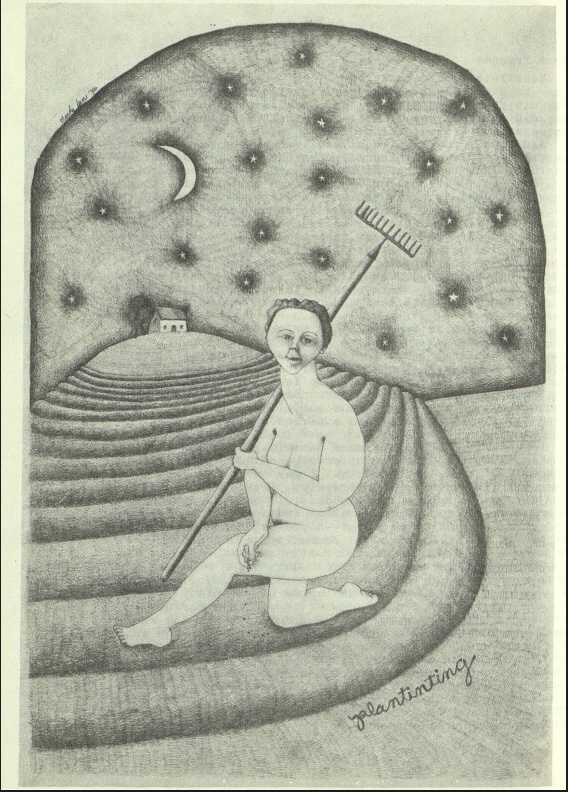
a late bloomer's guide to chaotic lesbianism

a late bloomer's guide to chaotic lesbianism

By sparrow Gore


An ode to my messy dating life. To baby gays figuring things out. That we look upon ourselves with tremendous grace, kindness, and warmth.


First, you’ll need to start with a series of homoerotic friendships,

join a throuple to a hetero marriage that’s falling apart,

get your sense and leave,

fall for another bisexual woman looking to distract herself, then fall for three more after this one,

learn your god damn lesson (please),

go on a two-year long road trip, devote yourself to storytelling, and have meaningful, momentary connections with strangers all across the south of turtle island

have a few summer flings, dance wildly at clubs, make out in public,

move somewhere new. discover anarchy, and learn words like “abolition”, “food sovereignty”, “land back”. get rageful beyond what you knew your body could hold

move again. This time, stay a while…

block your sneaky link but text them over Venmo once you’re ovulating,

get so embarrassed that you start focusing on yourself again

find a way to stop killing your plants, talk to the soil,

work on your avoidant attachment style until you realize that there was never anything wrong with you to begin with. Until you realize that wounds are the only reaction to being cut.

Until you realize all you ever needed was patience,

and finally, finally, decide for yourself, what love is.


Love is not extractive. It multiplies, like expanding roots of a tree. Love is not extractive. It adds, like precious sunlight peeking through thick clouds on a winter solstice. Love is not extractive.


I heard somewhere that people who are afraid of commitment have nothing to offer a relationship. It was the first thing to ease my heart after I’d become infatuated with someone who wanted me close but not too close. And it was the last fantasy I entertained before I concluded I was worthy of secure, and emotionally safe connections.

Though I regard all bonds as a way of showing us something important about ourselves, there is a particular side of people that only reveals after time, after shared history and longevity. Now that I’ve met this person within myself, I’m enchanted.

I’m completely taken away with who I become, when I feel loved, seen, and valued. I am perceptive, generous, playful. I am trustworthy, protective, and intentional. And I think that’s where the real magic is. Love opens doors. Love clears paths to more love.

So yeah. Follow your heart even when it takes you to chaotic places. The more you listen, the clearer it becomes and eventually you find a place to settle in. And that place is yourself. You become a home to yourself. And you see that you were worth it, you were worth all the wandering.


sparrow Gore (they/them) is reimagining a softer planet. sparrow Gore is a lesbian Sudanese-American farmer, abolitionist and writer. sparrow’s work is informed by Black feminist tradition, and liberationists Audre Lorde, Nikki Giovanni, bell hooks, and Octavia Butler ; who moved forward a sociopolitical movement that challenged the intersecting oppression and tactics of racial capitalism. sparrow seeks to make portals with their language, to take us to the hearts of reality and the limitlessness of Black queer imaginations.


Read more by sparrow Gore
Notes From a Wildly Intense and Sensitive Sapphic #1
Image: 

Sinister Wisdom 93 Cover

Sinister Wisdom 145 Cover

Pages

Subscribe to Sinister Wisdom RSS

"Empowerment comes from ideas."

Gloria Anzaldúa

“And the metaphorical lenses we choose are crucial, having the power to magnify, create better focus, and correct our vision.”
― Charlene Carruthers

"Your silence will not protect you."

Audre Lorde

“It’s revolutionary to connect with love”
— Tourmaline

"Gender is the poetry each of us makes out of the language we are taught."

― Leslie Feinberg

“The problem with the use of language of Revolution without praxis is that it promises to change everything while keeping everything the same. “
— Leila Raven