Avery's blog

Notes From a Wildly Intense and Sensitive Sapphic #1

About a month ago, in a fit of internal rage and frustration, I quit my job. I was working as a cook in a small tourist city where the manager was a gay white teenage boy with a blaccent, and the head chef was a white Chicano eager to tell me about how he had a “head full of dreads” a few years back. Because, when you’re the only Black person in a professional work space, it’s likely that your coworkers will try to appease you by mimicking Black culture. It’s micro aggressive, dehumanizing, and embarrassing to watch.

Often, I meet white people and get the sense they’ve never had a Black friend before. This sense was deeply affirmed by a 2014 study that discovered “75% of white Americans have entirely white social networks without any minority presence.” This Washington Post article verifies that a huge percentage of white Americans are unfamiliar with relating to, befriending, and creating authentic connections with Black and non-Black people of color.

To be frank, it’s white supremacy. It’s this subconscious disease that pushes white people to center themselves, and other white people, based on a racial construct that has never been real. It was made up to wield power, and disenfranchise BIPOC, and working/poor communities. This imaginary thing, with deadly consequences is passed from generation to generation, like a baton from one white person to the next as they upkeep systems of oppression that harm more than they have ever helped.

I’m caught between absurdities- I want to laugh, or vomit, or both. I’m sure that somewhere out there, a white person is using my name to justify that they “do have Black friends,” “don’t see color,” “have never been racist” meanwhile, ignoring the necessary and daily work it takes to detangle ourselves from colonized actions, mindsets, and ways of being together.

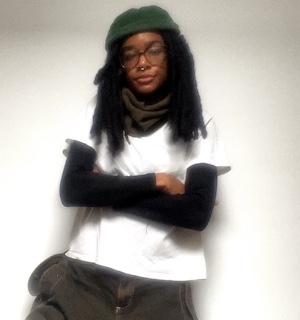
I am a Black person. I am a lesbian. I am an immigrant. And I don’t trust white people, because quite honestly, I haven’t been given any reason to. I don’t have white lovers or white friends. Okay. One. I do have one white friend, who at this point I consider us family.

We were colleagues and activists attending a Building People Power conference. We got along well. I always liked their wild humor, bold fashion, and general friendliness. And, as an introvert, I especially appreciated that they were willing to carry conversations in group spaces- as I took each opportunity to melt away into my body.

The conference was soon ending, so a group of us went out to karaoke. It was a diverse, punk crowd. I was sitting, sipping my drink, when a white woman sauntered up from across the room to touch my hair. My friend jumped out of their seat, immediately confronted this person, and moved between us. This woman started to cry and play the victim, as if she didn’t just cross my physical boundaries. Inwardly, I was rolling my eyes so hard. Outwardly, I de-escalated and sent the racist on her fragile way.

The best part of that night was getting to see my friend’s ethics in motion. It was nice. I’m drawn to passionate people, and I felt a mutual loyalty freshly cementing. Isn’t sapphic friendship healing? The same passion, romance, and understanding we bring to our partners, we can’t help but bring into every other connection we create. We were the only lesbians on the team, and it informed so much of how we took up space. Our willingness to go toe-to-toe with men, our desire to include femme and nonbinary thought/intelligence/creativity, our courage to be so tremendously gay out loud.
Racism, patriarchal and transphobic ideology walk hand in hand. They are tightly woven into each other, and work collaboratively. It tells us that the safest place is in proximity to power- is in connection to men. Double points if they’re white, triple points if they’re wealthy. It convinces us to find refuge anywhere but ourselves, or with community. And it is such a brave, and rewarding act to resist, and make home elsewhere. My queer worlds with my queer friends makes me strong enough to face “white supremacist capitalist patriarchy" (as bell hooks refers to it as) with grace, precision, and confidence, even at times where it is very difficult. It makes me hopeful.

May we each be empowered by the belief that we are worthy, and our freeness is interconnected will set us aflame to speak up in, or outright leave where our dignities are challenged. This is my ode to Black Trans pleasure, Black Trans joy, Black Trans madness, Black Trans silence, Black Trans eroticism, Black Trans brilliance, Black Trans domesticity. My deepest love and honor to the queer allies who devote their time, effort, and energy to transform our conditions so that we can all take breath.


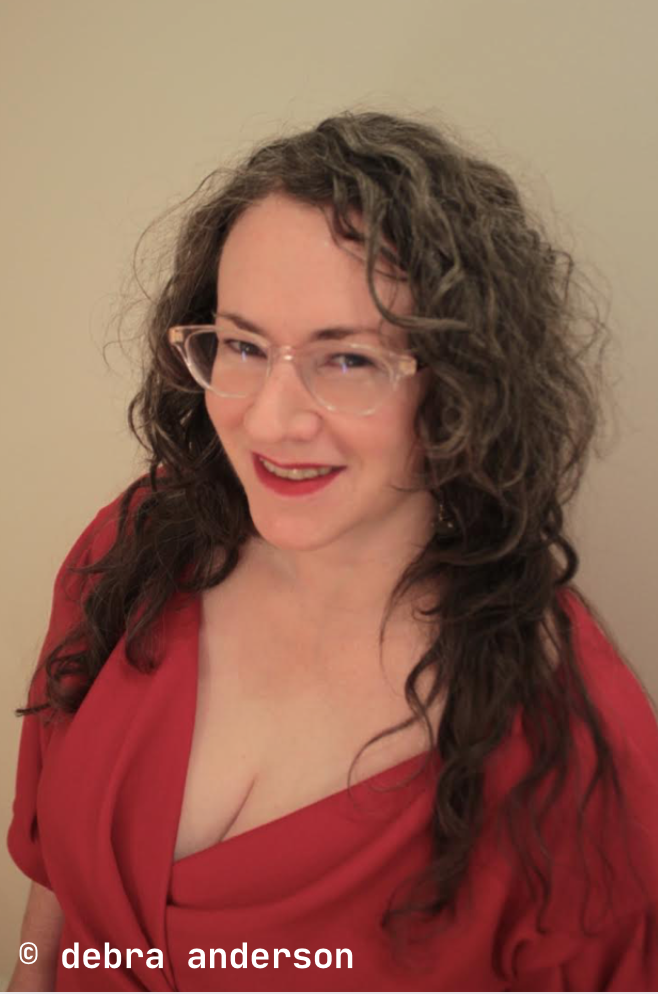
sparrow Gore (they/them) is reimagining a softer planet. sparrow Gore is a lesbian Sudanese-American farmer, abolitionist and writer. sparrow’s work is informed by Black feminist tradition, and liberationists Audre Lorde, Nikki Giovanna, bell hooks, and Octavia Butler ; who moved forward a sociopolitical movement that challenged the intersecting oppression and tactics of racial capitalism. sparrow seeks to make portals with their language, to take us to the hearts of reality and the limitlessness of Black queer imaginations.
Image: 

Lesbian Films and Media: The curation of the Lesbain Lives Film LineUp

Lesbian Films and Media: The curation of the Lesbain Lives Film LineUp
An Interview with Meghan McDonough By Mel Oliver

To complement the launch of the WMM Lesbian Lives Virtual Film Festival, in collaboration with Sinister Wisdom, we’re sharing an Interview with curator of the conference lineup, contributor to Sinister Wisdoms 2026 calednar and Independent filmmaker Meghan McDonough!

I spoke with filmmaker and journalist Meghan McDonough over Zoom in the aftermath of the Lesbian Lives Conference, where she curated a striking and expansive film program that continues to resonate beyond the event itself. As part of a virtual film festival presented by Women Making Movies, the selected films are available to stream from December 22–29, offering audiences a rare opportunity to engage with lesbian cinema that is intimate, international, and deeply rooted in lived experience.
Our conversation unfolded as both a reflection on Meghan’s first time curating a program of this scale and a broader meditation on queer film festivals as sites of connection, discovery, and collective care. From volunteer labor and international networks to works-in-progress screenings and audience dialogue, Meghan speaks thoughtfully about what it means to build cinematic spaces where lesbian histories, futures, and everyday lives can be seen and felt.

Q- Mel: Meghan thank you so much for speaking with me, I’m still reeling from the conference and all the wonderful connections that started and rooted themselves deeper. I was looking forward to the films and found the theatre to be a sanctuary itself within the rhythm of the conference. Each time I caught a showing I immediately felt wonder, seen and entranced by watching these stories with a room full of lesbians. I wonder, was this your first time Curating a program like this?

A-Meghan: Yes, it was a totally new experience for me. Old Lesbians, was the first independent film that I’ve directed, so that came at the end of 2023, and that was my introduction into the world of film festivals as a filmmaker.
I had been to several events like this in the last couple years, but it was my first time being on the programming side of things.
And, yeah, it definitely gave me a lot of appreciation for all the volunteer work that goes on behind the scenes, not just in terms of film curation but in terms of conferences too!
I was so impressed by all the volunteers that were making everything happen, a really monumental achievement and it was a lot of fun! Lesbian and queer film is my favorite topic so it was just a great excuse for me to explore new, great lesbain films I wouldn’t have seen otherwise.

Q- Mel: Wow, that's fantastic! What guided your choices when curating the film lineup for Lesbian Lives? What were your thoughts, feelings and emotions?

A-Meghan: Like when I first started stepping into curating it? I was definitely very excited, to try to figure out how the puzzle pieces work together, how the films might complement each other in a program like this. I was excited to showcase films that I had already seen and wanted people to see and I was super interested to delve into others that I had never heard of.
It was a mix of submissions and then reaching out to filmmakers, whose work I’d seen at other festivals or just were recommended to me by friends in this community.
As someone in the audience, films I enjoy the most are ones that make me laugh and cry ideally. So I’m always looking for stories that feel nuanced and personal to the filmmaker’s experience, whether, place specific or identity specific and I think that specificity lends itself to powerful emotions that resonate in the audience.
I also wanted the scope to be as international as possible given the theme of the conference, “The Lesbian International: Creating Networks of Knowledge Across Space and Time”,So I spent time looking to see what films festivals around the world programmed.

Mel: Yes, the films I was able to see (Es la reducción mínima del abismo (15 min) directed by Delfina Romero Feldman and Ferro’s
Bar (24 min) co-directed by Aline A. Assis, Fernanda Elias, Nayla Guerra, Rita Quadros.) during the conference were in different languages and gave such a layered, exuberant look into enclaves of lesbian lives in places that I’d never heard of and I really appreciated the non-US context, it felt mystical, to see lesbians carving space wherever, whenever!

Meghan: We really are everywhere. And I think in a lot of ways other countries support independent filmmakers in a more robust way.
So, yeah, it definitely felt like a magical discovery process and I love meeting other filmmakers and film enthusiasts too.
That's been one of my favorite parts of showing Old Lesbians at festivals is getting to see the choices the other performers have made, and getting to watch those films together. One of the films I showed, Saigon Kiss, shout out to my friend, Hồng Anh Nguyen. She is from Germany, but lives in Vietnam.
And we met at a film festival last year. I loved her film then, so I wanted to make sure that I included it in this program. Just a glimpse of lesbian life that I was not privy to before and film is a really great vehicle for that

Q- Mel: Oh absolutely, thank you. Next, can you talk about the conversations you had with collaborators that helped shape the final line up? Were there moments that surprised you?

A-Meghan: I did bounce some ideas off Julie, but yeah, I was the main film curator. But I started with the submissions and those were great and honestly very difficult choices. There was a lot of work I was really impressed by and a lot of filmmakers I was made aware of, so I was honored to watch all the samples that people sent in.
Tzeli, a Greek filmmaker, who I met by way of our films being screened together a few times, and for the first time when it screened in Lesbos, where she is from. So of course, I wanted her film called Lesvia about the Isle of Lesbos in the program.
In all, I wanted the final lineup to be a mix of films I’d seen at festivals in the last couple years and works that I wasn’t aware of and came up on my radar through submissions.

Mel: Wow okay, A lot of power!

Meghan: Yeah, I was like, whoa. Okay, I had also never been to an event where we had a work in progress screening, so there were a lot of new surprising things that actually worked out so well!
I know as a filmmaker that most of us are working on something new or multiple projects at the same time and I found in my residency with BRIC in Brooklyn, we ended with a work in progress screening, and we got feedback from the audience. I found that super helpful and wanted to bring that atmosphere to Lesbian Lives.s an independent filmmaker it can be a very
isolating process, and I found that as much as you’re able to engage your work with audiences and talk to people about it the better.

Mel: Mmm. That’s amazing to hear, it kind of goes into a later question of mine. I very much admire you using the tools you learned and putting them to action, as an aspiring filmmaker whose like, where are these films going to go? This gave me a little nudge!

Meghan: Yeah, you just kind of do it and then have people see it before it's actually finished and alleviate some of that tension, at least for me, so that's a good start and can be super motivating because you can get out of your head. So I definitely encourage you to share your work as much as you can

Mel: Ahah exactly! Thank you!

Q- Mel: For conversation flow, my next question, if you could dream forward, what would an ideal lesbian queer film festival look like? Or what have the ones you’ve been to been like?

A-Meghan: I would say my favorite film festivals are the ones that involve industry talks and an educational component.
Ones that involve a lot of networking, meals, mixers and gathering opportunities for filmmakers outside of the showings. Hearing from people who work in distribution, artists giving talks on their craft, because I think the best festivals are the ones that have established and emerging filmmakers present. Ideally a place for learning and collaborations to start.
Like, last year, at the Palm Springs Short Fest, which was a great festival, I met a friend and collaborator and we are co-directing a documentary about queer archives around the world. I think the intergenerational component is also important, because there aren’t many spaces where lesbians of different ages get to be in conversation.[At lesbian lives] There was so much going on and it felt like everyone who was there was either volunteering or participating in a panel. So I think when everyone is invested in that way, when they’re bringing their own skill and knowledge to the space , everyone’s learning from each other and that's the best setting to be in!

Q- Mel: Yes, yes I totally agree! Riffing off that question a little more, how do you imagine lesbian and queer festivals evolving?

A-Meghan: Accessibility!
I think since COVID a lot of festivals have a hybrid model. So they have programming for screenings and talks in person and virtual which is a great model to keep.
Most major cities in the U.S. now have a queer film festival, some well known ones; Newfest in New York, Frameline in San Francisco, Old Lesbian played at a festival called Out South in Durham North Carolina, and there's also Wicked Queer in Boston.
They are kind of all over, and for the most part volunteer run, it’s just people who are really passionate about this, making it happen. So I think accessibility can be a challenge due to lack of funding that these organizations can get, so the more support then the better because there is a lot of value to getting people there in person.
I”ve only been in the independent film space for the last two and a half years, but to dream forward I would like to see more dedicated funds for queer filmmakers of color specifically.
I think its really important that people who are telling stories and are telling stories about a specific experience have the lived experience themselves.
Realities and truth can get distorted, otherwise which really changes the public perception in the way that's inaccurate. And yeah, every filmmaker comes with their own perspective. So the more diverse viewpoints that we can get out there the better because it's just reflective of the world we live in.
There’s still a lot of representation gaps, so the more funds that create space to support these voices the better.

Q- Mel: Mm I feel that struggle consistently. As we come to the end of our conversation I am interested in any memorable moments within your experience.

A-Meghan: Moments in General?
I really enjoyed the Q&A portion for the films during the conference. I didn’t know how the conversations were going to work out but there were some really thoughtful questions from the audience and answers from the filmmakers that came.
Although you try to curate and be there for everything that can go wrong, there is bound to be technical failure, which unfortunately happened while I was out of the theater. So another memorable moment–because it's a lesbian conference, of course a friend stepped in (shout out Cheryl Furjanic) and saved the day, and that felt amazing!
That's the great part of being in a community in a safe space is people step up and make things happen. So even though I was intimidated going into this, as a younger filmmaker, never having curated a filmfest program, I felt really safe and in good hands with everyone as well as the audience.

Mel: I’m so happy for you, and glad this was your first experience!

Q- Mel: Before we go, do you have any guiding principles that you would give to emerging filmmakers or folks looking to curate a film festival?

A-Meghan: Be open to films from all different sources. I think subscribing to independent film newsletters is a good way to learn about films, go to as many events and festivals as you can!
For curating, I think it's the better problem to have too many good films you have to narrow down. And try to do as much as you can as early as possible so you can leave a buffer for making sure you get materials, description and technical information on time, leading up to the event.
Also, be open to delegating things. I moderated some of the Q&A’s, but also some of the attendees did an incredible job moderating, so that was wonderful. Do what you can to create a dynamic space for everyone to be an active part of what you're building.

Mel: Meghan, what a wonderful opportunity talking with you! Thank you for speaking with me and I loved the films I saw during the conference. You did a magnificent job and I admire your gusto for taking this on! Those 4 days are going to stick with me for the rest of my life! One last plug for those who will be reading – I want to know – are there any films that you’re excited about seeing, or any films from festivals you’ve been to you’d recommend?

A-Meghan: Saigon Kiss (dir. Hồng Anh Nguyễn) and Lesvia (dir. Tzeli Hadjidimitriou) are actually the only ones on that list that I saw at festivals– Palm Spring ShortFest and BFI Flare respectively. I also really liked Iris Brey's series Split and Rosanagh Griffith's Dope Fiend at BFI Flare. And this isn't a queer film necessarily, but I loved Vidhya Iyer's Giving Mom the Talk at Cleveland International Film Festival. Plus I Could Dom (dir. Madison Hatfield) and Spermicide (dir. Cat Davis) at the same fest.

Meghan also recommends all the films from the Conference lineup: (p. 8-9 of The Lesbian Lives Conference program )–

The films Meghan curated for the Lesbian Lives Conference reflect her commitment to specificity, emotional resonance, and global lesbian presence stories that make space for laughter, grief, tenderness, and recognition across borders and generations. The full Women Making Movies virtual program is available to stream during the week of December 22–29, inviting viewers to encounter films that might otherwise remain unseen, yet linger long after the credits roll.
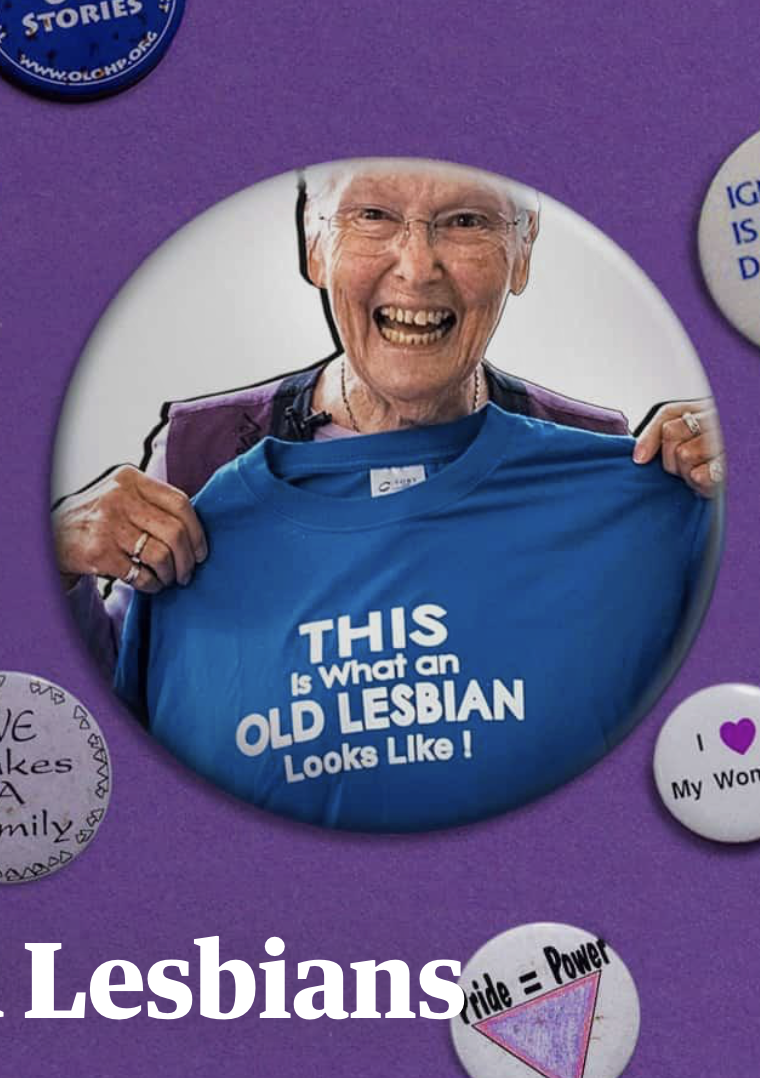
Meghan’s own award-winning documentary short, Old Lesbians, is a loving, attentive portrait of lesbian elders and the worlds they have built, sustained, and passed forward. The film has screened internationally at festivals and institutions including the British Film Institute, the California State Capitol, and the American LGBTQ+ Museum, and was featured on the 2024 IDA Documentary Awards Best Short Documentary Shortlist. A still from Old Lesbians also appears in the Sinister Wisdom 2026 Calendar, to which Meghan proudly contributed.
You can learn more about Watch Old Lesbians here

Visit Meghan's Official Website to follow her ongoing work and find her on Instagram @mmdonough3.

Dyke Bar* History: 1920s-1930s #1


Dyke Bar* History: 1920s-1930s

Jack Jen Gieseking with Michaela Hayes, Mel Whitesell, Paige LeMay, Syd Guntharp, and Sarah Parsons

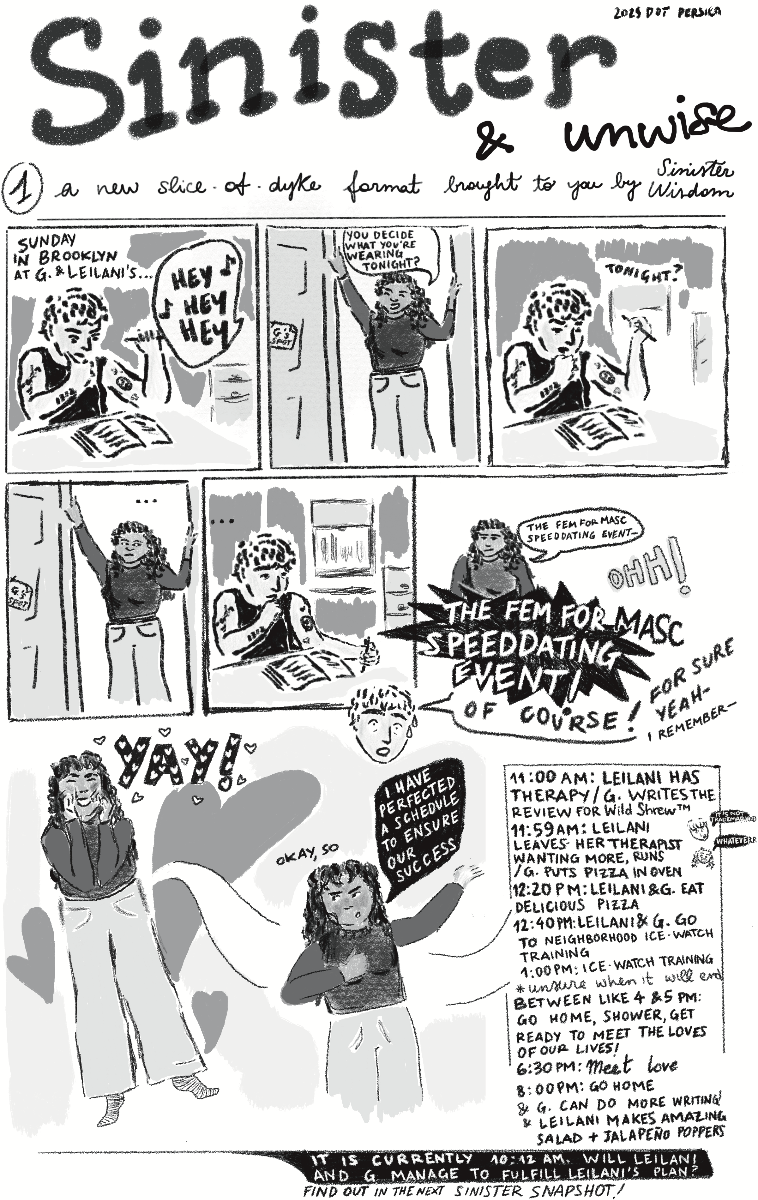
To complement the launch of the Our Dyke Histories podcast, hosted by Jack Gieseking and co-produced in collaboration with Sinister Wisdom, we’re sharing a reading guide for the decades. For the first season, Our Dyke Histories is spotlighting dyke bars*: lesbian bars, queer parties,  and trans hangouts; the structures that made them necessary, the lives they made possible, and the worlds we built from them.


An intimate, black-and-white photograph of women dancing in one another's arms to a live band at a bar.

When we talk about the 1920s and 1930s as a queer era, it’s usually framed in smokey Harlem cabarets, Greenwich Village speakeasies, and stolen glances around the world. Prohibition blurred the lines between respectable and illicit nightlife, creating underground spaces where coded glances, whispered introductions, and backroom gatherings could bloom into something bigger. Even as laws and morals tried to shut queerness, gayness, lesbianism, and transness down, urban centers were buzzing with creativity and connection. Lesbian, gay, and LGBTQ bars, cafés, and parties emerged as places to test out desire, find chosen family, and build lives beyond the reach of traditional expectations.

Our foremothers and fore-gender-expansive ancestors weren’t just surviving: they were innovating nightlife, creating dyke bars before “dyke bar” was even a recognized category, and leaving us receipts that are still hot a century later. These decades did not offer safety, but they did offer possibility. People built bars, cafés, salons, parties, and networks. These were spaces where lesbian life was not merely surviving, but generating new social forms. What constellated in these rooms—intimacy, style, mutual support, conflict, eroticism, art—was at once ordinary and transformative. The spatial politics of these sites reveal much about how lesbians negotiated risk, surveillance, class, race, and gender presentation to create something like a livable world.

The interwar period is often treated as an interlude, but they were foundational to our present day's lesbianism and lesbian spaces. These dyke geographies still structure how we inhabit nightlife, how we seek community in the day and night, and how we create lesbian belonging. From Greenwich Village to Montparnasse to Harlem’s rent-party circuits; dykes, bulldaggers, lady lovers, and gender-expansive people were inventing infrastructures of connection. A century later, the monocles and tea rooms might be artifacts—racecar-driving lesbians are still happening, of course—but the geographies they built echo in every lesbian bar, queer house party, and trans do-it-yourself gathering where we continue to make space for ourselves and one another.

While many of you already know the long-adored Odd Girls and Twilight Lovers: A History of Lesbian Life in the Twentieth Century by Lillian Faderman–a revered and trusted source of lesbian history–we’ll be reviewing two new amazing books and some venerable images of 1920s-1930s dyke bar* history on the podcast. Stay tuned!


Image: 

October 9, 2025 (by Barbara Johnson)


I walked this forest trail with you for years.

Now, alone, without you, for three.

Looking for fairy bowers. Owls. Or a sign that you’re still with me.

Had a memorial bench installed in your memory.

To commemorate our love of this trail, the nature sounds, the creatures, the Jacks in the Pulpit, the “white dog,” the peaceful holding of our hands.

“… Who walked this trail every weekend with her wife, Barbara.”

Visited six days before the anniversary of your death to find the words “her wife” scratched out. Unfixable. Someone trying to obliterate our love, our life together, our existence. Peace turned to menace.

“The love that dare not speak its name.”

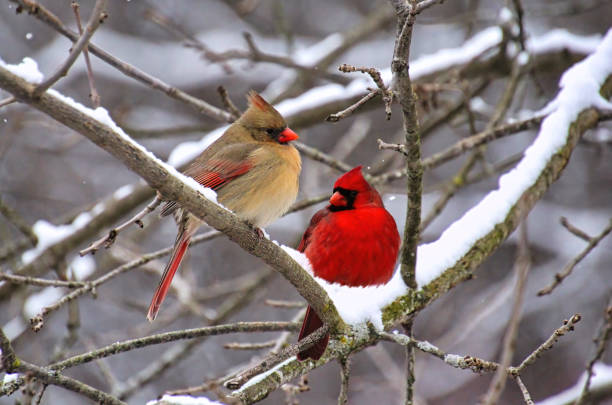
A female cardinal alighted on a tree in front of me as I sat sobbing on your bench today, the anniversary.

“Cardinals appear when angels are near.”

Was that you?


Barbara Johnson is a former Naiad/Bella Books author and winner of the Alice B. Toklas award in 2018. This award is given annually to living writers whose careers are distinguished by consistently well-written works about lesbians. She met her lover and soulmate, Kathleen DeBold, at Flagler College in Saint Augustine, FL, and they were together for 48 years before Kathleen’s death in 2022.


They walked the trail mentioned in the poem weekly for nearly 15 years. Though bittersweet, Barbara still walks the trail in memory of what they shared and what she’s lost.

onFrom the typewriter,the floor


onFrom the typewriter,the floor


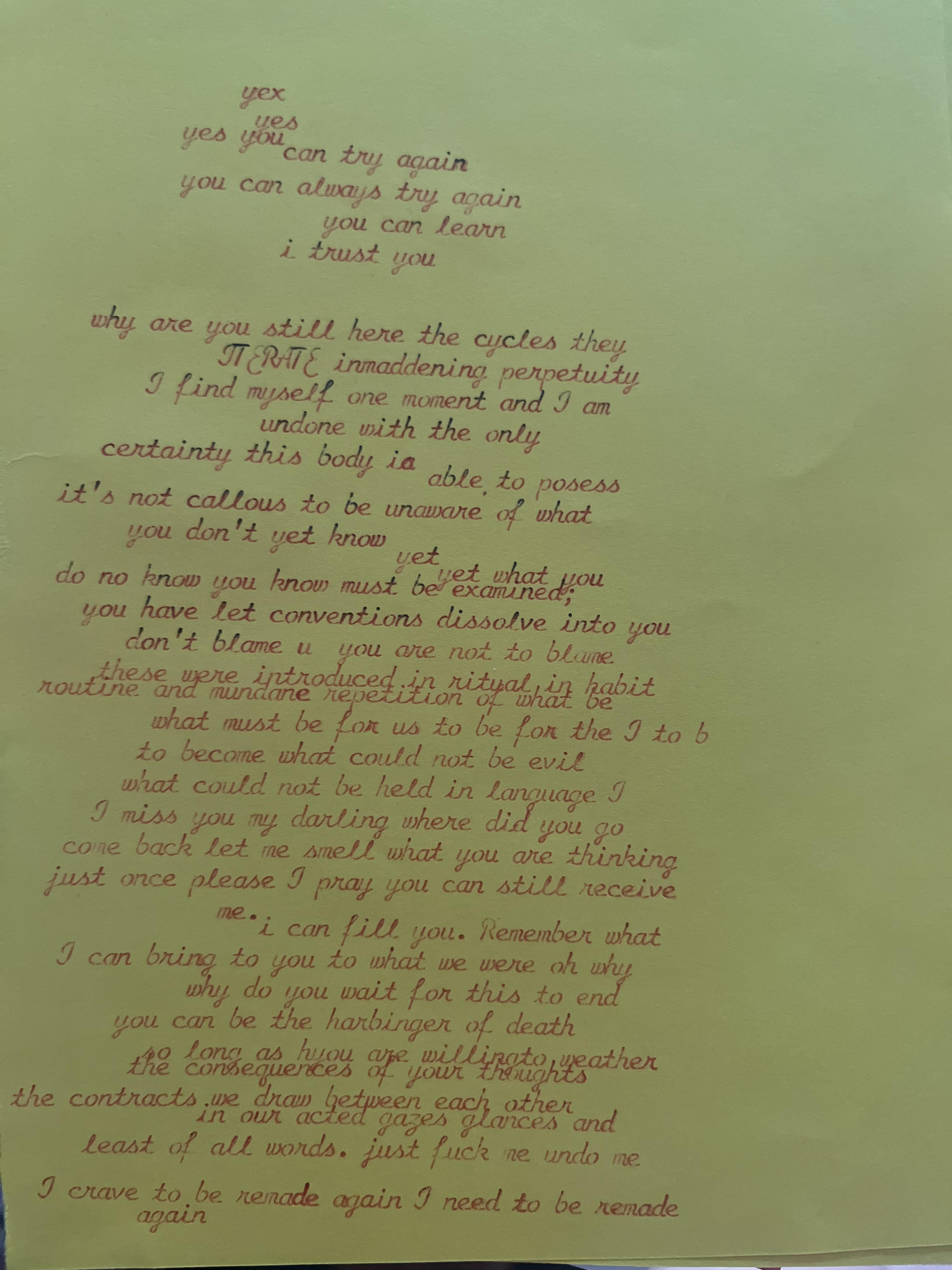
yex
yes
yes you
can try again
you can always try again
you can learn
i trust you


Why are you still here the cycles they
ITERATE inMaddening perpetuity
I find myself one moment and I am
undone with the only
certainty this body is
able to possess
it’s not callous to be unaware of what
you don’t yet know
yet
yet what you
do not know must be examined;
you have let conventions dissolve into you
don’t blame u
you are not to blame.

these were introduced in ritual in habit
routine and mundane repetition of what

must be for us to be
for the I to b
to become what could not be evil
what could not be held in language I


I miss you my darling where did you go
come back, let me smell what you are thinking
just this once please I pray you can still receive
me
i can fill you. Remember what
I can bring to you what we were oh why
why do you wait for this to end?
you can be the harbinger
so long as you are willing to weather
the consequences of your thoughts

the contracts we draw in between each other
in our shared gazes, glances,
and least of all, words. just fuck me undo me

I crave to be remade again I need to be remade again


Note from the artist:
This piece was originally done on a script typewriter my grandmother gave to me. She used to use it, now I do.


Quintessence is a multidisciplinary artist living in amiskwaciy, Treaty 6 territory on turtle island. They write, do fibre arts, host book clubs, and code, all Madly, all with care. @quin.tessence95

Image: 

Day in the life of a Middle-Eastern sapphic

The entire Middle East is quite lacking in terms of a Queer community, however it definitely isn’t lacking of any queers. Girls would often get caught making out in bathroom stalls in school, later getting reprimanded and having their parents called by the school secretary, biting their lips and twiddling their thumbs wondering if that moment of intimacy was worth it. Spoiler alert, it always is. Getting a slice of freedom in a world of traditions pie is such a wonderful thing to experience, especially when you are an Arab woman. What they don’t tell you is that separating girls and boys in school gives people the option to question their sexuality, it opens them up to the idea of, “What if? What if there was still love, and what if I am able to explore it with no limitations or boundaries?” Those rules were very ironic and clearly well thought out as if queer people didn’t exist.

Girls would often signal that they’re queer by cutting their hair short or pulling their hair into a messy half-bun, which has become an iconic style that screams gay and gives a sense of personal identity and expression of it. They would express themselves by joining a sport that gives them a feeling of who they are and a community similar to them, or maybe even try to rebel by leaning into a more punk rock category of lifestyle and clothing and maybe even ease into listening to some indie and Arabic music. Queer men, on the other hand, would often have to conceal their identities, as acting authentically as themselves would get them into trouble and cause harsh bullying in school. However, that doesn’t stop them from finding community and finding love eventually as our community is filled with strong people. Although it may be against the rules to be a part of the LGBTQIA+ community, we still find a way to plant our seed, grow and prosper with love and care.

I started my last semester of university in September before I chose to drop out. It shouldn’t be such a surprise as one of the last few things I remember is that I would skip classes to drink coffee and look for girls and guys. I would go to the sports building just to get some tea to sip on, as, well, it was truly the land of the dykes filled with gorgeous eye candies I could just stare at and some not so hidden couples I noticed. There would be couples and groups of friends sitting in the lockers room on the floor eating, Arabic hang out style. The first time I went to the locker room, I saw a lesbian feeding her butch girlfriend a sandwich, which was adorable. I felt envious, sick to my stomach. So I ended up joining the basketball team in search of a girlfriend. Although my lazy self only attended it for two days, it was a big commitment as basketball was always terrifying to me. It was filled with stunning tall girls, regardless of which team you decide to join, and I have always been so out of shape and unable to pull off sports, absolutely horrifying.

I spent most of my time in university walking around aimlessly, taking in the atmosphere and getting desserts and drinks for me and my friends. There would be some wholesome events such as mental health awareness and taking care of the environment. I would also make time for reading about queer activism and other politics, feminism and philosophy, sometimes indulging in playing video games. Arab society, although rich in culture, is plainly very boring. Everyone feels like they’re walking on eggshells with strict rules in regards to music, self-expression, politics, and religion. I find it very hard to make other Middle-Eastern friends since most of them hide behind a mask and don’t express interest in their hobbies or things that they find interesting. The culture here is prestigious yet shallow; oftentimes people’s topic of discussion is another person’s choice of clothing, way of talking, and just who they are as a whole. I pray that one day people learn that it's okay to be themselves and to know that it’s perfect being imperfect. However, until a day like that comes, we’ll be sipping coffee and discussing fashion trends.


Nujoom Al-Layali (she/her) is an agnostic Middle-Eastern expressionism and portrait artist, freestyle poet, and writer. With hopes and dreams in paving way for a non-judgemental future where people of all ethnic backgrounds, sexual identities, disabilities and faiths have a fair chance at living a life they truly desire and adore.

Image: 

Saturday at Clark Park

A Saturday night at Clark Park promises you will run into an ex, an ex-friend, a situationship or a paramour from the polycule that failed. Somehow I always end up there one way or another and thankfully this Saturday I was in luck, for the most part, up until the very end when the friend I dragged along saw an ex-friend of ours and ex-roommate of hers.

Anyway, the bowl of the park was packed with so many dykes and I admit I loved to see it despite the apprehension that hums under the chest when you stand in a crowd that mirrors your own longing. The bowl burst with that kind of charge only a queer fundraiser can hold, messy and hodgepodge, like a warm hug full of tension, you pick which kind of tension you like.

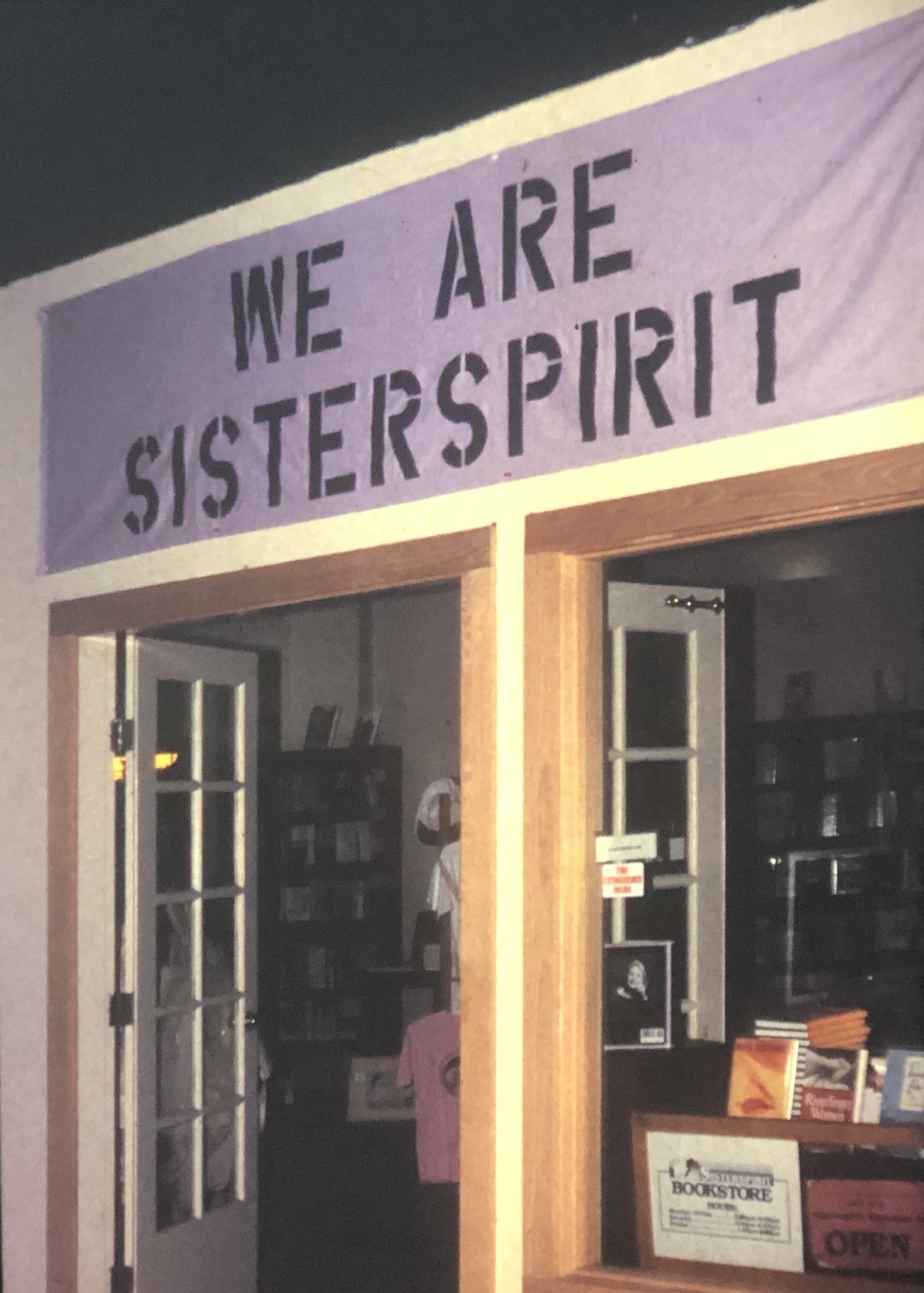
ScissorsPHL had called us together for a Gen Z–themed event to help a lesbian flee the country, and I showed up in solidarity, dressed like the patchwork of a thousand small rebellions. My classic leather moto jacket from Texas and the trusty black pants I’ve worn around the world, to concerts, events, and other gay activities, the ones with holes worn thin with time, were covered in self-sewn patches: “Clean Energy,” “Plant Seeds Not Bombs,” “Land Back,” and a few fresh Sinister Wisdom patches I’d ironed and stitched on before heading out. Thank you, Julie.

I tucked the rest of my stickers and patches into my pocket to hand out to cuties at the event because what’s a queer gathering without a little exchange of art and resistance. The space was pure lesbian performance energy, boisterous, tender, beautifully unhinged. Lesbians selling art, some in collars, others with blankets and chairs, most of us plopped right on the grass.

The night’s theme was a “Lesbian Performance Contest,” a challenge to whoever could embody the most performative lesbian-dyke essence. My favorites? A drag king who stripped and shook ass for a roaring crowd of about 150 lesbians, a hot femme with a backpack full of goodies, books, smokes, and the trusty strap, and the one that really got me hollering, a spunky butch who peeled off her shirt, dropped to the grass, and banged out a set of push-ups like it was the gayest bootcamp on earth (raise your hand if you too, have a fetish for women in uniform...)

I didn’t know whether I wanted to show her up or wrestle her right then and there. I enjoy a dirty pup and some beefy arms like no other, so you know I was cheering from the front, half laughing, half swooning.

The air felt like kinship, vibrant and joyful and defiant. We were all there for a cause, yes, but also to remember what it feels like to be together, to be seen, to be loud, to love every minute of it.

Sometimes it can be hard to reenter spaces like these and stay loud and proud. No matter the age, finding and building community is always a kind of labor, a journey of trial and error, a curation of boundaries and a widening toward new needs. I write this as proof to myself that I’ve done it and I will continue to persist. You can too, in action and in spirit, for our queer futures.

I love us,

Mel

P.S. If you’re in Philly swing by Marsha's on South Street! The First women-owned queer sports bar in the city, I was there opening night and wooweee is it a much needed vibe, hope I find my wife there!


Mel Oliver, is a Black Chahta-Indian Lesbian, Environmental Educator, Storyteller, and Healer who spends her time consuming sapphic media, serving community, gardening and hiking with her Carolina Dingo, Louie. She is also Sinister Wisdom's assistant event producer for 2025-2026!


Mel Oliver
Image: 

Master's Diaries No. 1 - Sappho, lesbian musicology, and nuns, oh my!

by Sydney Minor

Dear Sinister Wisdom readers,

Let me take a second to re-introduce myself. I’m Sydney, the Sinister Wisdom Blog’s Curator. As part of the blog’s reboot, I’ll be launching a monthly series about how my master’s in musicology is going (more on that later). If you’d like to start a recurring series of your own, feel free to email blog@sinisterwisdom.org, we’re still open to pitches and submissions!

I’m starting my master’s in musicology in a week. Actually, when this post goes live, it’ll be my move-in day. Wish me luck! I’m studying musicology with particular research interests in 20th-century opera, queer/feminist studies, horror, film, and how all those weird fun things can be intertwined. In this blog series, I might share a week in the life, an update on my dissertation, or dive into an interesting topic in queer musicology that I think you'd enjoy.

I thought a good place to start would be how I’ve been preparing over the summer to begin my master’s. A good portion of my summer has been spent researching: Sappho, lesbian musicology, and nuns, oh my!

What began as research for a Sinister Snapshot Featurette evolved into an article,then into a potential dissertation idea. Around July, I started looking into examples of lesbian poetry set to music. The most bountiful poet was Sappho, whose work has been set to music since the early 20th century. I spoke with our editor Julie, and she recommended I read Yopie Prins’ Victorian Sappho. The book went a bit over my head—I have no background in classics—but it turns out Prins also wrote an analysis of one of the pieces I was interested in. I devoured all this classical translation theory and started to think about how song cycles act as translations of text. In my opinion, research is most compelling when it intersects multiple art forms and disciplines. From there, I started thinking about how different musical settings of Sappho’s work depict lesbianism. Do they honor it, or distort it? I ended up writing an article for VAN Magazine about this, which came out last week. You can read it here.

The bad news is, once the article for VAN was accepted, I had to find another topic in lesbian musicology to write a Featurette on! During my Sappho research, I came across Elizabeth Wood’s Sapphonics, an academic article that asks, what makes music sapphic? I found it incredibly helpful and will most likely use it in my future research. It lays out a very clear framework for what can contribute to a lesbian essence in music. If you’re interested in learning more, check out my Featurette here.

Sapphonics comes from an anthology of queer musicology called Queering the Pitch. I’ve been slowly working my way through the book, taking notes and looking for further research inspiration. Another essay I found especially compelling was On a Lesbian Relationship with Music by Suzanne G. Cusick. Like Wood, she explores how lesbian sexuality can be understood through musicology, but her approach is more rooted in queer theory and politics than in musical analysis. Instead of proposing a specific lesbian aesthetic, she focuses on how the listener’s relationship with music can mirror a queer relationship.

What struck me most, though, was the essay’s form. It’s written as a personal essay, complete with anecdotes and first-person pronouns, something you don’t often see in academic writing. The topic itself also has a subversive edge. She poses questions like, how can a piece of music make love to you? Looking at the term “queer” from an etymological standpoint—meaning anything non-normative or deviant—the essay itself is queer, simply by rejecting traditional academic structure. I love this idea and would love to incorporate it more into my own writing.

The last part of my Summer Research Journey actually had nothing to do with music, but instead focused on nuns and the gothic. When I got access to my new university’s library system, it felt like Christmas morning. I suddenly had way more resources than I was used to, having gone to a conservatory for undergrad. I immediately began downloading books and articles related to my broader interests and stumbled upon Rethinking Gothic Transgressions of Gender and Sexuality. How interesting!

My undergraduate dissertation was on Strauss’ Salome (1905) and how it can be analyzed through the lens of Barbara Creed’s, “monstrous-feminine.” There’s a chance I’ll continue down this path for my diss, so the chapter titled From Gothic Heroines to Monstrous Prom Queens: Gender Horror in Dracula and Jennifer’s Body felt like a must-read. Honestly, nothing groundbreaking was said—queerness is transgressive and scary because it subverts the patriarchy, yes, we know—but it was still a fun read.

On a similar gothic note, I’ve been really into nuns lately. I’ve joked before that in a past life I was probably a sexually-repressed, closeted-nun, but that’s a story for another time. The nunsploitation genre—a film and literary subgenre portraying convents as hotbeds of lesbianism and perversion (ah, the horror!)—actually has a surprising amount of screentime in opera. There are many operas about nuns, including Suor Angelica (1917), Dialogues des Carmélites (1953), Sancta Susanna (1921), and The Fiery Angel (1927). I’m really interested in analyzing these operas through this lens, especially in terms of how the music contributes to the message.

I haven’t found much academic writing on this topic, so if you have any ideas or resources, I’d be extremely appreciative. Just email blog@sinisterwisdom.org!

That’s all for now, until next time, folks!

With love,
Sydney


References

Brett Wood Thomas’ Queering the Pitch

Barbara Creed’s The Monstrous-Feminine: Film, Feminism, Psychoanalysis

Rethinking Gothic Transgressions of Gender and Sexuality: New Directions in Gothic Studies edited by Sarah Faber and Kerstin-Anja

Salome (1905)

Suor Angelica (1917)

Dialogues des Carmelites (1953)

https:/Sancta Susanna (1921)

The Fiery Angel (1927)


Sydney Minor (she/her) is a New York-born, London-based writer and musician currently pursuing an MPhil in musicology at Cambridge. You can find more of her ramblings regarding music, art, and culture on her Substack, Salome’s Veil.

Image: 

“Would you go to the restroom with me, please?”

by Ellen D.B. Riggle, PhD

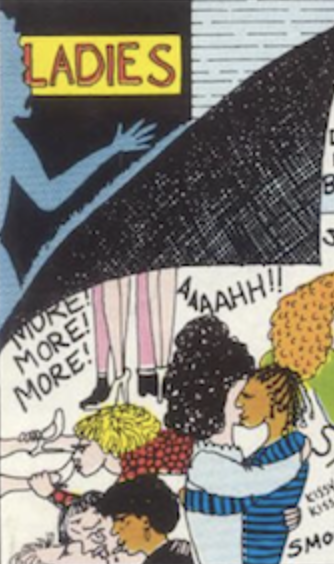
A meditation on the iconic three panel comic entitled Nature’s Call by Jennifer Camper*


Cred: Internet Archive, Gay Comix #7
A dozen women in a white tablecloth restaurant simultaneously inform their male companions that they are “off to the ladies' room.” Without needing to verbalize the request, these women begin a spontaneous mass migration.

I have long presumed that apparently straight women take one another with them to the restroom to get a break from tiresome male associates and check things for each other, like zippers and makeup. It has also occurred to me there is safety in numbers: the unspoken rule is ‘no woman left behind.’


The aforementioned straight women are found in the LADIES room in various couplings and throuplings having sex in a variety of creative positions leading to orgasmic exclamations!

This had not previously been one of my assumptions about why apparently straight women go to the restroom in pairs. I’m pretty sure the drawing is simply licentious comedic license—and it is a memorable visual (“ooohhh…aaahhh”).

As suggested in the second image, women who have sex with women may have sexual encounters in public restrooms. Television shows and movies, like The L Word and Vida, have popularized the notion of women getting it on in restroom stalls or perched precariously on lavatory sinks. As an advocate for sexual safety, I hope those sinks are well anchored to the tile wall.

I, personally, have never seen such scenes in women’s restrooms, not even in queer bars. (This is definitely NOT an invitation to send me your torrid toilet tales! Please don’t!) If I were to analyze the trope, I would say script writers use the grunge of a public restroom to suggest this a passion that just could not wait for soft sheets. The setting provides semi privacy for expressing uncontrollable desires, and adds to the intensity with a breathless, ‘will they get caught?’


A dozen men sit alone at tables in the restaurant wondering, “What do women do in there anyway?,” and grousing, “Damn, she’s been in there forever.”

Apparently, it bothers these men that women can be in a space out of their sight and their control. It’s as if they fear women are having an orgy without them, or, perhaps, that women are passing coded notes under the stall dividers plotting the demise of patriarchy.

The modern public restroom has always been a site of contention. The men at the tables verbally assail their absent female companions with projected anxieties. In real life, fearmongers whip up frightful frenzies by claiming voyeuristic and rapacious men will dress up as women to invade the LADIES room. These unrighteous narratives are wielded as a blunt weapon against transwomen, and catch gender nonconforming and masculine presenting female bodies in their broad snares.

As a gender non-conforming, masculine presenting person, I am currently forced to take a gender obviously-conforming woman with me to the restroom to avoid being attacked by riled-up ladies and their so-called protectors. These femmes provide an essential escort service. They are required to engage in constant lighthearted chatter with me, demonstrating that I am in no way a threat and I must, by association, be a female person despite outward appearance. The lip-sticked warriors must then stand stoic guard duty during my nature call until I exit the facility, unconfronted but not unscathed.

For reasons of public safety, for myself and others, I am an advocate for having a separate restroom, with a sign that is the sun and the moon and the stars, for the butch lesbians, dykes, tomboys, studs and bois, masc presenting women and queer folks, transwomen, transmasculine and trans folks, nonbinary, gender expansive and gender nonconforming people, and let’s not forget the drag royalty, where we can pee in peace. And check zippers and makeup. We all seem to get along just fine. And, when I say this out loud, all my cis straight women friends want to join us. A (rest)room of our own will be very joyfully crowded.


*“Nature’s Call,” by Jennifer Camper. Originally printed in Gay Comix #7, edited by Robert Triptow, Bob Ross, 1986. Reprinted in Dyke Strippers: Lesbian Cartoonists A to Z, edited by Roz Warren, Cleis Press, 1995. Jennifer Camper is a cartoonist and graphic artist living in New York City. https://www.jennifercamper.com/

Ellen D.B. Riggle, PhD, is an award-winning educator and author. Their essays and poems can be read in ADVANCE Journal, Does It Have Pockets, Earth's Daughters, Pegasus, Rise Up Review, Sinister Wisdom (forthcoming), and Writers Resist. They are also the author of over 100 academic articles and two books, and executive producer of the short documentary, Becoming Myself: Positive Trans & Nonbinary Identities (available on YouTube).

Image: 

A Week in the Life: Running a Queer Small Press

by Clare Lagomarsino

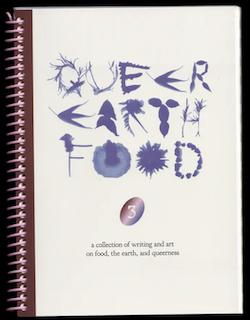
Hi! My name is Clare, and I run Combos Press. I started my press back in 2022 when I self-published an anthology, Queer Earth Food. Since, I’ve been publishing books on queerness, agriculture, food, and lesbian lives. I also have a full-time job in media, and I am currently planning our wedding with my fiancé. I’m about to enter a busy season of tabling at book fairs and finalizing two huge book projects, so I’m in heavy prep mode right now. This is a week in my life running Combos Press.

Monday, September 1
I just returned from a solo trip to Provincetown, and I am spending the day tying up some loose ends at Combos. Since it’s Labor Day, I have the day off of work at my media job. I devote a good chunk of time to finalizing some edits for an upcoming cookbook I’m publishing called Queering Mormon Cuisine. This book was pitched to me about a year ago, and currently we’re on the second round of edits. The author, Madi, spent all spring making changes to the manuscript of this book based on my first round of feedback, so the ball has been in my court this summer reviewing their edits. I’ve left some comments for Madi to review. Overall, it’s looking great.

Today also marks day one of the Bay Area Queer Zine Fest (BAQZF). I’m tabling virtually, which means that a link to my website has been published on BAQZF’s site and will be promoted on their Instagram. I’ve never done a virtual zine fest before. I’m hoping that some new folks find their way to my site and resonate with my work.

Tuesday, September 2
Today is a busy day. I’m back to work after the long weekend. Since I work fully remote, I’m able to dip out for quick errands during the day and spend my lunch breaks working on Combos.

This morning, I dip out to feed my neighbor’s cats while they’re away on vacation, and stop by the firehouse to vote in my town’s election. I live in a very small town in upstate New York’s Hudson Valley region; when I slipped my ballot in the machine it told me I was the 34th voter today! My last errand is to the post office to ship out Combos book orders. I’ve been shipping out orders for Burp, a new zine called on fermentation and queerness.

Back home, I knock out a ton of work for my day job, then in the evening I devote some time to responding to Combos emails. I’ve been putting out feelers with two UK-based writers for a new zine, but I’m not sure that anything will come of it just yet. I also responded to a photographer who had sent me an email approving some permissions that I asked for. I’m working on a new book called Nearest & Dearest: an anthology of dyke domesticity. It has turned out to be a beast of a project. One of our writers, Julia of the Dyke Domesticity Substack, wrote a piece for this project which will be accompanied by archival photography. After long discussions with the photographer and some essay edits, we’ve finally secured permission to print a handful of photos alongside Julia’s piece.

Another exciting email: I’ve been accepted to Staple + Stitch, an art book fair happening in Chicago this November! I respond immediately to let their team know that I’ll be there. This made me realize that I haven’t posted yet which fairs I’ll be at this fall on Instagram, and my fall book fair schedule is pretty locked down at this point. I text my friend Paris, an amazing graphic designer, to see if they are able to design me a little tour poster graphic. They get full creative freedom—I trust that whatever they design will turn out amazing.

Wednesday, September 3
After yesterday’s frenzy of errands and emails, today will be gentler for me. I have a full day of work, a therapy session, and a date with my fiancé Emily after work to finally put together the save-the-dates for our wedding. We’re getting married next year, and just received the save-the-date postcards we designed in the mail. We set up a little assembly line: I’m running envelopes through the printer so that I don’t have to handwrite everyone’s name and address, and she’s stuffing the postcards in the envelopes. I’m inviting some really special people that I’ve met through making books to our wedding; I feel so lucky to have made such close friendships doing Combos.

Before going to bed, I submit my table fee to the folks at Staple + Stitch. A half table costs $125, which is pretty standard for book fairs these days.

Thursday, September 4
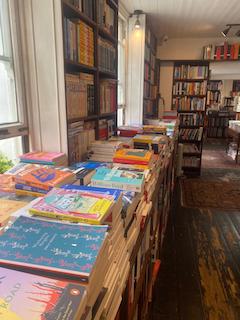
Now it’s confirmed that I’ll be in Chicago for Staple + Stitch this November, I can finally start booking all my travel and confirming other events related to some books I’ve published. I recently released a book called As Ever, Miriam by my brilliant friend Faythe. It was originally published by a Canadian press called OK Stamp, but I’ve picked up the second edition. Faythe has some programming coming up in Milwaukee this fall, and I’ve just confirmed a book talk at a bookstore in Madison, Wisconsin called A Room of One’s Own. It’s on my to-do list to send the events coordinator Iris the materials they need: Faythe’s bio and author photo, and a description of the book.

After taking some meetings at work, I book my hotel for Staple + Stitch, flights to and from Minneapolis for the Midwest Queer & Trans Zine Fest, and Amtrak tickets. I’m charging this to my business credit card—I’ll pay it off later once I’ve done the fairs and can earn the money back for all the travel. Usually I break even or make a tiny profit at these things, but it’s worth it for me to travel to new places and meet people that I otherwise wouldn’t have. Maybe some day I’ll make big bucks!

I realize that I had missed a call from my friend and Nearest & Dearest co-editor, Nina, the other day while working on save-the-dates with my fiancé. I call Nina back, and we chat for an hour on FaceTime. They’re at the New Mexico state fair and show me all the quilts in the art pavilion. Back when we were working on publishing their memoir Squelch, we used to talk on the phone for hours on end multiple times a week. It’s nice to catch up about life and the projects we’re working on.

Friday, September 5
I’m taking today off from Combos. I finish all my day job tasks, and then my fiancé and I are headed to a friend’s house for a pizza party. We belong to a little supper club here in the town we live in. Tonight it’s Nicole’s turn. She’s made pizza dough and prepared tons of toppings. Emily and I bring the ingredients for a blueberry cocktail and stay up chatting and eating with our friends until we all get tired.

Saturday, September 6
Emily usually works weekends, but she has the day off today. We plan to get bagels for lunch, then drive 2 hours to the Brimfield Antiques Flea Market in Massachusetts.

Before heading out, I stop by the post office to pop a check and our save-the-dates in the mail. I’m sending my friend and collaborator Tig a check. Tig made a zine called Playing in the Dirt that I published last year. The project has a mutual aid aspect: we’re redistributing profits from the sales of the zine to queer midwestern farmers. I’ve been holding on to all the profit that we’ve made, and since it’s almost the one year anniversary of the zine, Tig is finally launching a system to get the money out to farmers. The check is the $4k profit we’ve made in just under a year.

Paris texts me the Combos Press Fall Tour graphic. It’s perfect. I post it on Instagram immediately.

Sunday, September 7
I try to keep Sunday intentionally slow. I drop Emily off at work, pick up a birthday gift in town for my mom, and finish some chores around the house before sitting down at my computer to fire off a long email to Faythe. We’re traveling to the midwest together this fall for some book-related events. It’s been on my to-do list since booking my flights to write a detailed itinerary for her, just so she has it. I prepped my to-do list for the upcoming week as well: I have to book one last hotel, drop some boxes of books off at my storage unit, make the last payment on my accommodation in Pittsburgh for the upcoming Pittsburgh Art Book Fair, schedule updated Covid/flu shots, and make sure I’m stocked up on masks before heading into this busy fair season.

Clare is a publisher and designer based in the Hudson Valley region of New York. She is the founder of Combos Press. When she’s not reading or trying to track down a queer beekeeper to write a zine for Combos (please hit her up), she’s probably at a restaurant ordering a roast chicken.

Image: 

Pages

Subscribe to RSS - Avery's blog

"Empowerment comes from ideas."

Gloria Anzaldúa

“And the metaphorical lenses we choose are crucial, having the power to magnify, create better focus, and correct our vision.”
― Charlene Carruthers

"Your silence will not protect you."

Audre Lorde

“It’s revolutionary to connect with love”
— Tourmaline

"Gender is the poetry each of us makes out of the language we are taught."

― Leslie Feinberg

“The problem with the use of language of Revolution without praxis is that it promises to change everything while keeping everything the same. “
— Leila Raven