






Sinister Wisdom Newsletter
Login (ONLY for SW staff)


Review of The Safekeep by Yael van der Wouden
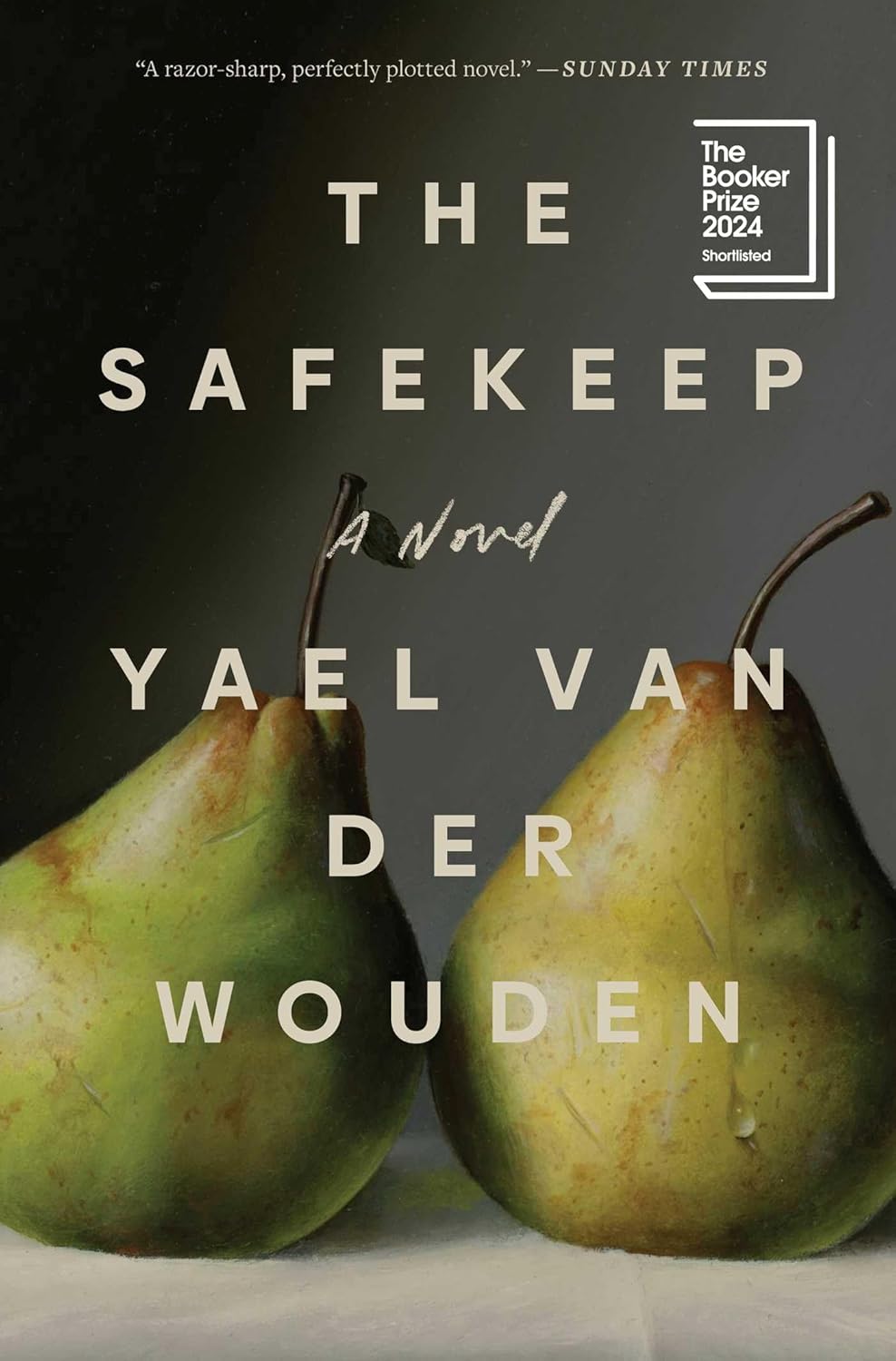
The Safekeep
Yael van der Wouden
Avid Reader Press, 2024, 272 pages
$18.99
Reviewed by Ruby Stefanucci
The Booker Prize 2024 shortlisted novel, The Safekeep, by Yael van der Wouden, is a visceral exploration of the relationships women hold, and the identity that keeps them tied to place. The novel, set fifteen years after World War II, follows Isabel (Isa), a reclusive young woman living alone at her family home, whose life is upended when her brother’s new girlfriend Eva must stay for the season. An exhilarating story unfolds in the summer heat as synergy between the two women unravels all that they know about themselves, and the spaces in which they exist.
The text navigates erotic desire and its development between Isa and Eva, who birth a new meaning of place through their relationship to one another. To achieve this, Van der Wouden traces the mundanity of sharing spaces, and heightens tension through the unbreakable obsession Isa has with Eva’s presence—her doing, her being, her existing. Attuned so deeply to the house, Isa cannot ignore the way Eva initially unsettles her. But as the novel continues, Eva rewrites Isa’s understanding of home, where “she would never leave a room again and not leave half of her behind” (258). The building of their relationship in the domestic space becomes a shared creation of queer space, moulded by them, rather than the circumstances that force them together.
For most of the text, queer desire is unspoken. It teeters on the edge of repulsion, on agitation and torment, as Isa feels antagonised and exposed by the mere presence of Eva intruding on her solitude. Yet, over pages of discovery and unbecoming, their relationship softly falls into a romance that they never intended to pursue. It becomes a vulnerable connection with an unwavering tension under the surface, right to the end—when an even greater connection, tying the pair, is revealed.
Yael van der Wouden masterfully crafts a protagonist deeply masked by her isolation, her demand for control, and her identity. Isa is intimately tied to the walls, furniture, windows, and crockery of the home. Left amongst the ruins of her family, the home becomes a space of obsession for Isa, to define her existence through order and possession. Eva, nonchalant, irreverent, and tantalising, is the antithesis to Isa’s comfort. Her presence disrupts Isa, who “had spent a whole life without this woman, without her in this house. . . And now her heart raced at the sound of tires on gravel. . .” (155).
The Safekeep does not shy away from confronting the aspects of social standing and gender roles that form the complexities of the characters. Isa and Eva, like Van der Wouden’s other characters, are layered. The lifestyle decisions of Isa’s brothers Louis and Hendrik, who are able to travel and philander, are privileges made possible by their status as Dutch men in a post-war world.
Their mobility contrasts the necessity of Isa’s attachment to the house “in the sense that she had nothing else, no other life than the house, but the house, by itself, did not belong to her” (33). Thus, Eva’s need to orchestrate and deceive in order to succeed in the world, as an unmarried queer woman.
Van der Wouden’s writing focuses on the intricacies of expression, dialogue, and circumstance that shape our relationship to spaces. The Safekeep ultimately follows two women softly becoming home to one another, a home crafted by their shared love and affection. The Safekeep left me reflecting on every word, every motif, every aspect of the writing, and is a uniquely brilliant work of literature that I will undoubtedly recommend.
Ruby Stefanucci (she/her) is currently based in Tarntanya/Adelaide, Australia. She completed a Bachelor of Arts degree with a double major in English and Classics, and was a fall 2024 intern with Sinister Wisdom. Ruby is a lover, writer, artist, and poet, but mainly just a girl in the world.
"Empowerment comes from ideas."
― Charlene Carruthers
"Your silence will not protect you."
— Tourmaline
"Gender is the poetry each of us makes out of the language we are taught."
— Leila Raven