






Sinister Wisdom Newsletter
Login (ONLY for SW staff)


Review of The Sea Gives Up the Dead by Molly Olguín
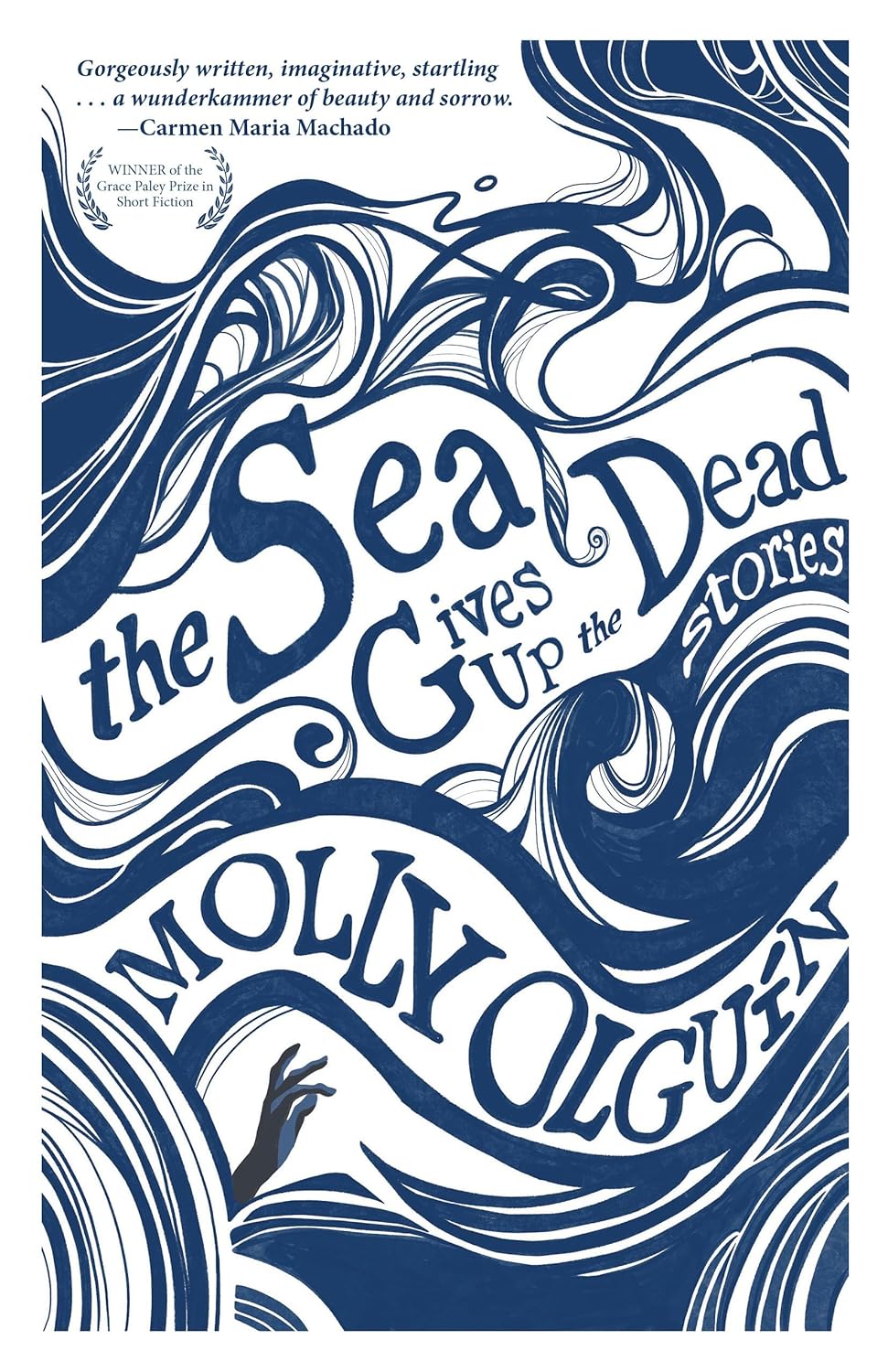
The Sea Gives Up the Dead
Molly Olguín
Red Hen Press, 2025, 152 pages
$16.95
Reviewed by Cheyenne Stone
Molly Olguín’s The Sea Gives Up the Dead is a haunting collection of short stories that examine death, grief, and identity. Her stories feature attempted murders, drownings, natural disasters, terminal illnesses, car accidents, the violence of war, and the human response to the aftermath of these losses. Above all, however, Olguín examines the grief that comes from a loss of identity—and the hope that comes from embracing it.
Olguín’s collection begins with a series of tragic horror stories, creating a sense of dread in her reader as she leaves off just before the final scene of a tragic ending. “Seven Deaths” promises that the cycle of revenge will continue despite the blood already shed. “Devils Also Believe” promises that a little girl’s mother will die of the flu, leaving her alone in the world. “The Princess Wants for Company” promises death for a still-living creature in order to retrieve the already deceased baby in its stomach. “The Undertaker’s Dogs” promises that death will come for a young puppy at the hands of a woman who has failed to find a natural maternal instinct for it or its now deceased siblings. Olguín litters her stories with tragedy but withholds the narrative’s final tragic event from the text, leaving readers haunted by what must come next. This narrative choice provokes a powerful sense of dread in the reader, creating horror more effective than what could be achieved through gruesome violence on the page.
However, Olguín’s collection isn’t all tragic endings. “honey from the rock” provides a short examination on how even the mundane can leave its mark on a person, exploring expectations and assumptions versus reality. “Clara Aguilera’s Holy Lungs,” “My Husband and Me,” “Small Monuments,” and “Esther and the Voice” each explore the ways we can be haunted by a loss, whether it be a sister, a younger self, the ex-girlfriend we regret refusing to marry, or a wife lost too soon. These middle stories are melancholy but gripping, delving into technology gone too far, fantastical faith and religion, and balancing grief, resentment, and forgiveness.
The final stories, “Captain America’s Missing Fingers,” “The Sea Gives Up the Dead,” and “Foam on the Waves,” bring the collection full circle, providing hope instead of tragedy, even as the stories are tinged with horror. Children disturbed by the violence of war reject an identification with the idealized notion of the noble American soldier. A mother who rejected and lost her son accepts and becomes reconciled with her daughter. A young girl refuses to commit a violent act and regains her voice, finding her heart’s desire as she creates her own identity. These stories show us what can be when what dies is our old, ill-fitting selves, our resentments, and our attachments to how we think things should be instead of how they could be. Olguín doesn’t show us these characters’ endings, the same as in her tragic stories, but the reader feels assured that their future is hopeful.
Reading this collection, what most interested me was Olguín’s exploration of identity. Many of the characters are struggling with their internal versus external identities, as normative assumptions about gender, class, and race have boxed them into roles that don’t seem to fit. Parents force their children to use names that don’t feel like their own. Women are expected to be natural nurturers and mothers, horror creeping into the story as they realize their lack of a real maternal instinct. A dead girl’s life is disregarded as she is sanctified in death, her afterimage as a holy saint more important than remembering who she actually was. These identities are ones imposed onto the characters despite their ill fit. The first several stories are tragic, one sad end after another as characters try to fit into the molds they’ve been placed in, and it is not until the characters begin to refuse these impositions that the endings begin to be more hopeful. The happy endings of “The Sea Gives Up the Dead” and “Foam on the Waves” are directly tied to a mother’s acceptance of her child’s gender identity and a young girl’s refusal to comply with her family’s heternormative expectations of her, respectively. Ending on these two stories, Olguín seems to suggest that the antidote to disappointment, anger, violence, and the tragedy they bring is acceptance of ourselves and others, allowing people to speak with their own voices and tell us who they are.
A tense, haunting, and mournful read, The Sea Gives Up the Dead is also at times hopeful and cathartic. The prose is dynamic and the characters are well-developed, compelling, strong personalities anchored in realistic problems and feelings, creating character-driven narratives that explore the intrinsically human—even if that exploration is set to a backdrop of dragons, futuristic AI cyborgs, or disembodied, breathing lungs.
Cheyenne Stone (she/her) is a writer and editor based in Huntsville, Alabama. She has a background in Shakespearean drama, queer literature, feminist criticism, and queer theory. Her research and creative works focus on understudied female characters and perspectives, events in queer history, and issues in gender and sexuality.
"Empowerment comes from ideas."
― Charlene Carruthers
"Your silence will not protect you."
— Tourmaline
"Gender is the poetry each of us makes out of the language we are taught."
— Leila Raven