






Sinister Wisdom Newsletter
Login (ONLY for SW staff)


Review of To the Moon and Back by Eliana Ramage
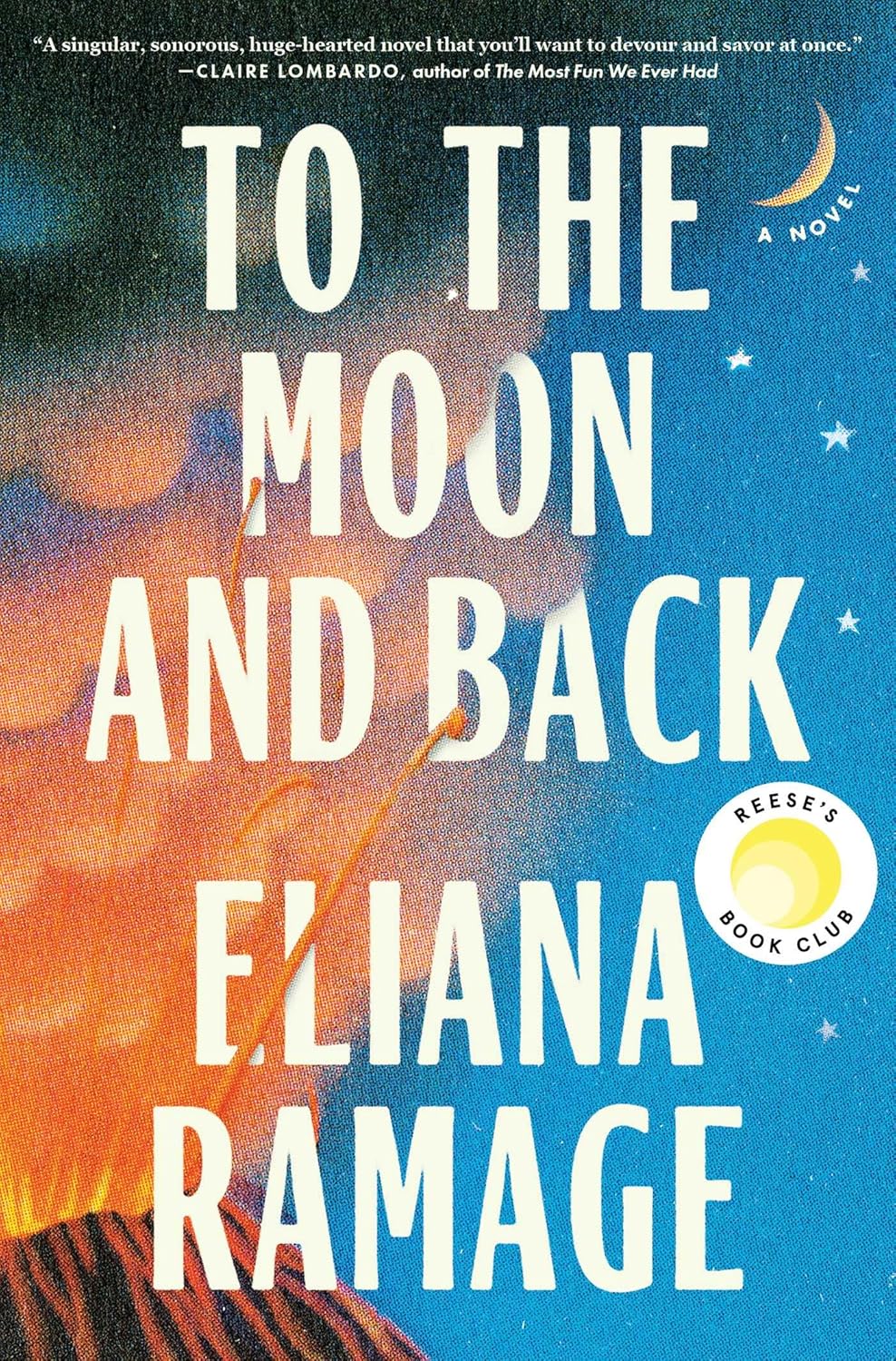
To the Moon and Back
Eliana Ramage
Avid Reader Press, 2025, 448 pages
$30.00
Reviewed by Sam Carter
To the Moon and Back by Eliana Ramage is an absolutely stunning novel following Steph Harper from adolescence to adulthood as she runs from the dissatisfaction of her life and toward the farthest possible destination—the moon. Largely beginning in the Cherokee Nation’s capital, Tahlequah, Oklahoma, Ramage’s debut novel spares no expense in taking readers on a journey spanning across geographies, time, and of course, space. As a sucker for messy and occasionally frustrating queer characters, To the Moon and Back offered all the sorrows and joys I was looking for. With NASA having just launched their first mission to the moon in over fifty years, there is no better time to dive into this book!
What to say about this novel that can possibly do it justice? To the Moon and Back is incredibly rich, holding a mirror to readers and characters alike and challenging us to reflect upon our pasts and how we’ve come to understand them. Particularly Steph, our lesbian lead, is fantastically messy and self-focused. As she moves throughout the story, every bit of resistance Steph faces is met with a greater assertion of control. Paralleling the incredibly strict guidelines to astronaut candidacy, Steph attempts to mold her life in the way she desperately wants it to be. Her near apathetic focus creates a shaky fabrication of reality at constant risk of collapse.
Ramage additionally foregrounds a number of other women throughout the story such as Steph’s sister Kayla, her mother Hannah, and her college girlfriend, Della, weaving together intersections and diversions regarding race, class, sexuality, and indigeneity among them. From those uncritically nostalgic toward their Cherokee heritage, to those who want nothing to do with it, to those who were divorced from their history and culture in infancy, Ramage displays an amalgamation of experience that never feels too convoluted or rushed.
Della is introduced to the novel near the end of Part One, bringing a refreshing narrative that contrasts Steph’s growing self-obsession. Della, separated from her Cherokee heritage by a challenge to the Indian Child Welfare Act (ICWA) when she was a baby, strives to reaffirm authority over her life. Enacted in 1978, the ICWA was a piece of legislation intended to disrupt the forceful separation of indigenous families and communities, granting tribes jurisdiction in the fostering and adoption of indigenous children. Della’s and Steph’s narratives immediately collide as they begin college, culminating in illuminating—if tragic—revelations for them both.
Overall, To the Moon and Back is about love and how we internalize and engage with our past in the present. Temporalities are not confined to a strict binary of good and bad, just as love is not isolated to a single notion of purity. Steph’s journey depicts the parallel and intersectional experience of life, in which one’s ambition can act as both a balm, and as a hubris-fuelled form of self-destruction. However, in engaging with the differing cultivations of our pasts, Ramage foregrounds the power of reflection, in which looking back can incite a future bettered by change.
Sam Carter is a butch archivist and MA student at University College Dublin in Ireland. When she’s not reading, you’ll find her listening to dreadfully loud rock music and wandering toward the beach. You can find her on instagram @sam.carter83.
"Empowerment comes from ideas."
― Charlene Carruthers
"Your silence will not protect you."
— Tourmaline
"Gender is the poetry each of us makes out of the language we are taught."
— Leila Raven