Baby Blue
Bim Eriksson, translated by Melissa Bowers
Fantagraphics, 2025, 264 pages
$29.99
Reviewed by Ash Lev
From Stockholm-based writer and illustrator Bim Eriksson, Baby Blue is a graphic novel that tells the story of Betty, a citizen of a dystopian, fascist society where human emotion is heavily policed, and the underground world of resistance she finds herself involved with after violating the rules of the regime. Translated from the original Swedish text by Melissa Bowers, this is the first of Eriksson’s works to be available in English.
In the world of Baby Blue, any and all expressions of sadness—crying in public, Googling “how to be happy,” or even listening to a Lorde song—are strictly prohibited. This law is enforced by Peacekeepers, a Gestapo-esque force that surveils and eventually detains Betty after a public emotional outburst. What follows is a scene that reads as only a slight exaggeration of how it feels to seek mental health support from medical professionals. As she fidgets anxiously with her hands, Betty is asked to describe how she feels in detail, where she significantly downplays the depressive symptoms she has been experiencing. When the nurse calls her out for lying, Betty is belittled, threatened with institutionalization, and eventually forced into a suspicious twelve-week “treatment program.” This is where she meets Berina, a charismatic member of the resistance who takes Betty under her wing and helps open her eyes to the truth of their world. With Berina’s guidance, Betty learns not only how to rebel against their fascist leaders, but how to accept herself, sadness and all. As someone who often struggles to find the value in my negative emotions, Betty’s character arc is something that really stuck with me. I also particularly enjoyed that the story is set in Sweden, which allows for the dystopia to be read as a twisted satirization of Nordic exceptionalism.
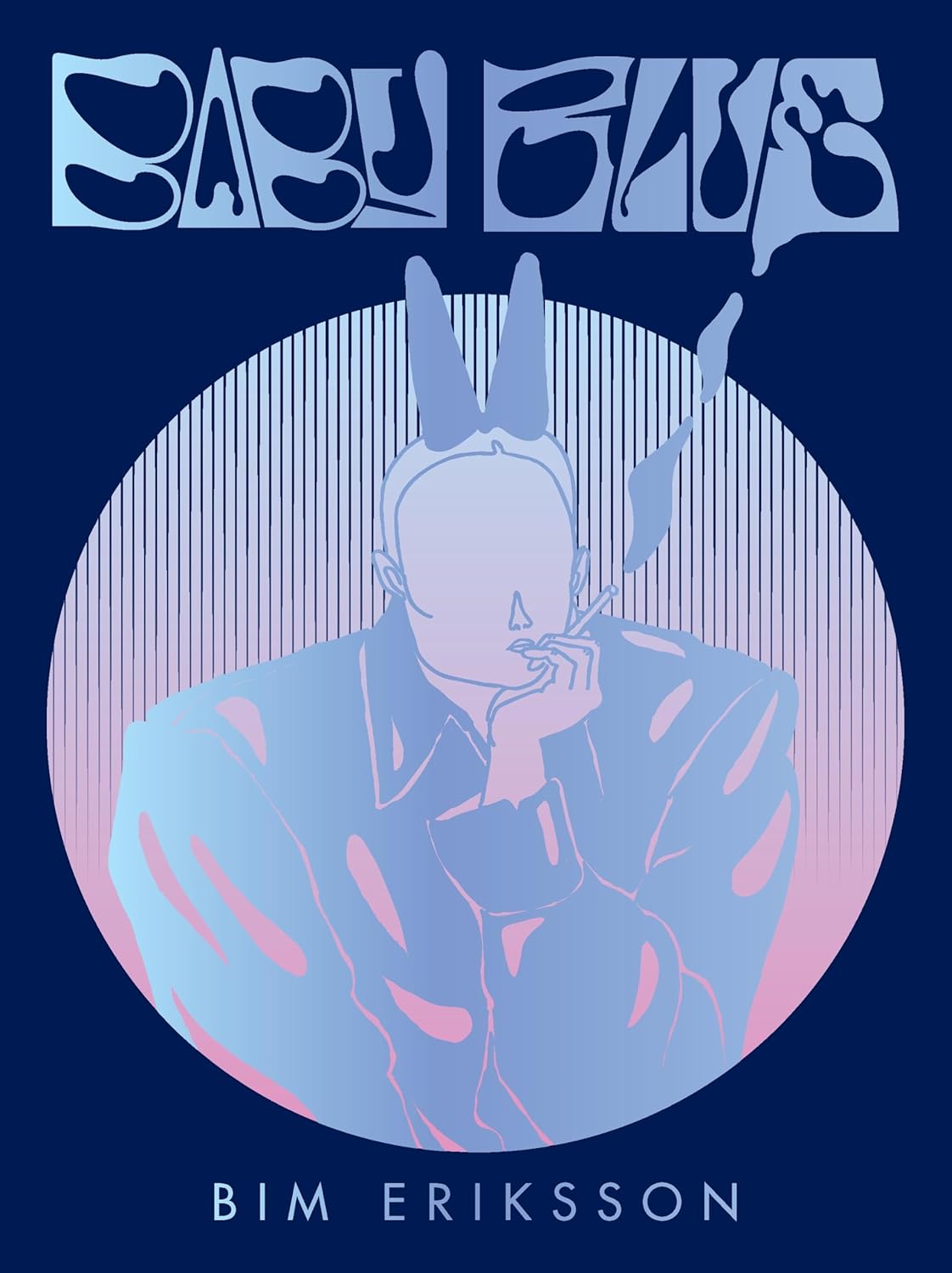
The standout feature of the graphic novel is by far its unique visual style. With blue-ink illustrations, Eriksson creates uncanny characters with huge bodies and tiny heads that wear facial expressions so detailed that they’re almost grotesque. These same characters blow heart-shaped puffs of cigarette smoke and do drugs that look like crushed-up emojis. The world of Baby Blue is decorated with massive advertisements, smiley faces, and feel-good newspaper headlines like “Here Comes the Sun” and “GDP Hits Record High!!” (20), all used in an attempt to numb and redirect the minds of its citizens away from their own suffering. What the illustrations lack in variety of colour, they make up for in spades with depth and texture, placing Betty’s minimalist but distinct character design in front of elaborately detailed backdrops that seem to directly point to how out-of-place she feels in her environment.
Eriksson’s graphic novel is an imaginative, absurd, visually striking, read-in-one-sitting type of book, and exactly the thing I needed to get me out of my recent reading slump. Baby Blue is an unfortunately relevant story of how fascism thrives on implicit submission, but a much-needed reminder that a better world is always worth fighting for.
Ash Lev is a butch writer and photo-based artist currently living in Tkaronto. In Ash’s free time, you’ll find him kissing his cats’ heads, overanalyzing TV shows, or contemplating grad school.