subscribedonate


fiction

Review of The Theme Park of Women’s Bodies by Maggie Cooper

The Theme Park of Women’s Bodies cover
The Theme Park of Women’s Bodies
Maggie Cooper
Bull City Press, 2024, 49 pages
$12.95

Reviewed by Catherine Horowitz

Maggie Cooper’s The Theme Park of Women’s Bodies is a short book of stories, or more accurately, portraits, of a wide variety of fictional environments formed around women. Each story is just a few pages long but depicts an intricate world that is vividly and beautifully imagined: a convent that specializes in making jams, a vast system of caves and the women exploring them, a ship of female pirates who leave their old lives behind, a lush, growing island formed by bodies. Although some stories have characters who develop and change, for the most part, it is entrancing enough just to watch each world unfold and discover its inner workings. It was with reluctance that I moved from story to story, wishing I could remain longer in each.

Cooper masterfully moves between genres, styles, and tones, with each story having a unique voice. Some stories are fantasies, some are dystopian, and some are more grounded in reality with hints of magic or the supernatural. Some read like fables, and some are blunt and conversational. The overall effect is a rich and rewarding reading experience that kept me excited to see what would come next.

Often, one brief detail adds a huge amount of depth and imagery to a story. I found these details often—details like the mention of a cathedral ceiling in “The Cure,” which introduced a huge amount of new context and implications, or a brief remark made by a jaded tour guide at the end of the titular story, which flipped my perception of how much of the tour was officially sanctioned and how much was just commentary. These worlds easily stretch beyond the limits of the pages and raise many unanswered questions, creating opportunities to think more deeply about each story after reading. In this way, The Theme Park of Women’s Bodies is an immensely rewarding and thought-provoking read.

What is The Theme Park of Women’s Bodies trying to say, though? The blurb on the back of the book indicates an intention to “point to the ways that narrowly defined femininity feeds exploitation and violence, inviting readers to consider the breadth of ‘woman’ as a category with a wide-ranging history, present, and future.” This is most successful in “The City,” which at first presents a society of women that seems almost utopian but gradually reveals its limitations and narrow, exclusionary nature, as well as a bit of context about the outside world. Without giving too much away, this story deals with queerness in a way that is interesting and unexpected and leads to more speculation once the story ends.

Of the other stories that more overtly address the theme of narrowly defining femininity and the harm this causes, many depict environments where women are reduced to the acts of giving birth and raising children and where those who don’t—or can’t—face consequences. Other stories center on the harm and exploitation women uniquely face and depict environments that harness this exploitation for a variety of purposes. For the most part, though, these themes aren’t explored in a particularly innovative way or one that differs from other media that addresses these same ideas. Like “The City,” many allude to or overtly address queerness with a broader understanding of the category of ‘woman’ than this book’s older counterparts. However, the motif of queerness generally isn’t factored into the plot or worlds in a significant way—for the most part, it often feels like an added detail without which the story could have easily existed.

But in the end, nothing detracts from what makes The Theme Park of Women’s Bodies a truly memorable, intriguing, and beautifully-written read. What will stay with you is the sticky feeling of jam and sun in vineyards, the dark, damp echo of an ancient cave, the creak of limbs twisting into a tree, the sulfurous scent of a pool of water, and the taste of a red cherry shake.


Catherine Horowitz is a writer and educator living in Washington, D.C. She earned a B.A. in English and Jewish Studies from Oberlin College. You can find her other work in Bright Wall/Dark Room, New Voices, and the Jewish Women’s Archive. She has previously worked with Sinister Wisdom on A Sturdy Yes of People: Selected Writings by Joan Nestle.

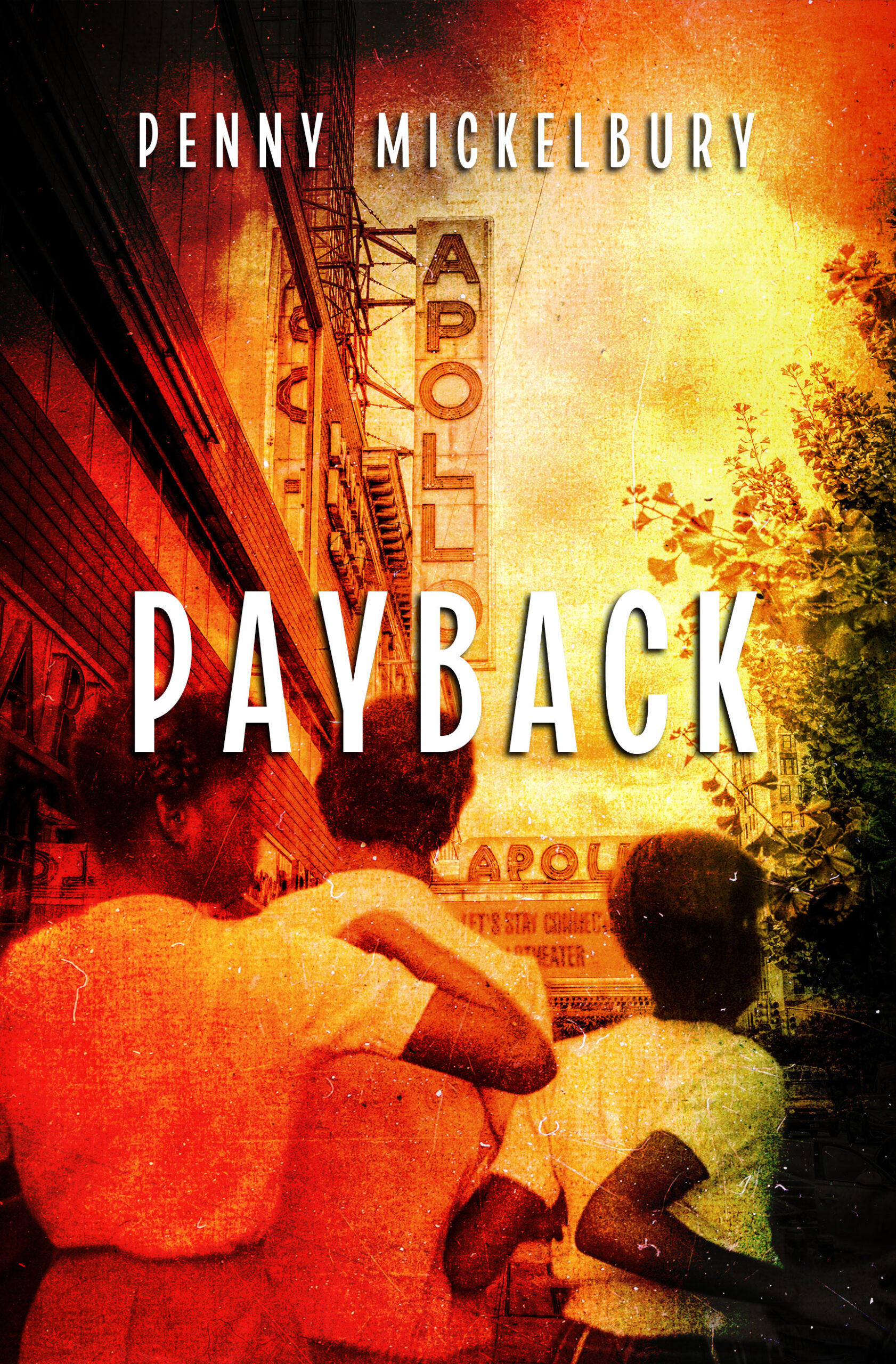
Review of Payback by Penny Mickelbury

Payback cover
Payback
Penny Mickelbury
Bywater Books, 2025, 436 pages
$23.95

Reviewed by Judith Katz

Penny Mickelbury’s fifteenth novel is a switch from her well-loved detective fiction and a foray into the historical. Payback is a jam-packed, fast-moving story of gay Black life in Harlem in the early 1950s.

Mickelbury’s background as a playwright is in full view here, as Payback’s rich cast of characters drive this fast-paced story. The lead player is Elleanor Roberta “Bobbie” Hilliard, a handsome, no-nonsense butch. She not only works the bar at her Black-women-only night club, the Slow Drag—she owns the building and one or two others. Her generosity and street smarts are apparent as soon as we meet her—dressed to the nines in high butch drag, she rescues a young gay man from a bashing, brings him home, and from that point on makes him her fast friend and unofficial little brother. In short order we also learn that Bobbie has provided a livelihood for her dear friend Jack—a woman who has survived a gang rape and a beating—by employing her as a driver. She has also provided fair and decent employment for all the women who work in her club.

Central to Mickelbury’s story is Bobbie’s romance with alluring femme Grace Hannon. Grace is an accomplished OB-GYN at Harlem Hospital, beloved by her patients and nurses, and put upon by her disrespectful white male colleagues. And while we readers spend a good amount of time with Bobbie and Grace together—eating Grace’s wonderful cooking or munching on burgers from the local joint; luxuriating in satin pajamas in a beautifully made bed; or throwing fabulous parties, the two are more than just a socializing power couple. Grace is called on repeatedly to aid a battered woman and Bobbie is always ready to take part in a protest or jump in with a crowbar when some eponymous payback is needed.

The historical people and places who make cameos in Payback add to the richness Mickelbury has created here. In addition to her entrepreneurial and fisticuffs skills, Bobbie is a talented pianist and an early supporter of Black Mask, an evolving arts organization in Harlem. Notorious, real-life gangster and madame, Stephanie St. Clair, makes multiple heroic appearances and forges an unlikely community alliance.

The combination of Mickelbury’s skilled storytelling and complex characters makes Payback a rich, fast-moving, feminist adventure—as satisfying as one of Dr. Grace Hannon’s legendary meals, and as generous and open-hearted as Bobbie Hilliard herself.


Judith Katz is the author of two novels, The Escape Artist and Running Fiercely Toward a High Thin Sound, which won the 1992 Lambda Literary Award for Best Lesbian Fiction. She is currently working on sequels to both novels, and is still meditating on her novel in a drawer, The Atomic Age.

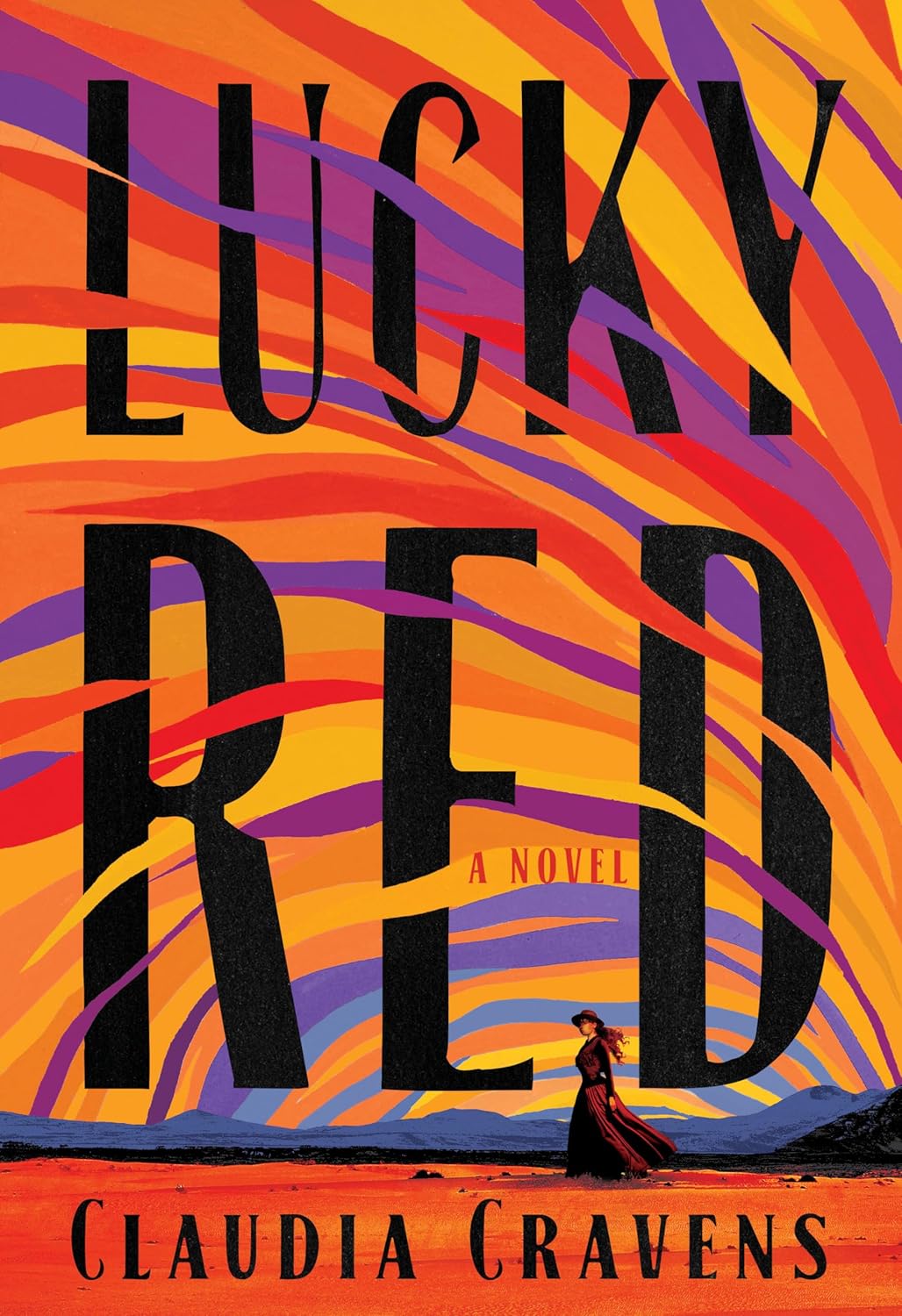
Review of Lucky Red by Claudia Cravens

Lucky Red cover
Lucky Red
Claudia Cravens
Dial Press Trade Paperback, 2024, 320 pages
$18.00

Reviewed by Catherine Horowitz

According to author Claudia Cravens, Lucky Red was inspired by the “limited menu” of character archetypes in Westerns, like the “mysterious stranger who rides into town” and the “hooker with a heart of gold.” Lucky Red plays with, and in many ways inverts, these tropes. The hooker is the protagonist, Bridget, and the center of her own adventure, instead of contributing to someone else’s. Bridget is a young girl who finds herself orphaned, far from home, and with no money in the semi-fictional town of Dodge, Kansas. There, she finds work at the only female-run brothel in town, the Buffalo Queen, where she meets a variety of characters and finds herself in the center of trouble more than once.

Lucky Red centers on Bridget’s relationships: with Spartan Lee, a female gunfighter who brings a notorious criminal into town for his trial; Jim Bonnie, Dodge’s deputy sheriff; and her fellow workers. Jim initially has an arrangement with the Buffalo Queen’s owners to spend time with Bridget for free in return for providing security. However, over time, he falls in love with Bridget and asks her to marry him, which she ultimately declines because, well, she’s gay. She has various infatuations with women at the Buffalo Queen, first Sallie, an out-of-town friend of one of the owners, and then Spartan, who makes a similar deal to Jim—time with Bridget in exchange for elevating the Queen’s image through association.

Bridget’s romance with Spartan escalates quickly: it begins as a few brief interactions, then a drunken tryst on a night off, and then sanctioned sexual encounters that mean far more to Bridget than those with her regular patrons. I can’t say it’s unrealistic for gay girls to get swept up in their first “relationship” so quickly and act recklessly because of it. However, as a reader, I felt like a frustrated friend on the sidelines, totally unconvinced by their relationship. It seemed far too rushed to warrant Bridget’s extreme feelings and actions. Bridget’s relationship with Jim was much more well-developed, with more time to grow and a real rapport between the characters.

This wasn’t the only frustrating part of Lucky Red; Bridget is often a frustrating character and can be difficult to root for. She is naive and impulsive, which is part of her initial charm to the Buffalo Queen’s owners and patrons. However, her immaturity often leads to trouble and sometimes unintentionally wrongs people. In the end (spoiler alert), one of these people returns for revenge and, with Spartan’s help, robs the Buffalo Queen—which they get away with because of a lack of security. Almost every element of this betrayal was inadvertently caused by Bridget, from trusting Spartan too easily to losing the security Jim once provided. However, as is a pattern throughout the book, she doesn’t realize her fault in this when it happens.

In the end, though, Lucky Red was satisfying. While I thought Bridget and Spartan’s relationship would end with a literal “riding off into the sunset” moment, I was surprised to see it plummet into disaster in a way that made far more sense—and is more realistic for a first whirlwind lesbian love. Bridget hunts down Spartan, helps take back the stolen money, and kills her in an epic showdown. This was a sort of redemption for Bridget, who proved that she could recognize and begin to learn from her mistakes. I can’t help but hope everything works out for her.

There are other great parts of Lucky Red, too. The worldbuilding of Dodge is full and vivid, true to the lively atmosphere of the Western genre. It has a fun array of side characters whom I grew to genuinely like and some twists and turns that are hard to anticipate. And ultimately, Bridget is a complex character, and for a book with a goal of reimagining the Western genre and bringing new depth to a two-dimensional archetype, that is an achievement.


Catherine Horowitz is a writer and educator living in Washington, D.C. She earned a B.A. in English and Jewish Studies from Oberlin College. You can find her other work in Bright Wall/Dark Room, New Voices, and the Jewish Women’s Archive. She has previously worked with Sinister Wisdom on A Sturdy Yes of People: Selected Writings by Joan Nestle.

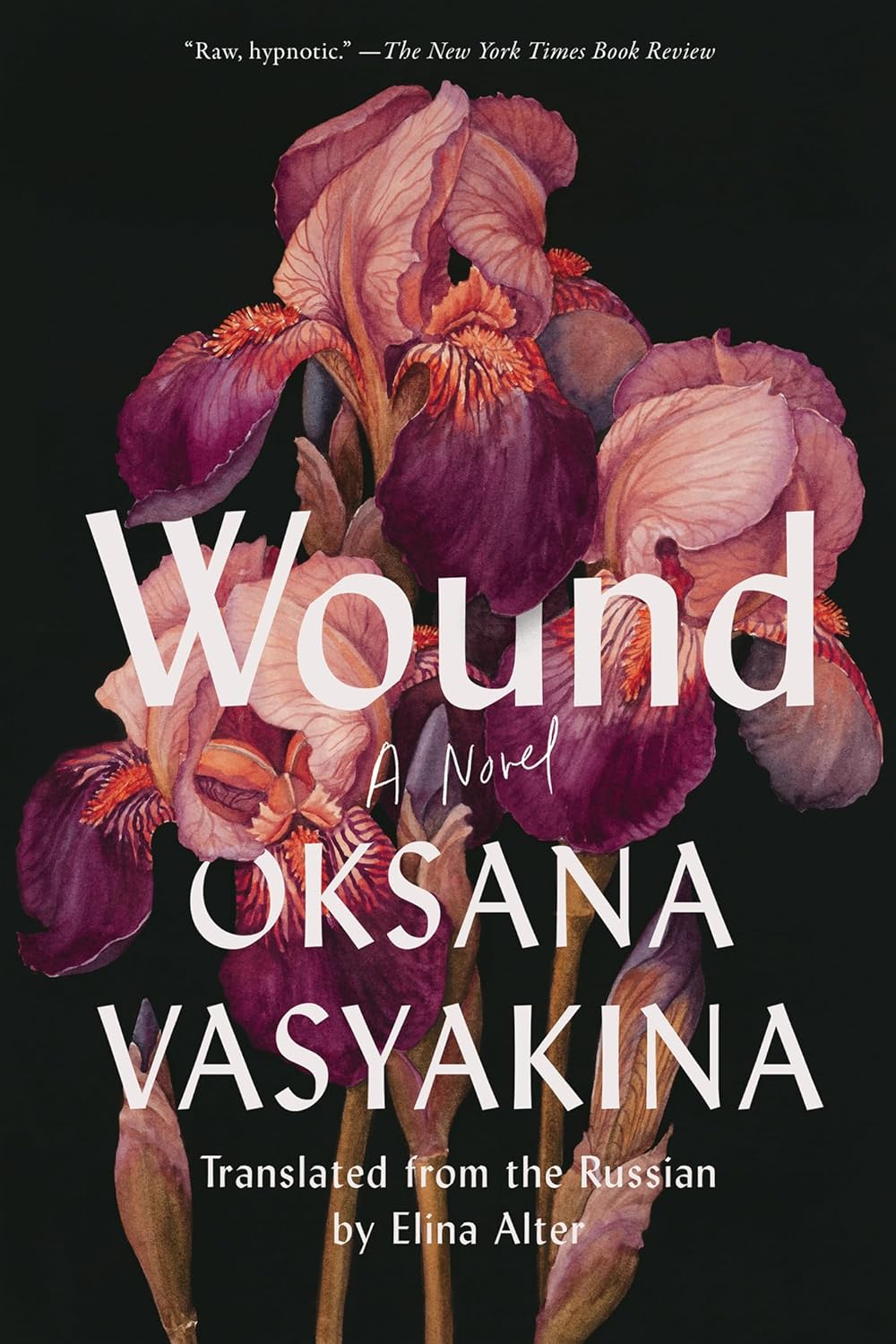
Review of Wound by Oksana Vasyakina, translated by Elina Alter

Wound cover
Wound
Oksana Vasyakina, translated by Elina Alter
Catapult, 2024, 240 pages
$16.95

Reviewed by Bailey Hosfelt

The plot of Wound is straightforward: a lesbian poet retrieves her mother’s ashes in the industrial steppe city of Volzhsky, returns to a life adrift in Moscow, and travels back to the small Siberian town of Ust-Ilimsk to inter her ashes. However, what unfolds over the two-month journey is more complex; the narrator, an autofictional version of Oksana, meditates on grief, memory, and fraught mother-daughter dynamics while reconciling her sexuality, place in Russian society, and identity as an artist.

The impetus for the narrative, on the surface, is the mother’s illness from breast cancer. The narrator chronicles the new patterns of life while her mother’s body was shutting down. She lived in her mother’s apartment, slept head-to-feet each night, diligently emptied and sanitized a bedpan, and noticed the space’s changing odor. The narrator secured her mother a place in hospice for her final days, identified her body in the morgue, and began the logistically complicated process of laying her to rest. Yet, her mother’s death is not the original wound. Rather, it reopens one scabbed over but never fully healed: “The wound is there not because she didn’t survive, but because she existed at all” (21).

A single mother and factory worker, she had a series of abusive relationships with men who exposed both women to violence growing up. Despite her mother’s harsh exterior—undeniably shaped by the Russian political context in which she lived—and inability to show affection, the narrator still describes her mother with love and longing. She reflects: “I felt my mother as a space. A matrix. A place. After her death this place disappeared. The world itself didn’t disappear, but the complex symbolic network that had allowed me to orient myself using my surroundings was gone” (66).

Anxiously journeying far distances with an egg-shaped urn and confronting the simultaneously bureaucratic and painful nature of death, the narrator grapples with childhood memories, generational trauma, and her lesbian identity—putting each under a microscope and examining the intricate ways they connect.

The novel is deeply introspective and fragmented, weaving together personal experience with broader reflections on art, literature, philosophy, and theory. The hybrid structure allows Vasyakina to analyze the relationships between mother and daughter, artist and art in a distinct manner—one that compares to the literature of Maggie Nelson and Maria Stepanova, among others. Prose breaks into free verse and essay-like asides. References to Louise Bourgeois, Hélène Cixous, Monique Wittig, Susan Sontag, and the ​​Greek myth of Philomela ground Wound in a broader feminist tradition. While evocative, these elements sometimes disrupt the narrative’s overarching flow and might not resonate with readers who prefer a more traditional structure. Nevertheless, this approach mirrors the nonlinear nature of grief—where past and present blur and coherence feels increasingly elusive.

Vasyakina’s exploration of queerness stands out, particularly at a time when LGBTQ+ “propaganda” is now illegal in Russia. The author illuminates prejudiced rhetoric in an opening scene where, en route to collect her mother’s ashes, distant acquaintances lament “those queers” in the West, “prancing around in sparkly underwear” and believe sex education should be replaced with teaching kindergarteners how to hold a Kalashnikov rifle to prepare for potential wars instead (9). The narrator asks them to be quiet, given the occasion, and only later do readers learn she has a wife in Moscow.

Throughout the novel, the narrator voices her internalized homophobia, a belief she must disentangle as she ages. What she first experiences as the erotic, expansive excitement she felt gazing at another girl’s body—“It was all like a tender lozenge that I wanted to put in my mouth” (64)—the narrator later regards as frightening: “In the bathroom I undressed. On the gusset of the underwear I’d bought specifically for travel shone a large clear spot. I felt hurt by myself. . . In little Ust-Ilimsk lesbians did not exist” (94).

Although she vocalizes her initial confusion and shame, she later reconciles and confidently embodies her lesbian identity, despite the challenges it creates for her in Russian society which renders her as “half-woman” or “half-person.” An attractive butch in a club has a gaze like a key that makes her want to “go limp and open” (95). Later, she describes her wife as “a complex, rich landscape” with a “warm, wide gaze that gathers me into itself as though I were a tiny insect and her gaze a drop of oozing warm honey” (138); she feels such affection for her that the world “trembles and transforms” (198).

While Vasyakina should be commended for writing as a lesbian so openly (and autobiographically) when doing so in Russia is increasingly dangerous, her narrator has a darker side worth examining. She is abrasive, flawed, and, at times, deeply unsettling. An early reference to a former girlfriend accusing her of rape is particularly jarring, especially as it is never revisited; instead, she attempts to absolve herself, citing that consent was not part of the culture at the time. This is particularly striking in a novel that otherwise circles back to past behaviors, examining them with increasing clarity and perspective.

Despite its looser narrative structure, Wound is ultimately a raw and deeply affecting narrative. Vasyakina acknowledges that the novel’s meandering nature is by design; the narrator reflects that she is deliberately putting off writing the story’s end because “once I finish the book, the wound will close” (199).

While the world continues to live on after death, Vasyakina notes grief’s unresolved nature: “Our great voyage, mine and Mama’s, from Volzhsky to Ust-Ilimsk was essentially over. But it keeps unfolding inside of me. Like a long road in the night” (222).

In a novel that so closely dissects the mother-daughter dynamic, it is fitting that its narrator addresses the last few pages directly to her mother. While her mother could never say “I love you” to her daughter, the narrator says it to her mother, believing their language is not so different after all, and her mother will finally understand.


Bailey Hosfelt is a lesbian writer and freelance contributor to Sinister Wisdom. She graduated in 2024 with a master’s degree in gender and women’s studies from UW–Madison, where she wrote a thesis on Dyke TV and queer activist infrastructure. Previously, Bailey lived in Brooklyn, New York and worked as a journalist for local newspapers. Bailey lives in Chicago with her partner and their two cats, Hilma and Lieutenant Governor.


Review of Wild Geese by Soula Emmanuel

Wild Geese cover
Wild Geese
Soula Emmanuel
The Feminist Press, 2023, 240 pages
$17.95

Reviewed by Courtney Heidorn

There is a reason why seeing geese fly alone is rare—geese are community-oriented creatures. In Wild Geese, Soula Emmanuel employs a goose motif that mirrors the protagonist, Phoebe, and her evolution from solitude to being in community with herself and the world. The 2023 novel won several awards, including the 2024 Lambda Literary Award for Transgender Fiction. It is no surprise Emmanuel’s debut novel gained such accolades: Wild Geese grapples with the deep human longing for connection and explores how one can evade loneliness in such a diverse, globalized world.

Wild Geese opens with a solitary Phoebe, living in her professor’s sublet apartment in Copenhagen, where her only friend is a stinky ten-year-old bichon frisé. As voice-driven as Wild Geese is, Phoebe’s voice has failed to penetrate where it matters: with others. Phoebe’s life is simple and lonely; she admits, “And that is what I need: to be seen but not remembered” (9). Phoebe feels at home in her post-transition body and mind but not necessarily in the world. Emmanuel’s engaging first-person prose gives readers an image of a currently stagnant protagonist, but one who is ripe for growth. It is exciting to watch Phoebe be forced to make herself known to others and join the V-formation of the world.

Emmanuel’s decision to make Wild Geese a novel surrounding homesickness is intentional: Phoebe is not only a stranger to others but also a stranger to her setting. Phoebe’s home is in Ireland, but she geographically relegates herself to a reality of distance and disconnection. Instead of migrating for self-discovery, Phoebe is stuck in the lonely loop of escapism. Everything changes, however, when Phoebe’s ex from before her transition, Grace, spontaneously shows up on her doorstep. Fiery and spontaneous, Grace’s character is the perfect foil to Phoebe’s cool and reticent exterior. Phoebe must deal with the past now.

A nod to the novel’s title, Grace and Phoebe witness a flock of geese fly over them, “impertinent and uncaring. The sound of their squalls is distorted by distance, so it resembles the corrugated wheeze of an old alarm clock. . . Grace looks skyward. . . she seems to cast not merely her gaze but her entire being towards the birds. ‘Look at them go,’ she says. ‘So free’ ” (51). Geese migrate seasonally, but only to places that fit their needs. Phoebe is unable to experience this intentional migration due to her solitary life, but Grace changes things. She awakens a part of Phoebe that she buried in the past: the feeling of being truly known. Phoebe admits, “I know her, and she knows me. I am known” (227).

Wild Geese is a feminist novel. It is not forthright about politics or misogyny—the book is far from didactic. But Emmanuel’s prose is clear about one thing: being a woman is to be in community. It celebrates women who pull each other out of a solitary hole. Wild Geese holds women as beings with multitudes: to be a woman is to be ‘several,’ to be held ‘severally,’ and to “focus on the small things of life, to view each day as a site of exploit, as beginning and end and everything else” (229).


Courtney Heidorn (she/they) holds a BA in English and Creative Writing and is an Assistant Editor at Chestnut Review. You can see more of their work in their chapbook, Palimpsest, from Bottlecap Press and at CURIOUS Magazine and Pearl Press.

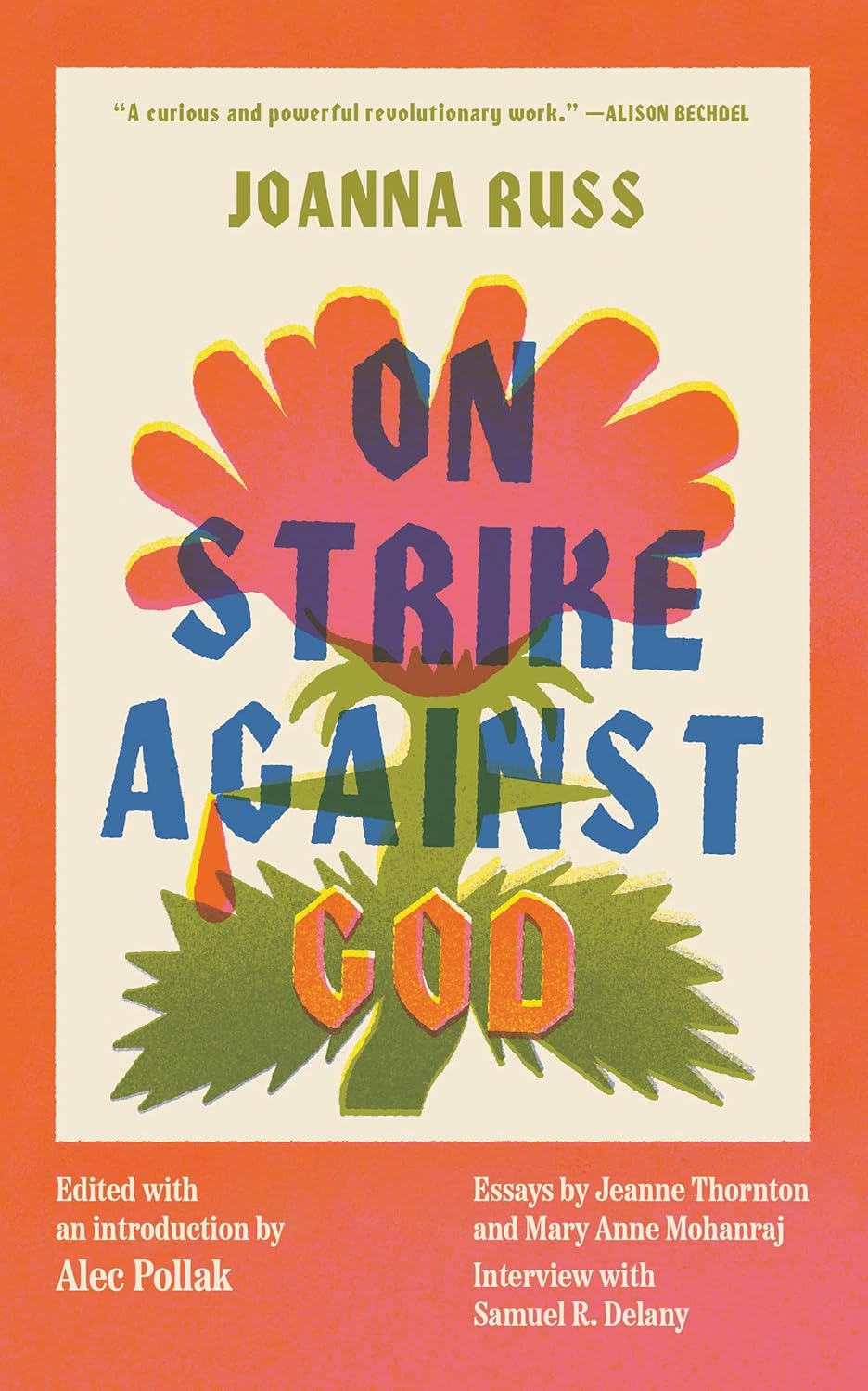
Review of On Strike Against God by Joanna Russ, edited by Alec Pollak

On Strike Against God cover
On Strike Against God
Joanna Russ, edited by Alec Pollak
The Feminist Press, 2024, 309 pages
$17.95

Reviewed by Bailey Hosfelt

On Strike Against God by Joanna Russ has long been relegated to outlier status in the acclaimed feminist science fiction writer’s broader oeuvre. Originally published in 1980, the work went out of print after its 1987 reissue and remained lost to contemporary readers until 2024, save for those who managed to acquire a second-hand copy.

The new edition from The Feminist Press asserts that On Strike is integral to Russ’s literary canon, not marginal. In addition to the book itself, this edition includes an introduction from editor Alec Pollak, essays by Jeanne Thornton and Mary Anne Mohanraj, an interview with Samuel R. Delany, correspondence between Russ and Marilyn Hacker, and archival material, including alternate endings of the book.

While these elements provide critical historical, cultural, and literary insight into the long-overlooked text, it is ultimately Russ’s voice that stands out. A tour de force work of fiction—undoubtedly drawn from Russ’s own experience, as the paratext highlights—On Strike is equal parts rage against the machine and a vulnerable study of the courage necessary to let one’s guard down and come fully alive. This makes it essential, luminescent lesbian fiction for anyone who has articulated and embodied a language they once feared was impossible, especially those just beginning to cross its threshold.

Aptly described by Pollak as Russ’s “attempt to be brave right now” (9), On Strike presents the possibility of love between two women without the alternative reality portal Russ relied on in The Female Man. The work follows Esther, an English professor in an upstate New York college town in the 1970s. Surrounded by infantilizing patriarchy—vocalized by men including patronizing academics, napkin-shredding potential suitors, and pathologizing psychoanalysts singing the praises of Freud, Esther rejects the arbitrary confines of gender and sexuality and attempts to make a place for herself in a world that polices non-normativity.

Esther, both an acerbic cynic and feminist who believes in the possibility of something better, soon becomes enchanted by Jean, a statuesque graduate student and close friend—an affection she finds at once unnerving and captivating.

Struck by Jean, Esther initially determines she must conceal her desire forever because “reality doesn’t allow it” and Jean could never feel the same (98); however, when Jean reciprocates, Esther’s “reality [tears] itself in two, from top to bottom” (99).

Consumed by her attraction to Jean, now reciprocated, Esther begins a brief, world-altering lesbian love affair. She casts aside her fears “because it was such a glorious opportunity to fail” (101).

Describing Esther’s initial sexual encounter with Jean, Russ’s prose is both lyrical: “She’s a vast amount of pinkness—fields and forests. . . My friend is snowfields and mountains. Another world” (104), and matter-of-fact: “I had trotted into the bedroom and brought out my vibrator, hiding it shyly between the couch cushions because it really is a gross little object, about eight inches long, made of white plastic and shaped like a spaceship” (103).

Russ also has an impressive ability to capture the tender yearning Esther feels with precision and desperation: “Waiting for Jean is fortunate: that she will come at all makes you feel blessed. Waiting for Jean is exacerbating: I can’t wait much longer” (110). She also highlights what it feels like to finally yield to something long repressed: “Jean put her arms around me and it felt so good that it made me stammer. Such astonishing softness and everything shaped just right, as if thirty years ago we had been interrupted and were only now resuming” (111); “I fulfilled a daydream of twenty years’ standing and nibbled along her hairline, under her temples and around her ears” (107). She describes the sensory nature of desire: “Her odor is a complicated key, one among millions” (104).

This viscerality of Esther’s character parallels Russ’s experience. For example, in “Not For Years But For Decades,” Russ describes feeling after her first lesbian experience that her “body was well-put-together, graceful, healthy, fine-feeling, and above all, female” (273), a sentiment Esther echoes.

Russ saturates the narrative with humor, philosophical musings, and sharp observations about the unrelenting nature of being a woman, such as an extended party scene where Esther flees an especially horrible assortment of men. Russ also often gravitates toward long sentence constructions that vividly stack up everything Esther is experiencing, allowing the reader to feel the increasing weight building on her shoulders, and decide whether or not they empathize.

While Russ spends ample time on Esther’s ability to turn the unthinkable into the possible, On Strike is not a coming-out narrative alone. It certainly depicts Esther’s and Jean’s short-lived romantic encounter and the aftermath, including Esther crying for two days straight, realizing the worst part of pain is its sheer boredom, and determining whether to confide in other friends. When Jean flees, Esther turns introspective, is riddled with self-doubt, and fears the worst—thrown back into the same homophobia-induced spiral that initially paralyzed her.

Jean’s return, however, ushers in the book’s second beginning. It confirms Esther’s lesbian identity, and equally important, the same is true for Jean. After an excursion shooting rifles in Jean’s backyard so Esther can learn to kill a man—initially where Russ thought of ending the book, which Hacker advised against due to its address to men, not women, as the archival material shows—the world, in all its collective potential and validation, opens once again for Esther. She goes to her first lesbian bar, has sex with another woman, and carries on living.

As a polemic thinker, Russ ends the text turning to the ‘we.’ Initially, that ‘we’ is a shared affirmation among Esther and Jean, despite their changed dynamic. Then, Russ turns to the reader, dropping the narrative into their lap with the invitation, “Let’s be reasonable. Let’s demand the impossible” (168). In doing so, Russ solidifies her ability to reconcile the inherent contradictions between disavowed identity and external affirmation, illuminating a path into the future, should one choose to follow it.


Bailey Hosfelt is a lesbian writer and freelance contributor to Sinister Wisdom. She graduated in 2024 with a master’s degree in gender and women’s studies from UW–Madison, where she wrote a thesis on Dyke TV and queer activist infrastructure. Previously, Bailey lived in Brooklyn, New York and worked as a journalist for local newspapers. Bailey lives in Chicago with her partner and their two cats, Hilma and Lieutenant Governor.

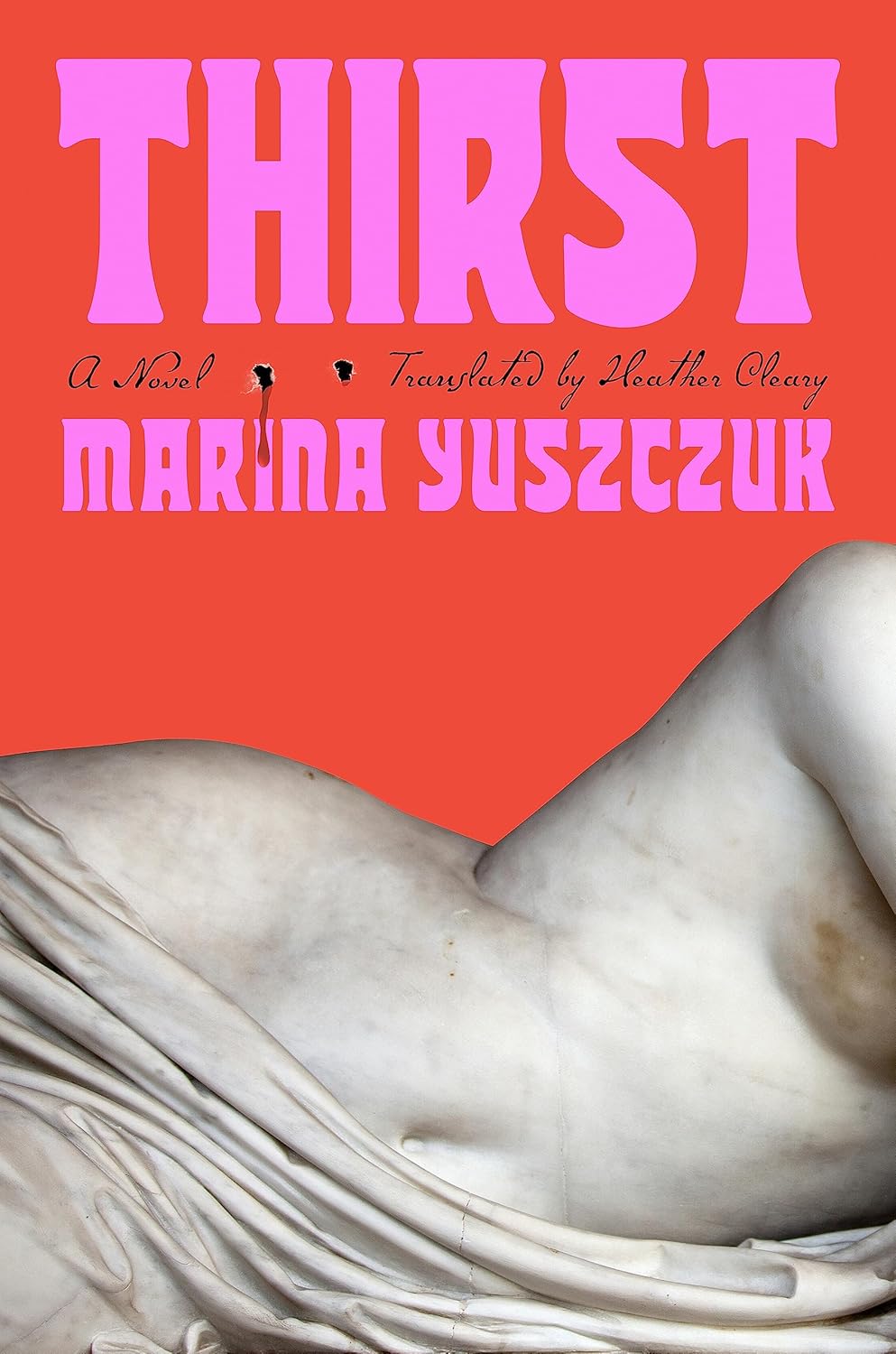
Review of Thirst by Marina Yuszczuk, translated by Heather Cleary

Thirst cover
Thirst
Marina Yuszczuk, translated by Heather Cleary
Dutton, 2024, 256 pages
$28.00

Reviewed by Chloe Weber

Thirst is the first book of Argentinian writer Marina Yuszczuk to be published in the United States. It is set almost entirely in Buenos Aires and infused with the author’s love of her home country. This novel is divided into two parts: the first from the point of view of a centuries-old vampire who, after her journey across the Atlantic, watches Buenos Aires as it is built from the ground up into the bustling city we know today; the second from the point of view of a divorced mother in the present day trying to balance emotions about her mother’s declining health, work life, and caring for her five-year-old son.

Above all else, Thirst is a novel that deals heavily with the theme of death and what it means to each woman in a personal sense. In the grand city of Buenos Aires, the location that draws these women together is La Recoleta Cemetery, a real Buenos Aires cemetery that juxtaposes the horror of death with the beauty of its sculptures, much like the intense personality of Yuszczuk’s vampire, who loves carnage just as much as she loves art.

The vampire, who remains nameless, is characterized by a bloodlust that is often beastly and uncontrollable in nature. In order to survive on the streets of the city, she must tame her thirst by learning restraint and what it means to act human. She witnesses death at her own hands, the deaths of thousands of people from yellow fever, and finally the death of her desire to live when she has no one left for company, leading her to lock herself away in a coffin at the turn of the twentieth century.

As the vampire flickers in a fugue state in her coffin, our modern protagonist faces spiritual and personal death as she watches her mother fade away. One of the final messages the protagonist’s mother delivers to her daughter leads her to a key and a photograph, which she is instructed to do nothing with. Against her better judgment, this modern woman uses the key to open the vampire’s coffin, once again unleashing upon Buenos Aires a thirst that has been marinating for centuries.

When these two womens’ paths finally converge, they find themselves tied up in a mutual obsession that gives each a better understanding of what it means to live and die. With the vampire’s help, the modern woman is able to give her struggling mother the death she wishes for, freeing her daughter from the pain of a slow decline. The vampire provides this woman with an opportunity to escape with her, to accept death and face the centuries as they turn in a new light—an offer which she accepts, leaving the rest of her life behind.

Much like the title implies, Thirst by Marina Yuszczuk includes thirst of many kinds: the thirst for blood, the thirst for death, and how this thirst finally culminates in sexual and obsessive desire. Yuszczuk’s vivid descriptions of Buenos Aires make her passages about death all the more morbid, adding a tone and depth to the story that complements the characters in their differing views of a changing world. Thirst is an ambitious novel that hits the ground running with gore and chaos and transforms into a profound philosophical lamentation on grief. Yuszczuk’s readers will come away with a burning melancholy that inspires them to think differently about how death affects their lives.


Chloe Weber is from Montclair, New Jersey and was a Sinister Wisdom intern for the May 2024 season. She is attending her third semester at Macalester College as a student of English and Anthropology, always on the hunt to expand her literary knowledge.

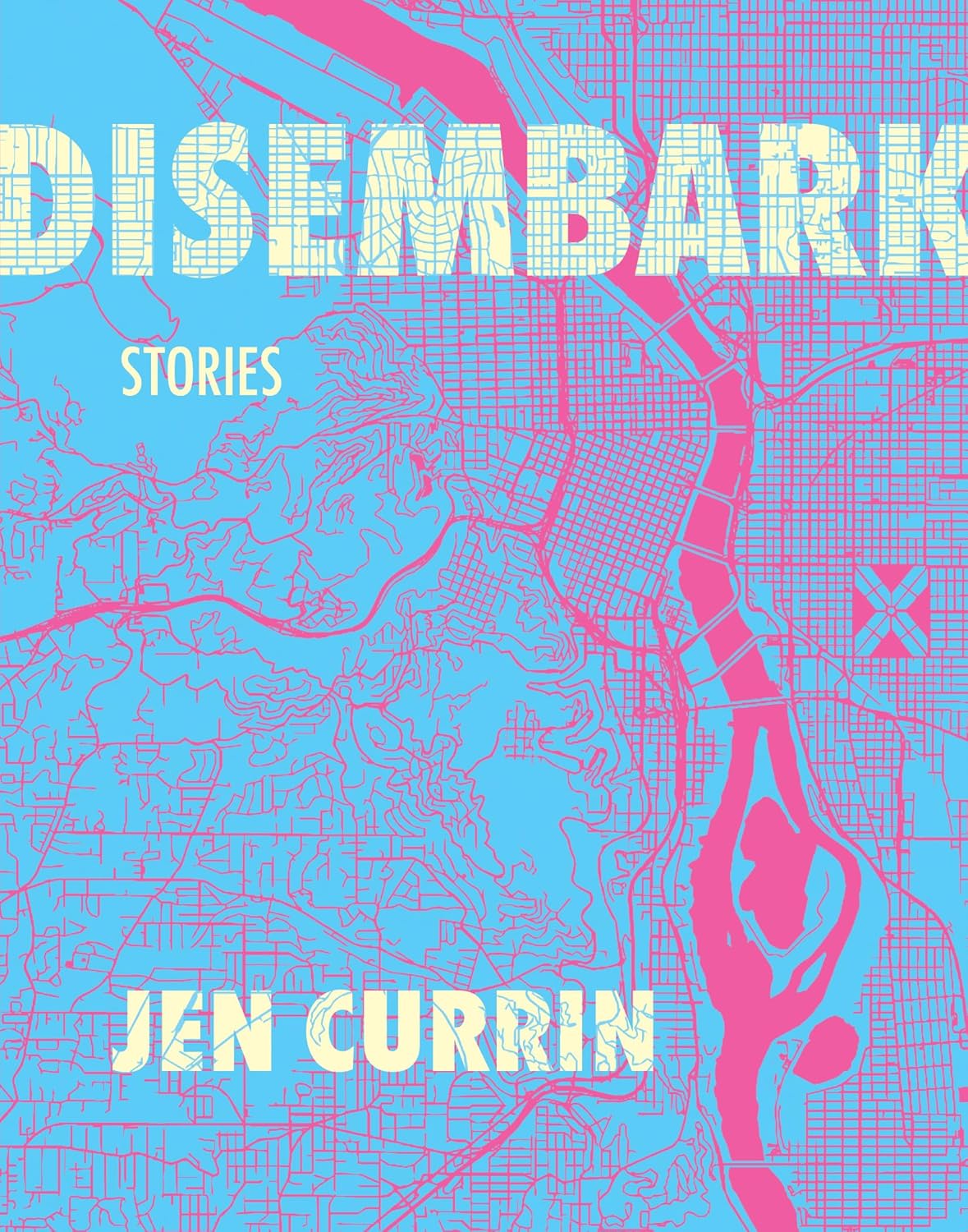
Review of Disembark: Stories by Jen Currin

Disembark: Stories cover
Disembark: Stories
Jen Currin
House of Anansi, 2024, 264 pages
$17.99

Reviewed by Pelaya Arapakis

Jen Currin’s Disembark is a vibrant short story collection offering readers glimpses into the lives of queer characters as they navigate periods of transition and change. Drawing on the narrative modes of realism and magical realism, Currin showcases the breadth and depth of queer relationships—from platonic intimacies to romantic intimacies and the emotional territories in between—exploring the nuances of queer love against the backdrop of urban life.

The collection opens with a story that traces entangled queer relationships, aptly titled “The Golden Triangle.” We encounter a constellation of characters who meet, love, fuck, date each other’s exes, negotiate non-monogamy, and like a tide, drift in and out of each other’s lives. However, the heart of the story revolves around the narrator’s friendship with their gregarious and flirty friend, Del, and the attendant experiences of love, loneliness, grief, and liminal spaces of intimacy. Over the course of the narrative, we learn that the protagonist yearns for a romantic relationship with Del as they grapple with an intense desire for their friend that they attempt to suppress: “Sometimes my mind tried to veer to Del, to the night we’d spent together, her soft skin, the way her tongue had felt in my mouth—but I quickly shut these thoughts out before they could go too far” (10-11). After all, “[They] were just friends, and it would stay that way” (9).

With prose that is effortless, considered, and evocative, Currin embodies the lives of each of their characters with grace and complexity. In “Joey, When She Knew Him,” Currin tenderly explores a different kind of entanglement—the friendships between lesbians and gay men. A profound sense of loss and sorrow suffuses the pages of this story as Currin captures the acute emotional pain of dissolving friendships. The narrator, Sid, recalls how her once-best-friend, Joey, “used to tell her all the time that he loved her” (40). However, the insecure and bedraggled Joey ultimately finds a husband and starts going by a new name: “Joey goes by Richard now” (30). A gulf between Sid and Joey slowly sets in, widening over time, and Sid mourns for the person she once knew.

One of the more fantastical of these stories is the surreal yet witty “Banshee,” which follows the story of a banshee who takes up residency in a lesbian couple’s home. In the story, the narrator navigates a rocky marriage while the imminent threat of climate catastrophe haunts her. The banshee lurks along the fringes of the narrative as Currin charts the changing circumstances that brought about the couple’s marital difficulties. The banshee loiters around the apartment, humming, rocking, moaning, listening to Drake, or playing guitar. It appears she has arrived to perform last rites for the biosphere: she wails, “a thousand gorse fires on the island” (51) and caws, “The winds. . . Close your eyes. The dust the dust the dust” (52). But does the banshee also portend the literal death of the narrator? Or her wife, Matilde? Does she represent the figurative death of their relationship? Or could the banshee signify the death of old ways of relating and the birth of the new? This story leaves us with much to consider.

Across twelve compelling stories, Currin presents us with snapshots into the multifaceted nature of queer relationships and love. The theme of change unites this collection, affording us small moments into the lives of each character as they prepare for new beginnings and journeys of transformation.


Pelaya Arapakis (she/her) is a Sinister Wisdom intern based in Naarm/Melbourne. She is also a musician, cultural worker, and freelance writer.

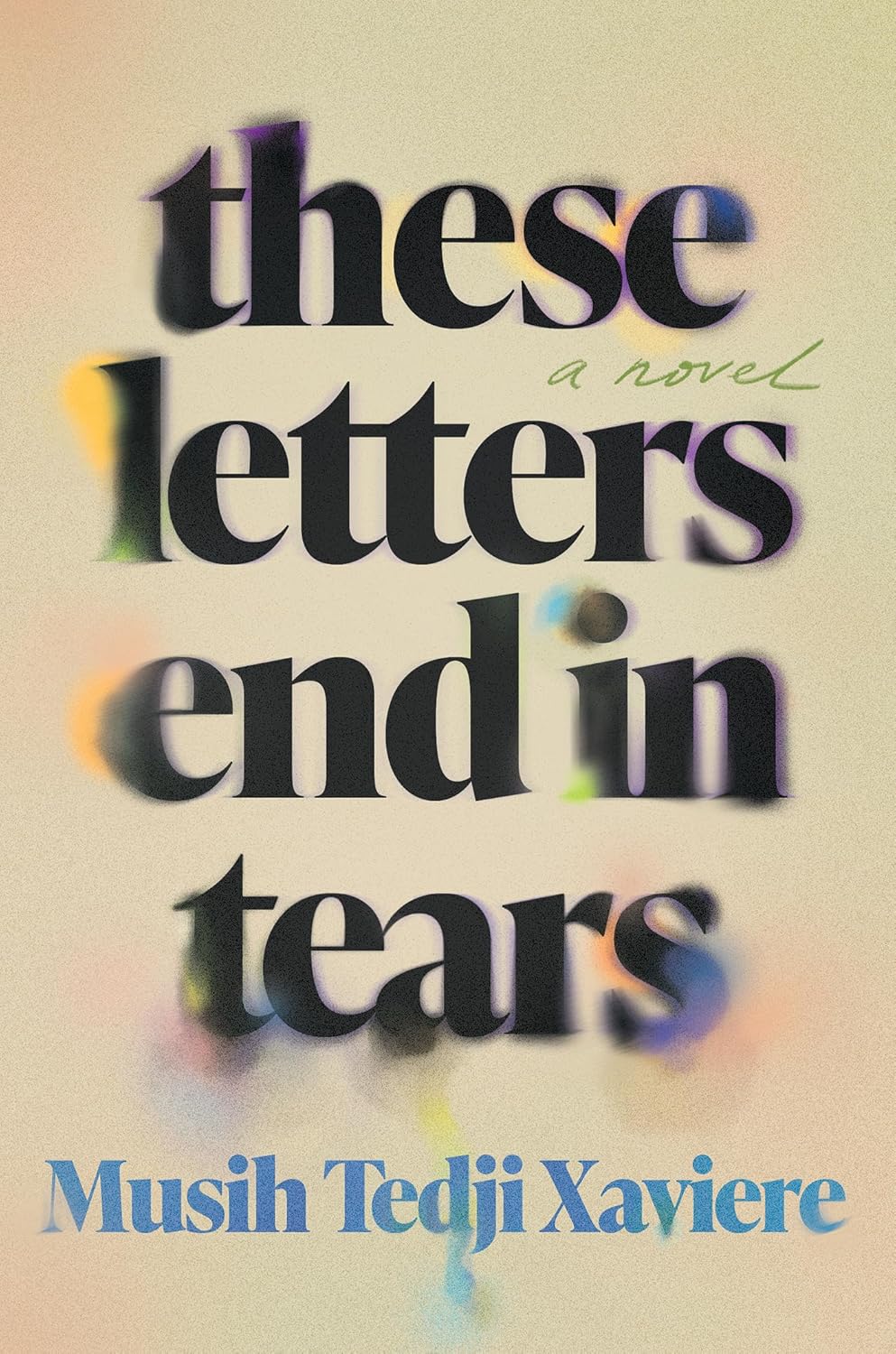
Review of These Letters End in Tears by Musih Tedji Xaviere

These Letters End in Tears cover
These Letters End in Tears
Musih Tedji Xaviere
Catapult, 2024, 240 pages
$27.00

Reviewed by Roberta Arnold

In a powerful debut, These Letters End in Tears by Musih Tedji Xaviere is a coup de maître, a stroke of brilliance. Winner of the 2021 Pontas and JJ Bola Emerging Writers Prize before it was published, this beautifully written novel is a treatise on culture, politics, and caste wrapped in a love story. Xaviere parses connections between opposites in a way that startles the heart and challenges thought. The epistolary narrative creates an intricate picture of community being fleshed out while writing to the love of one’s life.

In Cameroon, being gay is a crime punishable by death. In spite of this harsh reality, the country is culturally rich–and awash in opposite dyads: Francophiles and Anglophiles, Muslims and Christians, the wealthy and the poor, the powerful and the powerless, the corrupt and the just. It is no surprise when masculine and feminine characteristics among lesbians are examined in the novel. Fatima is butch, and Bessem is femme. Butch mannish behaviors would target one more readily for being a lesbian, along with any woman she is seen with publicly, unlike two feminine women seen together walking arm in arm without risk. Bessem is from an Anglophile Christian family, raised with ample financial means. Fatima is a Muslim from a devoted religious family selling wares on the street. Fatima and Bessem meet at a soccer field where Fatima is playing soccer. When her ball runs close to Bessem’s feet, their attraction is unequivocal and being together is a natural extension of being themselves, as described by their later lovemaking: “… it felt like I was unfolding into you” (p. 17).

A hidden life together continues for three years and then they are separated. A surprise attack, orchestrated by Fatima’s brother, ends when the two lovers are carted away to jail with bruises and cuts. Rescued by her mother and father while Fatima remains behind in the jail cell, Bessem writes to Fatima: “I never saw you again” (p. 20).

The search for Fatima keeps the suspense humming. Although she never gives up searching for her lost love, Bessem goes on to achieve her educational dream of becoming a professor. At one point she tries explaining to her mother that a professorship is not to be confused with a doctorate. A professorship, bestowed by the Minister of Education and the University, has a higher standing in Cameroon, coming only after a doctorate. But when Bessem comes out to her mother, the recognition and honor become meaningless: the mother-daughter bond is divided; the heft of advanced degrees flutters to the ground like paper scraps. Despite the religious consensus that she was “eaten by a lesbian demon,” Bessem holds firm, refusing to marry a man to please her mother, refusing to adhere to dogma and law. She searches out another lesbian relationship with a Francophile named Audrey, trying to decide what it is she is looking for with her: will it be a “smash and dash,” the colloquial term for a short-term gay relationship, or her usual: “smash and stick around for the time being” (p. 114)?

Scenes from life in Cameroon roll forward with the well-oiled skills of a wordsmith. Gravitas is captured with immediacy like expelled poetic breath. “I hold hope in one hand and fear in the other, Fati” (p. 158). At times, I felt as though I were being taken by the hand and led through someone else’s dream, a dream deeply resonating with my own, despite being worlds apart. Their love story is a challenge to any society that tries to diminish others: “I don’t remember my vows word for word, but I recall promising her not to let the world come between us” (p. 193).

This book is for anyone who believes in love, community, and the defiant cry of resilience in survival: “Love is love and we can love whoever we want because love is our birthright” (p. 222).


Roberta Arnold I am a lop-sided lesbian elder living in the mountains of Southwest Virginia. I am very close, physically and mentally, to my sister, my dog, and my cat–not one who belongs to me though I hold each one close to my heart. I walk and swim and read and write and find myself in awe of nature and animals. I was born in Houston, raised in New York City, and have done a fair bit of seeing the world. In my good fortune, I came from an unusual lesbian-feminist-author mother, June Arnold. I’ve published stories and book reviews in Sinister Wisdom: A Multicultural Lesbian Literary & Art Journal. Back in the 1970s, I sat on a grassy lawn and wrote a short story for Ain’t I A Woman? Press in Iowa City, Iowa, when traveling across the country with a van full of radical dykes. This journey was outlined by me and my outlaw compadres in Sinister Wisdom 95, Reconciliations, 1971 Dyke Outlaw Roadtrip. With my sister, I wrote a tribute to my mother in Sinister Wisdom 89: Once and Later. More recently, I had a book review about Andrea Dworkin in Ms. Magazine. I volunteer and serve on the board at Sinister Wisdom and am a member of Dykewriters and OLOC.

Review of Hotel Impala by Pat Spears

Hotel Impala cover
Hotel Impala
Pat Spears
Twisted Road Publications, 2024, 392 pages
$19.95

Reviewed by Roberta Arnold

In this stunning, literary tour-de-force, Pat Spears once again brings us into the courageous humanity found among the dire, inexplicably brutal and intertwined human situations of poverty on a lesbian. The novel is defined by characters in chapter headings by name: Leah, the mother who wants to feel the creative reach of being without the drugs that quell the disease but leave her feeling mentally deadened; Grace, the budding teenager who tries to manage her mother whirling in and out of the throes of mental illness; Daniel, the gentle father who tries to keep his family together without sufficient means; the youngest, Zoe who is just barely allowed her child feelings; and the lesbian policewoman who comes to their aid. Other vivid characters remain in one’s memory well after they leap from the page with fast-moving action, defining the inner and outer reach of a community.

Complicated by a failed social system and the mother’s driving desire for creative inspiration, the family system breaks apart. The father and daughter and lesbian officer tenuously set about putting it back together again like a home of pick-up-sticks with a hurricane threatening on the horizon. What feels like a descent into an increasingly untenable situation with danger around every corner is buoyed by the writing flowing evenly in seamless chapters. Hope is found by defining the abiding truths: inherent in the carefully fleshed-out layers of each person is a force striving towards what is true within community and love. I was most struck by the character of Grace, the iconic lesbian child, somehow still blooming with desires despite the hard realities poverty creates. Like Dorothy Allison’s wise reminders, Spears’ novel teaches us how survival in an impossible system is a constant struggle of grace and grit. The quote at the front of the book opens the door to this kind of thought, almost as a caution light to stay vigilant and not take everything at face value as the quote implies: “Things come apart so easily when they have been held together with lies.” (Dorothy Allison, Bastard Out of Carolina).

This is the third book by Spears, and it is another lesbian classic. I recommend it for anyone who works in a shelter, social services, a mental health profession, or anyone who wants to imagine how someone being given the least amount of chances can survive–or not. I would pair this book with Phyllis Chesler’s famous treatise on bias towards women in the mental health profession, Women and Madness (1972), and Mab Segrest’s brilliant exposé, Administrations of Lunacy: Racism and the Haunting of American Psychiatry at the Milledgeville Asylum. All three combine to create a stark gut-punch hit of awareness about what happens to women with mental health struggles. In Hotel Impala, Spears makes it impossible to turn a blind eye to the struggle of women’s mental health by bringing the point home to the caring daughter. The strong lesbian daughter character of Grace elicits hope that will be re-writing the endings.


Roberta Arnold I am a lop-sided lesbian elder living in the mountains of Southwest Virginia. I am very close, physically and mentally, to my sister, my dog, and my cat–not one who belongs to me though I hold each one close to my heart. I walk and swim and read and write and find myself in awe of nature and animals. I was born in Houston, raised in New York City, and have done a fair bit of seeing the world. In my good fortune, I came from an unusual lesbian-feminist-author mother, June Arnold. I’ve published stories and book reviews in Sinister Wisdom: A Multicultural Lesbian Literary & Art Journal. Back in the 1970s, I sat on a grassy lawn and wrote a short story for Ain’t I A Woman? Press in Iowa City, Iowa, when traveling across the country with a van full of radical dykes. This journey was outlined by me and my outlaw compadres in Sinister Wisdom 95, Reconciliations, 1971 Dyke Outlaw Roadtrip. With my sister, I wrote a tribute to my mother in Sinister Wisdom 89: Once and Later. More recently, I had a book review about Andrea Dworkin in Ms. Magazine. I volunteer and serve on the board at Sinister Wisdom and am a member of Dykewriters and OLOC.

Pages

Subscribe to RSS - fiction

"Empowerment comes from ideas."

Gloria Anzaldúa

“And the metaphorical lenses we choose are crucial, having the power to magnify, create better focus, and correct our vision.”
― Charlene Carruthers

"Your silence will not protect you."

Audre Lorde

“It’s revolutionary to connect with love”
— Tourmaline

"Gender is the poetry each of us makes out of the language we are taught."

― Leslie Feinberg

“The problem with the use of language of Revolution without praxis is that it promises to change everything while keeping everything the same. “
— Leila Raven