subscribedonate


fiction

Review of Untethered by Shelley Thrasher

Untethered cover
Untethered
Shelley Thrasher
Bold Strokes Books, 2024, 240 pages
$18.95

Reviewed by Martha Miller

There aren’t a lot of books by and about older lesbians. I think May Sarton was the last senior writer who wrote and published books about life over seventy. So, I was drawn to this book for that reason. The protagonist, Helen, is eighty-one years old. Many younger readers can’t imagine being that old and still walking upright, but I can, and I think I am not alone. The Baby Boomers were the largest generation born since World War II. During our lifetimes, some things happened to lessen our numbers, including the Vietnam War, Desert Storm, AIDS, the War on Terror (Afghanistan and Iraq), and most recently, COVID-19. The first and last took the largest of our numbers. So many of us didn’t make it to our sixties, seventies, and eighties, but we are still a large population. Speaking for myself, I look for stories about older lesbians because I know there are still a lot of adventures and things left to settle this late in life.

Helen Rogers’ story is framed by a mystery about herself and her family that leaves me questioning some of my own experiences. We start when she has just survived cancer and experienced a divorce from a longtime lover. She finds herself constantly alone, often by choice, as she has a hard time talking to people. Even though she still feels a bit unsteady after these two big events, she thinks getting away will help. So, she reserves a trip for a relaxing cruise to Bali with two close friends, a couple whose names are Martha Jo and Amy. This trip with several other senior citizens is one where everything goes wrong, starting with the plane trip from Texas and ending with expensive extra weeks in Bali because she catches COVID-19.

Amid the shipboard chaos and excursions to seldom-visited Indonesian islands, Thrasher gives us rich descriptions of warm ocean breezes, clouds in an aquamarine sky, waves, and beaches. Gradually, Helen becomes mesmerized by a younger, unhappily married woman named Grace. While alone, she and Helen exchange life stories and enjoy pleasant company as they make their way to their destination. Helen describes two marriages to men and, lastly, a long relationship with a woman that has just ended. After these revelations, suddenly Grace starts to run hot and cold. She asks Helen to save her a seat at dinner, then shows up and sits with someone else. She is unavailable and then friendly again. Finally, with no explanation, Grace pulls away entirely.

Both Helen and her friend Amy become ill with COVID-19 and must stay in isolation, far, far from home. Alone in a beautiful room that she’s too sick to enjoy, with mouthwatering food that she can barely eat, Helen thinks about her life and is haunted by previous relationships, especially the last, where her refusal to work on their poor communication caused their divorce. Although Grace has quit their friendship, Helen can’t let go. By the time she’s well enough to travel, she’s raised several questions about herself and is determined to find the answers.

After a nightmarish flight home, several months of recovery and reflection, as well as some research, Helen realizes that most women in her family have a different makeup; they live on the autism spectrum and process life differently. This forever changes the way she sees herself and her possibility of love.

Helen’s trip and the possible relationship with Grace were interesting and well-written. The frame of Helen’s search and discovery was more difficult for me. Maybe I didn’t understand the extent of her difficult communication. Helen admits wouldn’t go to counseling for that reason, so she lost her longtime lover. Teaching college English for several years, I often encountered students on the spectrum. Most of them were quite focused and earned A’s. Now I’m thinking about them. Helen has told me what it was like for her. A lifetime of experiences, influencing major decisions. Now I’m wondering what it was like for them.


Martha Miller is a Midwestern author whose latest book, Torrid Summer by Sapphire Press, came out June 1, 2024.

Review of Beaver Girl by Cassie Premo Steele

Beaver Girl cover
Beaver Girl
Cassie Premo Steele
Anxiety/Outcast Press, 2023, 260 pages
$16.00

Reviewed by Sarah Parsons

I am often wondering where all the climate stories are. Climate change, biodiversity loss, and general ecological collapse are, after all, among the most existential issues we face, are they not? Perhaps these stories are too impersonal, I sometimes think, or too bogged down in scientific jargon to be accessible or appealing to the average reader. Yet in Beaver Girl, a digestible and compelling dystopian novel, Cassie Premo Steele makes it clear that climate fiction is more present and engaging than ever.

Beaver Girl exists in a world which hints at an eerie but possible future for us all–a world ravaged by climate disaster, viruses, and general collapse. Within this world, which has largely seen an end to familiar capitalist systems, people have had to invent new ways of living. This is challenging, given that resources are in short supply and human contact carries the risk of disease or death. Yet, in the absence of all that is familiar, Steele creates a story of reconnection and returning to the ecosystems that we exist within.

The story follows two protagonists: a nineteen-year-old girl named Livia and Chap, the patriarch of a small beaver family. When a wildfire descends upon Livia’s community, she finds herself seeking a new home beyond the human world. Joining a large and rich canon of queer stories about chosen family, Beaver Girl shows the perspective of seeking family and connection beyond human terrain, which is what I find to be so unique about the novel. What lessons can we learn from the animals and plants living among us? Through the split perspectives between Livia and Chap, Steele highlights the varied struggles the characters face and the ways in which they learn to live in proximity to one another. As Livia deals with the aftermath of grief and loss while growing into her adulthood, Chap deals with the fear of caring for his family as his home is under threat. Steele seamlessly weaves ecological knowledge throughout the text, helping the reader access a deeper understanding of the characters (particularly the non-human beings) that populate the story.

Readers of all ages who enjoy dystopian fiction will likely connect with this book, though I think it is particularly suited to YA readers and those with a developing curiosity about the world we live in and the ecology that connects us all. This will also appeal to those like myself who appreciate the intersection between queer narratives and climate stories. What I find perhaps most effective about Cassie Premo Steele’s Beaver Girl is the ultimate sense of hope or resilience the reader is left with, which is endlessly important in stories about our changing world.


Sarah Parsons is a Sinister Wisdom intern and writer based in Oregon whose work can be found online in Paperbark Magazine.

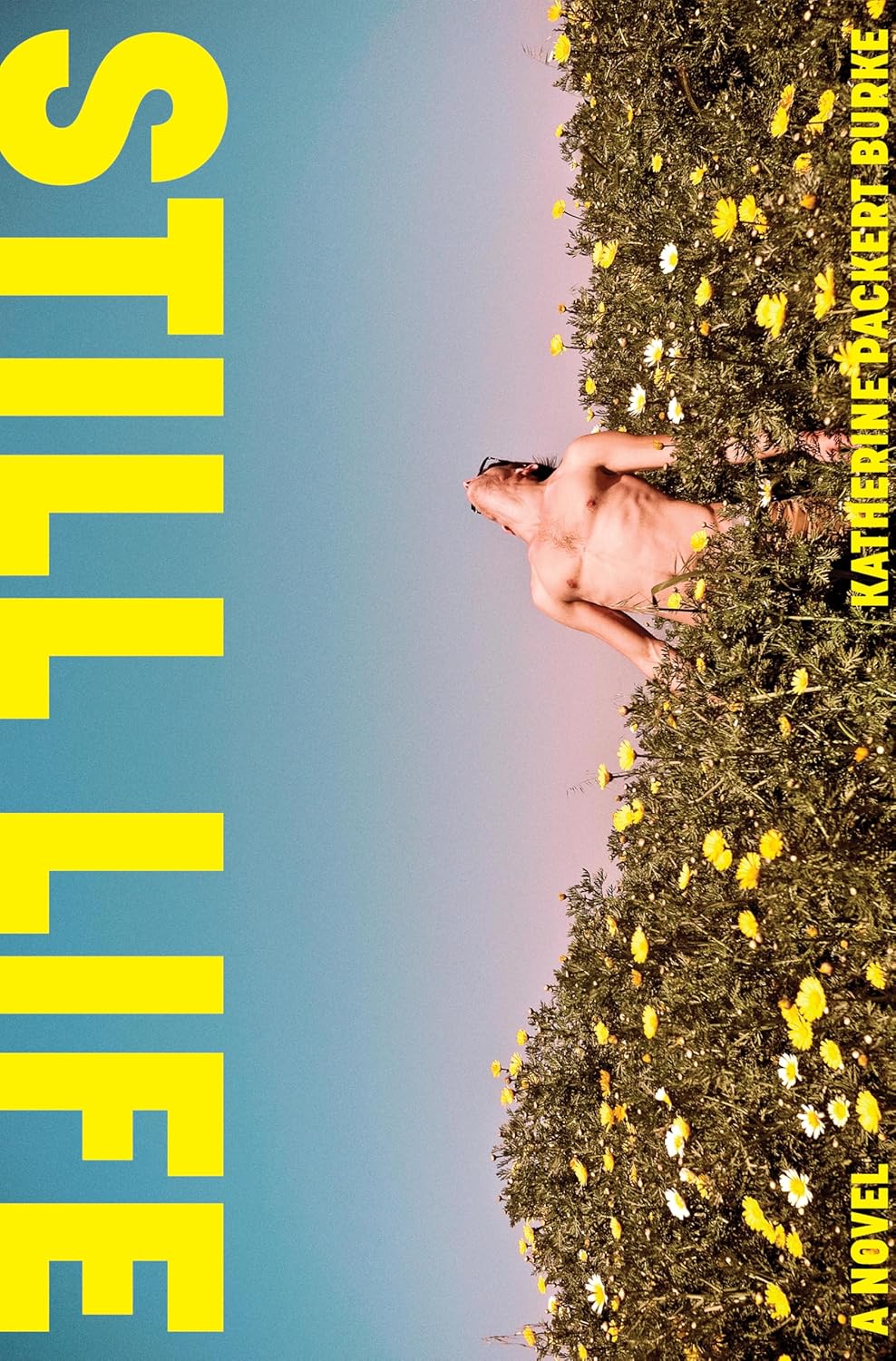
Review of Still Life by Katherine Packert Burke

Still Life cover
Still Life
Katherine Packert Burke
Simon and Schuster, 2024, 272 pages
$28.99

Reviewed by Catherine Horowitz

Still Life, Katherine Packert Burke’s debut novel, is a heartfelt, candid, sometimes overcomplicated, always authentic, and ultimately singular tribute to queer friendship and relationships. Its main character, Edith, is a writer in her late twenties returning to Boston for the first time since living there for a few years after undergrad. Boston holds old friends, old haunts, an ex-girlfriend, and memories of a life she feels both removed from and still stuck in. The book moves between Edith’s visit and life back at home in Texas, and her memories of college and the years directly after.

The structure works well, moving back and forth between past and present in a way that generally feels seamless and purposeful. The present often feels trancelike and strange, while the past feels real and vivid. Dialogue is written in italics throughout both past and present, making the past feel not so distant and the present feel as blurry as a memory.

The three main characters, Edith, her ex, Tessa, and Valerie, their friend from college who has since died in a car crash, are clearly written with care and love. Many books attempt the challenge of authentically capturing what it is to be a young queer person alive in the twenty-first century. It’s a difficult thing to convey, but Burke does it beautifully.

Edith, Valerie, Tessa, and their friends all feel very real; they talk about things I talk about and act like people I know; they have similar interests, similar conflicts and feelings, and are frustrating in similar ways. I grew to feel real concern about Edith, and frustration at how stuck in her feelings she was. I was fond of Tessa’s Boston lesbian hangouts, with all their irritating characters, silly activities, and oscillation between belonging and not. I wanted to know exactly how these characters changed and what ultimately happened between them, which is revealed gradually and strategically throughout the first part of the book.

The second part of the book follows Edith’s current life in Texas alongside her evolving relationship with Valerie while in grad school. Valerie is a little less tangible as a character than Edith and Tessa, although she still felt recognizable. This, along with the absence of the first half’s clear trajectory, might be why this section was harder to become invested in.

I also initially found Still Life compelling because of its use of Sondheim, Edith’s personal soundtrack that she often uses to analyze her own life. Burke mainly references two musicals, Merrily We Roll Along and Into the Woods. The parallels to Merrily are obvious and articulated poignantly. Both works follow the trajectory of a group of three friends, ultimately explaining how their relationships become fractured and unrecognizable from how they began.

Into the Woods isn’t as clear. I truly understand the impulse to incorporate it, a cathartic classic for theater kids during lonely times, into one’s work. But Burke struggles a little to articulate its thematic connections to Still Life, instead complexly weaving lyrics and summary into the narrative. I wonder whether its use is effective for those who aren’t Sondheim lovers like me.

The theme of autofiction presents another intriguing throughline in Still Life. Edith is initially apprehensive of autofiction and hesitant to admit that she is working on it. She reflects on the genre, continuously reevaluating her work and ultimately writing the first line of Still Life itself, unsure of what it will lead to. This discussion may be meant as a sort of meta-reflection on autofiction, or an attempt from Burke to account for her own misapprehensions about it. I might not have read Still Life as autofiction otherwise, and even if I had, I wouldn’t have thought as heavily about the genre’s shortcomings while reading. I’m not sure whether this was Burke’s goal, but it warrants interesting conversation.

Despite its sometimes tangled themes and storylines, Still Life is mesmerizing, profound, and will stick with you. I find myself thinking back to the characters, and wondering whatever became of them. I can imagine a neater version—maybe one that ended after Edith left Boston—but at the same time, this version, messy, imperfect, and a little cumbersome, has its own kind of authenticity and beauty.


Catherine Horowitz is a writer and educator living in Washington, D.C. She earned a B.A. in English and Jewish Studies from Oberlin College. You can find her other work in Bright Wall/Dark Room, New Voices, and the Jewish Women’s Archive. She has previously worked with Sinister Wisdom on A Sturdy Yes of People: Selected Writings by Joan Nestle.

Review of Perfume and Pain by Anna Dorn

Perfume and Pain cover
Perfume and Pain
Anna Dorn
Simon and Schuster, 2024, 352 pages
$18.99

Reviewed by Kelsey McGarry

In Perfume and Pain, Anna Dorn both pays homage and gives new life to a classic queer genre, lesbian pulp fiction of the 1950s. Author Astrid Dahl attempts to revive her career after she finds herself in a situation that leaves her slightly canceled. While trying to rejoin a writer’s group she co-founded, she temporarily loses sight of her goal and finds herself enmeshed in several steamy, flirty detours, creating significant distractions.

Perfume and Pain takes us through Astrid’s life mid- and post-cultural reckoning. One of the key challenges she navigates is balancing flirty encounters with two scintillating women: one grad student and one neighbor. The neighbor, Penelope, is a painter, whom Astrid finds slightly off-putting but also irresistible. Astrid and Ivy, the graduate student, begin to date, leaving Astrid to navigate many conflicting feelings.

Astrid is then presented with the surprising professional opportunity to adapt one of her novels for television. She considers the possibility that this might resurrect her career, but the pressure is at times too much to bear. Wrapped up in a series of conflicts, Astrid confronts clashes internally and with those around her.

By many accounts, Astrid is not a woman that an audience would rush to champion. Yet author Anna Dorn writes her as deeply human with brutal honesty, providing exciting and transparent views into the character’s world.

Los Angeles and the greater Southern California region are also main characters in the novel, providing a rich and bright background for compelling action, as well as characters’ behaviors that are less savory. The issues Dorn explores within the Los Angeles region include: love and attraction that borders obsession; the joy and fun of professional success that can sour with fame, power, and access; the raw heat of both the climate and relationships that can burn out as quickly as they began.

Perfume and Pain is rich—full of energy, wit, and humor. The characters are unapologetically feminine, desirous, hot, creative, imperfect, and blunt. Through the entirety of the novel, Perfume and Pain scarcely ever drags, and Dorn trusts the reader to grasp the complex characters she crafts. The novel negotiates the conflicts among these characters until the very last page, providing an ambiguous yet satisfying end.


Kelsey McGarry is a Sinister Wisdom intern and volunteer based in Los Angeles, CA. She is interested in queer history and archiving, scheming, and being outside.

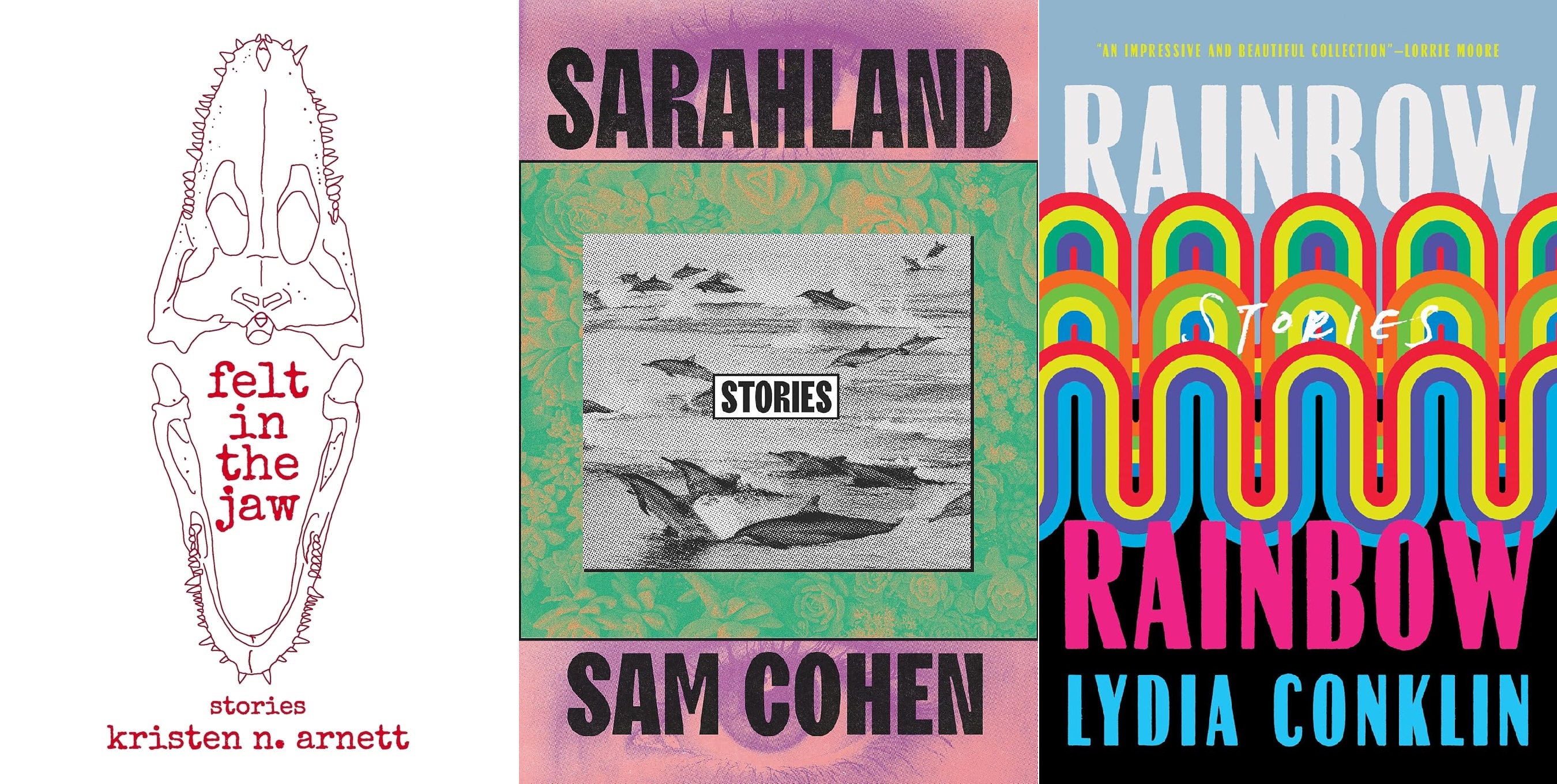
Review of Felt in the Jaw by Kristen N. Arnett, Sarahland by Sam Cohen, and Rainbow Rainbow: Stories by Lydi Conklin

Felt in the Jaw, Sarahland, and Rainbow Rainbow covers
Felt in the Jaw
Kristen N. Arnett
Split/Lip Press, 2017, 220 pages
$16.00

Sarahland
Sam Cohen
Grand Central Publishing, 2021, 208 pages
$15.99

Rainbow Rainbow: Stories
Lydi Conklin
Catapult, 2023, 256 pages
$16.95

Reviewed by Grace Gaynor

Felt in the Jaw by Kristen Arnett, Sarahland by Sam Cohen, and Rainbow Rainbow by Lydi Conklin are short story collections linked by their representations of lesbian and queer identities through varying narrative styles and contexts. Each collection invests in a thorough examination of themes such as exploration, self-discovery, transformation, isolation, and connection. These common investigations build bridges between each of these vibrant collections, allowing their stories to stand out as unique examinations of identity.

Within each collection, exploration and self-discovery are represented through literal and figurative journeys. In Sarahland, characters are constantly searching for and finding new ways of expressing themselves and understanding the world. Readers are invited on this exploratory expedition through the lush, second-person narration of “Dream Palace,” the fourth piece in the collection. The narrator of “Dream Palace” places the reader within the story by simply stating, “Now you are Sarah. Here you go, driving down the highway…” (91) and later saying, “You’re running away, untethered, a girl and her car and a thousand dollars you’ve saved from tips. You want to start over you think and why not do it this way” (91). As we travel within the enormous building that is the Dream Palace, we are oriented to the experiences of a Sarah, becoming intrinsically embedded in the world of Sarahland. Similarly, “Playing Fetch,” from Felt in the Jaw uses the second-person to send the reader on the journey of coping with grief. As the characters discover life after loss, the reader is required to adjust at the same pace, as the narrative seamlessly immerses readers into the life and perspective of Danielle, the narrator.

Self-discovery is a central theme in Rainbow Rainbow, particularly in the story “Pioneer.” Coco, a fifth-grade student who has always felt inherently different from those around her, experiences moments of clarity as she goes through a simulation of the Oregon Trail with her classmates. Though she may not have the exact words to describe her realizations, the story culminates with Coco’s understanding that her journey of self-discovery is just beginning: “Really, the end of the simulation was just the beginning. Coco knew that now. Not even Ms. Harper could help her. She pulled away and turned to face the yellow field, the milkweed, the curved path of cones. The sun was a low white hole in the sky. She would go on her journey now. She would set off” (108). In this moment, Coco realizes that her survival depends on her willingness to explore the reality of her gender nonconformity and identity. She understands she must embrace the things that disconnect and differentiate her from her peers.

Connection and isolation are explored at length in each collection, as these themes often serve as the foundation of narratives centered on lesbian and queer identities. In one instance, Felt in the Jaw’s “Blessing of the Animals” depicts the difficulty of isolation as Moira is severed from her church family and lifelong dream of a large, conventional wedding when her pastor casually refuses to perform a traditional ceremony for her and her partner. The narrative quietly represents the feelings of loneliness and isolation that come with embracing queer identity, while emphasizing the value of gaining sustenance from acceptance and connection through images of Moira’s supportive partnership.

This theme of sustenance through connection is similarly explored within “Pink Knives,” the third story in Rainbow Rainbow. The narrative opens with the following images: “We meet in the plague. Your gray roots have grown out four or five inches into the red—we’re that deep in. We sit on opposite hips of a circle printed on the grass in a crowded public park in San Francisco” (57). The narrator, after describing the circumstances in which the two main characters meet, discusses those around them in a swirl of connection, at odds with the aforementioned “plague”:

Around us are first-date kisses, teens huddled dangerously close together on tarps, techies dancing to rubberized jewel-toned radios. Everyone massing into Dolores Park for whatever they need: sex, friendship, family, work meetings, chess lessons, air, rigorous jump rope, letting their toddlers scream like wolves, pudgy arms extended, anticipating a fall (57).

Against a backdrop of isolation imposed by uncertainty and illness, the main character makes connections that provide them with new insight into the reality of their gender identity. In this way, Rainbow Rainbow’s “Pink Knives” is a story about queer survival and the ways isolation and connection, though often at odds with each other, might work in tandem to provide us with self-knowledge.

Connection is further explored in Sarahland’s “Exorcism, or Eating My Twin,” as Cohen explores the formation of an intense bond between two characters. The narrator, Sarah, speaks intensely about her “twin,” whom she has renamed Tegan: “It turned out, of course, that we’d both been solitary children, obsessed with Stephen King and Tori Amos. We’d both grown up lying on quilted girlbeds biting our cuticles and feeling an intense sense of missing, of pining for a twin” (70). These perceived similarities between the two characters escalate Sarah’s feelings of attachment and dependence. When the seemingly sudden severance of the connection forces her to exist on her own once again, she struggles to make a life outside of her relationship with Tegan. The emphasis placed upon this struggle makes this narrative a contemplation of the ways isolation and connection work together to create charged relationships imbued with unwieldy power.

Each collection also explores the way long-term relationships and the people within them transform over time. Felt in the Jaw’s “Aberrations in Flight” depicts a growing distance between two partners set against a backdrop of death and the complications associated with house renovation, which magnify the tedium within the relationship. As the story comes to a close, the narrator, Amber, realizes that her partner, Elizabeth, is no longer the person she fell in love with and asks: “How do you reconcile loving two different versions of a person?” (188). The first story in Rainbow Rainbow, “Laramie Time,” seeks to answer this question in the context of the uncertainty and doubt embedded in their struggling relationship. Leigh, the story’s narrator, is torn between continuing her difficult relationship or coping with the pain of leaving a person she loves, a turmoil represented when she says: “This person had lied to me. She was happier than she could admit; she was thriving. My heart lifted for her joy, even if it was separate from me” (28). In the end, the dissolution of the partnership allows the story to stand out as a meditation on the impact of insurmountable change on a relationship.

“Becoming Trees,” the eighth story in Sarahland, opens with a line that centers on the pressure associated with transformation: “It began in the season when everyone was changing” (155). The narrator discusses the tension related to this overwhelming sense of change, noting that “it seemed like everyone was wrapping themselves in chrysali and having late-in-life emergences as different kinds of creatures, and what this made clear was that we weren’t becoming anything. We felt like caterpillars who didn’t know that being a caterpillar wasn’t the endgame” (155). This lack of becoming dramatically impacts the narrative’s main couple, Jan and Sarah, who feel inadequate in their lives and relationships as normal people. Soon, they make the decision to trade in their physical bodies and become trees, hoping to strengthen their relationship and escape the expectations of a rigid society. In the same way, the stories within Sarahland transform and shift the expectations associated with traditional narrative structures and systems. Retellings, recastings, and refusals support the queer power of this collection.

Each of these story collections hold valuable perspectives on human experience, most notably in the context of identity and connection. The experience of reading these collections comparatively might allow readers to gain new understandings of themselves and others.


Grace Gaynor is a writer from Louisville, Kentucky. She earned her BA in English from Hollins University and is currently an MFA student studying creative writing at Virginia Tech. She is a Sinister Wisdom intern and serves as an editor for the minnesota review and SUNHOUSE Literary.


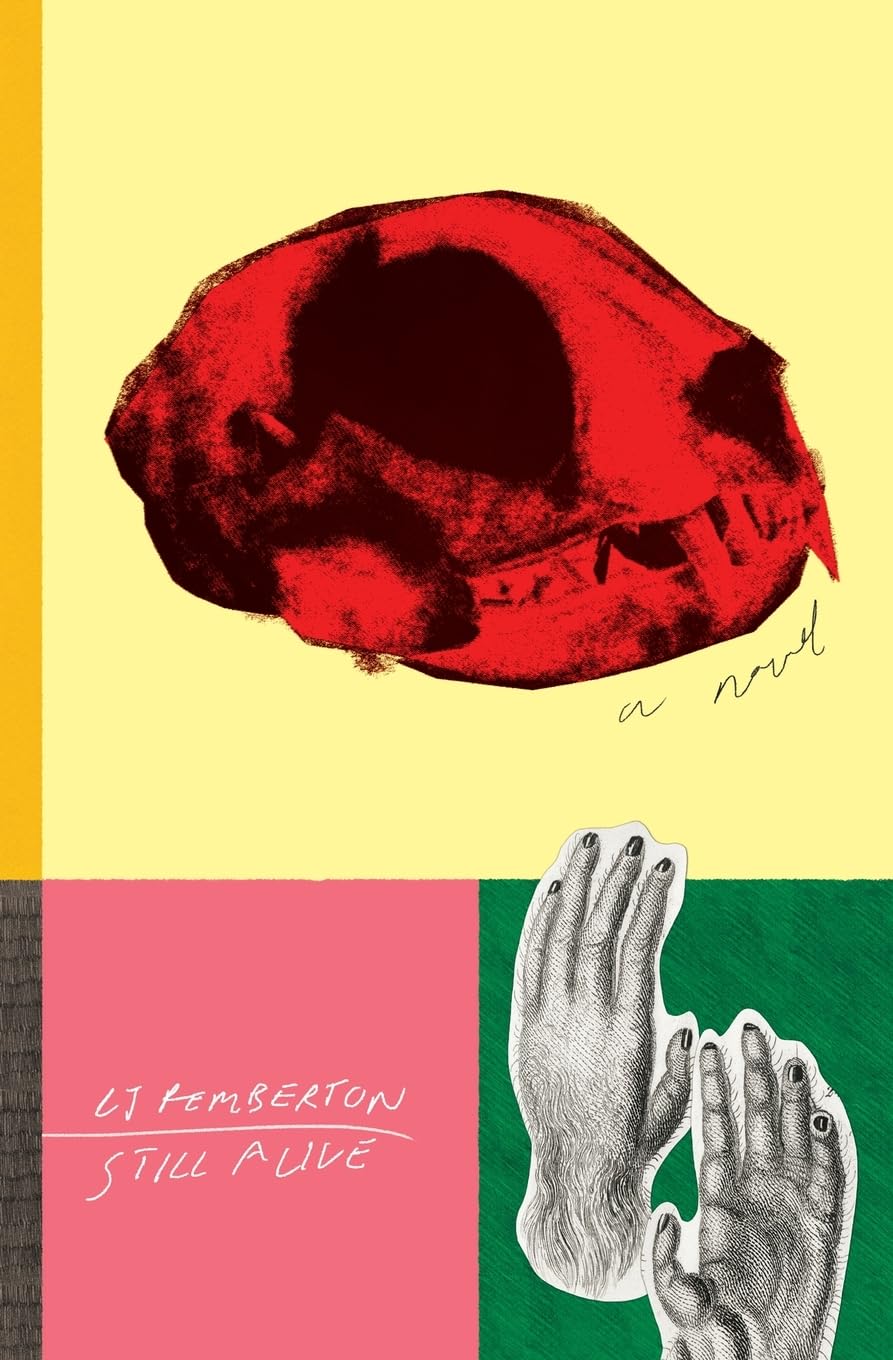
Review of Still Alive by LJ Pemberton

Still Alive cover
Still Alive
LJ Pemberton
Malarkey Books, 2024, 290 pages
$19.00

Reviewed by Rae Theodore

LJ Pemberton’s Still Alive is a raw, evocative exploration of love, self-discovery, and the relentless quest for meaning against the backdrop of a fractured American landscape. The novel traces the tumultuous journey of V, a bisexual temp worker whose life is intricately entangled with Lex, a butch painter. Pemberton’s narrative deftly captures the poignant complexities of V’s relationships and personal growth, weaving a story that is both deeply intimate and widely resonant.

From the moment V meets Lex at an underground punk show, their chemistry ignites a whirlwind romance that drives much of the novel’s emotional core. “We’re waiting and she says her name is Lex. The x trips off like every other name is lacking without it” (17). Pemberton’s prose is both lyrical and incisive, capturing the dynamics of love, heartbreak, and obsession. I found myself going back and re-reading sentences to let the words roll around on my tongue a little longer.

Lex, with her artistic flair and strong presence, becomes a central figure in V’s search for stability and identity. “There was poetry in the way she carried groceries from the store. There was meaning in the way she ignored responsibility. I wanted her. I wanted to be her. I barely knew myself,” V acknowledges (22).

However, their on-again, off-again relationship is far from idyllic, punctuated by the dysfunction of V’s family, which looms over her like a specter. “The problem is I know how it all ends, in blood and quiet, and I learned that final lesson when I was too young to know what was routine and what was unusual and how everyone mixes up the two,” V says (276).

In parallel, the novel examines V’s relationship with Leroy, her gay best friend, who has chosen a more serene rural existence. Leroy’s peaceful life serves as a foil to V’s restless pursuit of meaning, highlighting her internal conflict and dissatisfaction. Pemberton skillfully portrays V’s inability to find contentment, whether in the structured routines of temp work or the conventional expectations of mainstream life.

Pemberton’s narrative is not merely a chronicle of V’s romantic entanglements and family discord–it’s also a profound meditation on the search for personal freedom and authenticity. V’s restless journey across the United States from New York City to Portland to Los Angeles symbolizes her broader quest for self-fulfillment and a life defined on her terms.

Still Alive is a modern-day Rubyfruit Jungle that will resonate with anyone who has ever grappled with finding their place in a world that seems perpetually at odds with their true self. If you’ve rarely found yourself represented in a book, you just might catch a glimpse of yourself in Pemberton’s.


Rae Theodore (she/they) is the author of the memoir collections Leaving Normal and My Mother Says Drums Are for Boys and the poetry chapbook How to Sit Like a Lesbian. She is the story curator for the new anthology Swagger: A Celebration of the Butch Experience.

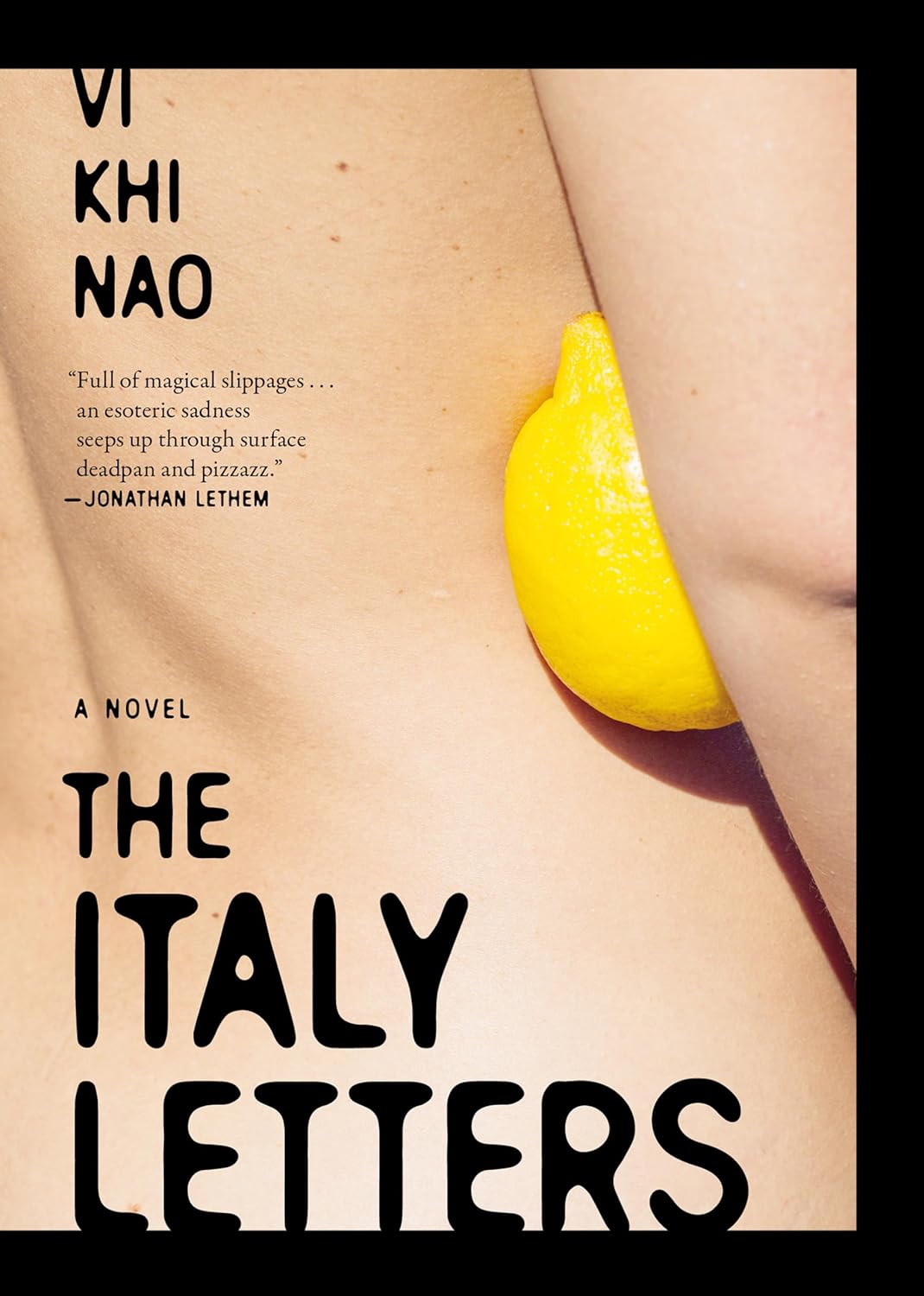
Review of The Italy Letters by Vi Khi Nao

The Italy Letters cover
The Italy Letters
Vi Khi Nao
Melville House, 2024, 192 pages
$18.99

Reviewed by Lara Mae Simpson

A broke writer living in a small apartment in Las Vegas, caring for her ailing mother while crafting long, emotional letters to her Italian lover in London, who’s married to a man. . . The premise of The Italy Letters sounds like an irresistible, unrequited sapphic love story–but the delivery feels more like wading through a depressive episode, with nothing but moments of beautiful prose to keep you afloat.

The Italy Letters plunges you right into the narrator’s stream of consciousness with no mercy. This wandering narrative style allows Vi Khi Nao to explore a wide range of pertinent, contemporary issues—as well as the narrator’s overarching desire—in a way that reflects the overwhelming nature of our modern-day life. Whether this translates well into an epistolary form, however, is uncertain. The novel is ostensibly a series of letters, but as the present-tense narrative (addressed to ‘you’) shifts between letter-writing and ‘writing’ through back-and-forth texts, the result is disorienting.

Through the fog of the narrator’s turbulent mind, what stands out are Nao’s insightful reflections on relationships and complex societal issues. Money is a key theme in the novel, and Nao shows how poverty makes every part of life near-impossible, from trying to make it as a writer when tickets to writers’ events are extortionate, to always losing teaching jobs at the university to white men. Money also casts a dark cloud over the narrator’s relationships–she struggles to care for her mother, not only because of her mother’s constant suicidal ideation, but also because she gambles all her money away. Her behaviour creates endless stress and guilt for her daughter, who then feels forced to write and publish as much as possible in case it makes any money. Furthermore, the narrator finds herself exploited by her best friend–in exchange for cheap rent, she does all the cooking and cleaning for her friend, is kept at home by her and not allowed to socialise with others, and is made to have uncomfortable sex with her.

When the narrator isn’t making incisive critiques about inequality—on both a societal and personal scale—she spends a lot of time trying to suppress her desire for her lover. The erotics of this novel are also a highlight–as suggested by the book’s cover, depicting a naked body holding a lemon between breast and arm. The narrator is unafraid to write about how her clitoris feels and to describe in-depth her dreams about having forbidden sex with her married lover. There is also a deep romance running through the novel—inherent in the art of writing letters, of course—and the moments of fondness and longing from across countries and time zones are often touching. The experience of loving a woman who loves a man is a very universal lesbian experience.

However, I wouldn’t have been left feeling so empty after reading this book if these lesbian love letters had more of a sense of direction. I love stream-of-consciousness narratives and how they can almost truly represent our chaotic minds, but Nao’s lack of structure did not land for me here. Perhaps the title—The Italy Letters—misled me, as I kept waiting for the lover to be in Italy, but she’s only ever in London, with the narrator in the US. The lover being Italian is only mentioned a handful of times. The only thing that breaks up the narrator’s letters is when she changes location–from Las Vegas to Los Angeles, for example. Perhaps if the novel was moving somewhere solid rather than ambling around like one’s thoughts in a journal, it would be more hard-hitting.

While The Italy Letters has instances of beauty, perceptive commentary, and even comedy, it did not resonate with me overall. However, it is clear that Nao is a highly talented writer, and I look forward to checking out more of her work and seeing where she grows from here.


Lara Mae Simpson (they/she) is a poet, writer, and editor based in London. Their work has been published by The Poetry Society, fourteen poems, Queerlings, and more. They were Literature Editor at STRAND Magazine, and they are currently Poetry Editor at Phi Magazine and part of The Writing Squad. You can see more of their work at www.laramae.com.

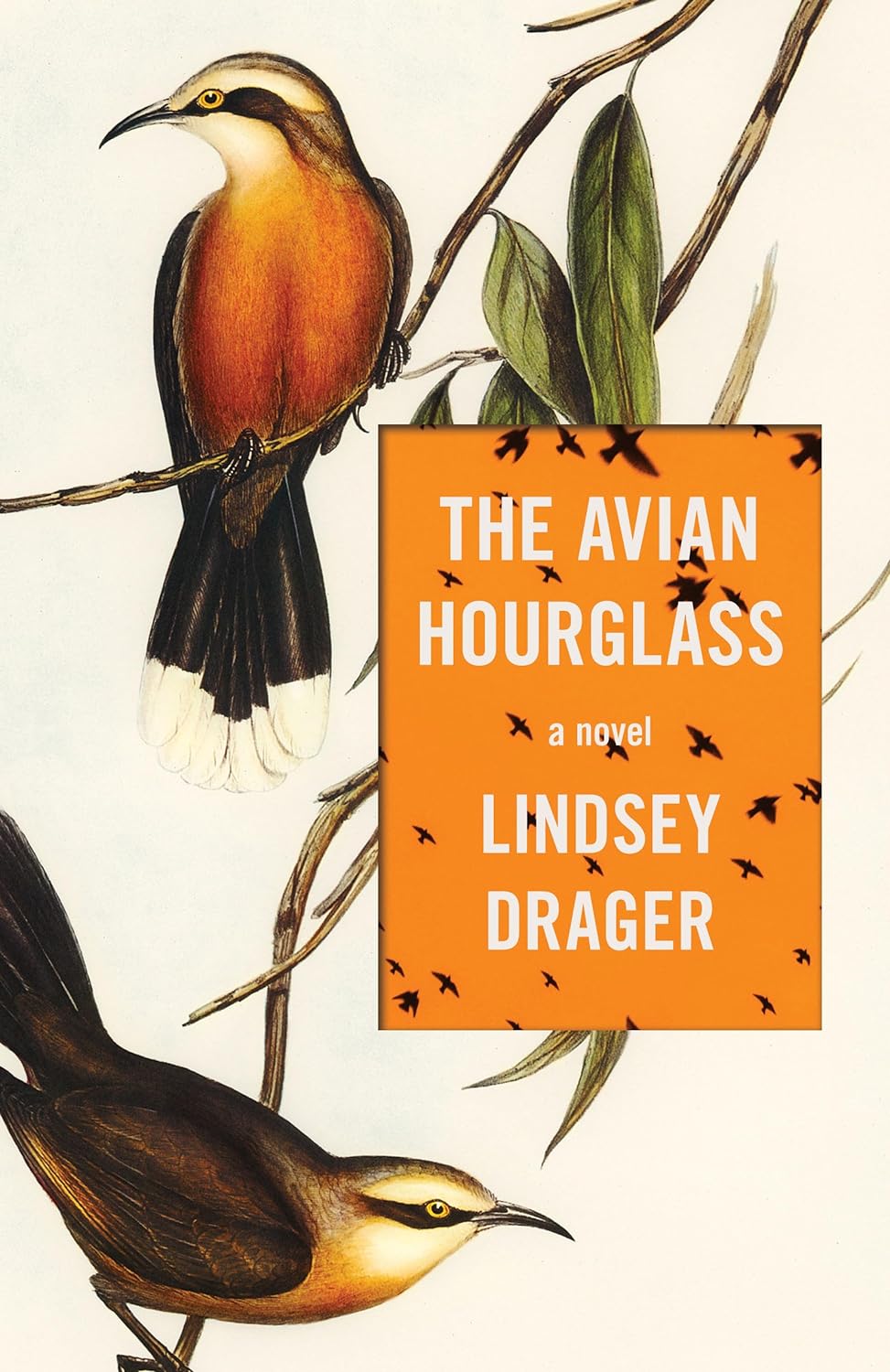
Review of The Avian Hourglass by Lindsey Drager

The Avian Hourglass cover
The Avian Hourglass
Lindsey Drager
Dzanc Books, 2024, 212 pages
$17.95

Reviewed by Sara Youngblood Gregory

Author and professor Lindsey Drager’s latest novel, The Avian Hourglass, is a kaleidoscopic, rigorous, and sometimes disorienting movement through speculative fiction and surrealism.

Written in the first person, the novel follows an unnamed narrator struggling to manage her life in a small, sometimes claustrophobic town. The narrator is a bus driver but dreams of becoming a radio astronomer, dutifully studying to take the exam she has already failed four times. Meanwhile, she acts as the legal guardian to triplets—children she gave birth to as a gestational surrogate but whose parents died in a car accident before the novel’s opening. As if this weren’t enough, the narrator, her children, and a patchwork of town folks must grapple with The Crisis, a looming and insistently vague upheaval that disappears birds, covers the stars, and acts as a stand-in for environmental and political degradation and emotional estrangement.

However, if you are expecting a typical end-of-the-world novel about loneliness, climate change, and the human spirit, The Avian Hourglass is a different beast entirely. Rather than focus on the material pursuits of apocalypse—like food or pollution or gathering supplies—Drager is concerned with emotional and linguistic sustenance. The narrator frequently considers etymology, memory, birds’ nests, planets, and legends with an almost orbital obsession.

Near the novel’s opening, the narrator shares some of these stream-of-conscious, cyclical thoughts:

“Luce tells me the world effect comes from the Old French and Latin for completion, result, accomplishment, and ending. Intent, she says, comes from intend, which in Old French means to stretch or extend. The problem is this: the idea of having intention—the idea of having control over effects by altering their causes—seems silly when my deja vu confirms for me that every move I make was meant to be. This is how I know I’ll pass the test” (18).

At times, these musings are arresting—at others confusing—but perhaps all the more powerful for it. All in all, The Avian Hourglass is a compelling, intellectual, and emotionally-charged take on climate fiction.


Sara Youngblood Gregory is a lesbian journalist and poet. She serves on the board of directors for Sinister Wisdom.

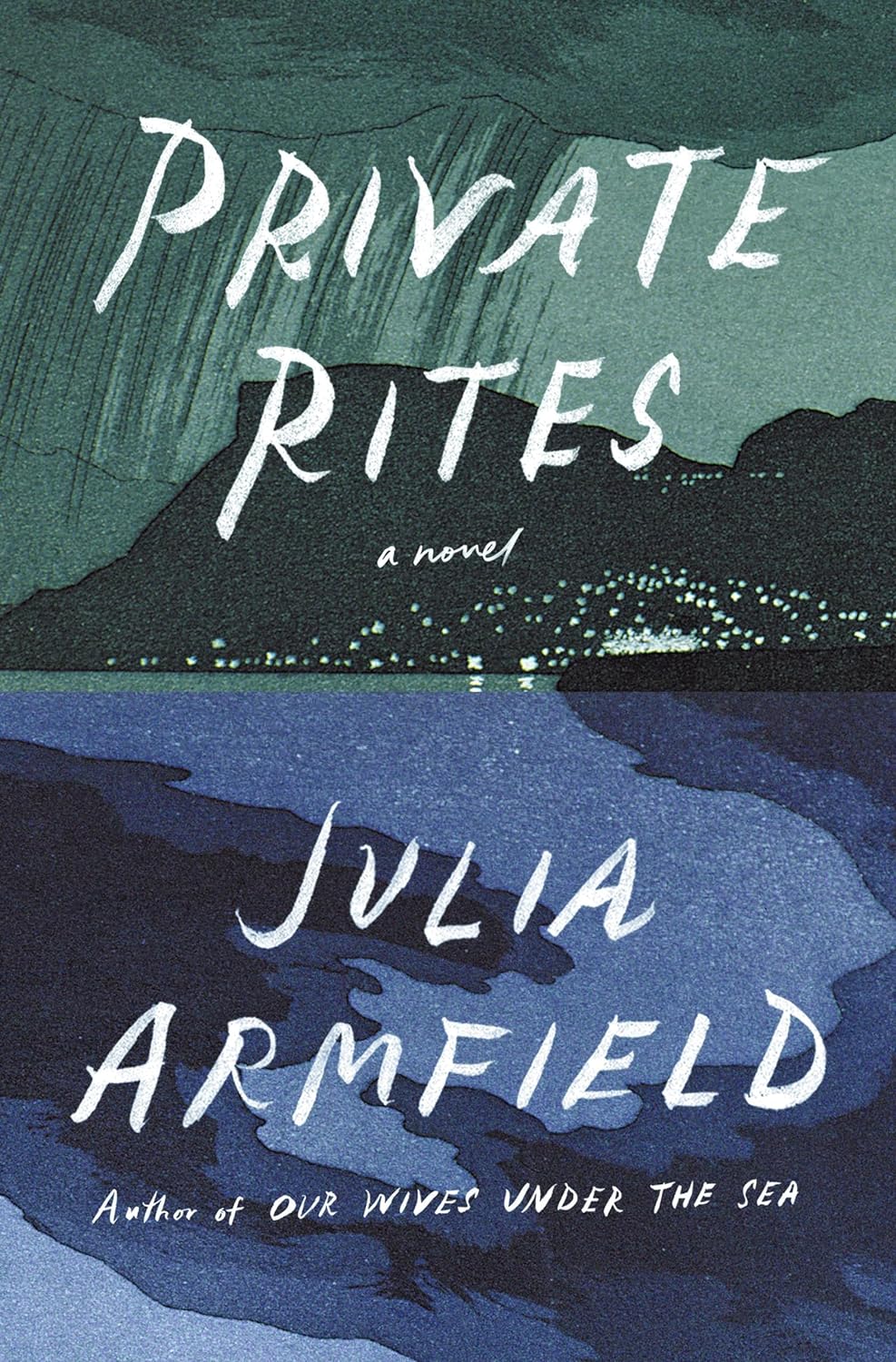
Review of Private Rites by Julia Armfield

Private Rites cover
Private Rites
Julia Armfield
Flatiron Books, 2024, 304 pages
$27.99

Reviewed by Catherine Horowitz

When will you know that the apocalypse has arrived? When will the realization come that we’ve progressed too far in destroying the world to reverse it? Julia Armfield’s speculative novel Private Rites is a vivid depiction of an apocalypse of the mundane, where people make gradual adjustments to the world’s worsening conditions, ultimately doing what it takes to continue their lives around it.

In the world of Private Rites, there is heavy rainfall every day, with only a few minutes of respite. Water levels continue to rise. People live on the upper floors of collapsing high-rise buildings and take public boats to work, while the wealthy flee to less affected areas and use advanced technology to delay being impacted. This didn’t happen all at once; it was a gradual decline, with fewer and fewer sunny days until people were stuck trying to remember the last sunburn they had.

Amid this, Isla, Irene, and Agnes must navigate the death of their father and their own strained relationships. Isla is a high-strung eldest daughter, Irene is short-tempered, and Agnes, ten years younger than her sisters, is distant and impossible to reach. Their father was an acclaimed architect who designed many of the buildings adapted to the rising water levels but was absent and sometimes cruel to his daughters. The sisters are forced together when he dies and find themselves entrenched in conflicts both familial and widespread.

At its core, Private Rites is a beautiful and lifelike depiction of sibling and family relationships and their complexities. It puts words to facets of sibling relationships I hadn’t thought to name, like the “strange back-dated nature of the things [siblings] choose to know” about you and how uniquely frustrating this is.

There is another layer of complexity as well: how to navigate one’s personal life during the literal apocalypse. Is it worth it to try to work through relationships or to grow as a person when the ocean could rise about your apartment any day? Although our world may not feel quite as dire as this one, it can still be challenging to balance both one’s personal life and the fact that the planet is burning and people are suffering in a much more pressing way.

Armfield is also a thoughtful and meticulous world-builder, constructing a landscape that extends far beyond the confines of the book. The world-building goes down to the smallest details, like the fact that people drink chicory coffee because coffee beans can’t grow anymore, cremations are mandated by law since it’s impossible to bury bodies, and the cleaner, more controlled suburbs are called the “millponds.” The landscape of Private Rites is as important as its plot, and Armfield makes it feel both real and terrifyingly feasible.

While Private Rites starts off slow-paced, focusing primarily on its three protagonists and their histories, relationships, and daily lives, Armfield scatters hints throughout the landscape that something more catastrophic is coming. This sense of anticipation grows gradually throughout the book, which turns from a slice-of-life novel set at the end of the world into a thriller. For the last third of the book, I couldn’t put it down.

There is also the King Lear element of the book, which is labeled as a “speculative reimagining.” The parallels are clear: a powerful father dies and causes conflict in dividing his properties among his three daughters. The youngest daughter is the clear outlier. Tense familial relationships lead to destruction. I wouldn’t exactly call Private Rites a reimagining, though; I would say it exists in conversation with King Lear. The plots diverge in ways that sometimes feel like deliberate inversions but more often feel unrelated. It might be a fun exercise for someone familiar with both texts to further interpret them in comparison, drawing out thematic parallels and significant differences. Ultimately, though, while knowledge of King Lear might be rewarding in some ways, it isn’t necessary to understand Private Rites and its larger themes.

Private Rites is a thoughtful, moving book that intertwines a personal story with a larger climate catastrophe. Although thrilling and fast-paced at the end, its larger world and multifaceted characters are what make it powerful. It’s also a masterful representation of rain and wateriness; I’ve never felt more relieved to emerge into hot, sunny weather.


Catherine Horowitz is a writer and teacher living in Washington, D.C. She earned a B.A. in English and Jewish Studies from Oberlin College. You can find her other work in Bright Wall/Dark Room, New Voices, and the Jewish Women’s Archive.

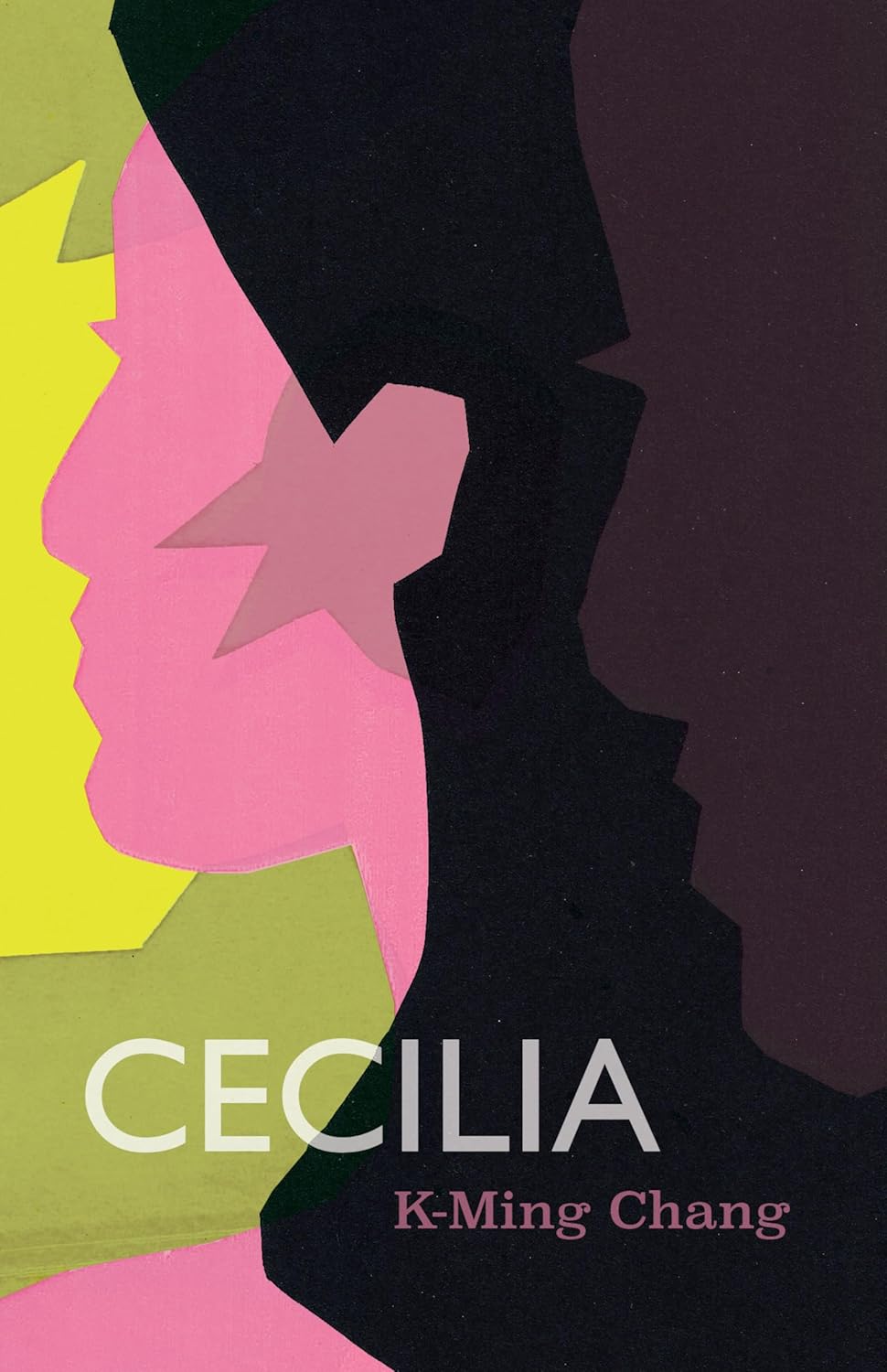
Review of Cecilia by K-Ming Chang

Cecilia cover
Cecilia
K-Ming Chang
Coffee House Press, 2024, 144 pages
$14.95

Reviewed by Gabe Tejada

Reading Cecilia was like suffering an ingrown toenail that causes blood and pus to ooze from tender flesh, concocting a putrid stench that haunts the nostrils as much as the pain of a pierced toe haunts the foot. I’ll stop with the figurative dramatics, though, if you enjoy that kind of writing, this novella by K-Ming Chang might just be for you.

Told through (or unfolding in the mind of) the main character and narrator, Seven, Cecilia is about that universal lesbian experience: the obsession with our first ‘situationship.’

Let me sing my praises before I turn you off the work. Chang triumphs in how she depicts and weaves together those forces in our lives that live just beyond the tangible. The sublimation—through Chang’s surreal prose—of cultural expectations, familial tensions and self-repressions that Seven experiences lend the story an almost instinctual telling. It is as if Seven’s “objective” reality, filtered through their perspective, was distilled into its purest (and therefore most visceral and animal) form. By dissolving the divide between internal and external, Cecilia’s reality becomes a new plane of existence—a third place resulting from the cross-contamination between the physical world and the psyche.

To read Cecilia is to step into Seven’s skin. This intimacy with Seven’s interiority makes the narrative more immediate. I felt the familial claustrophobia of an immigrant family whose embrace is as comforting as it is suffocating. I recognised those same bonds between Seven and their Ma and Ama—that cutting comfort between the women in the family. I yearned, just as Seven did, for “a boyhood for my bones” (65). Chang rends the stereotype of the submissive and docile Asian woman, with Seven even perceiving themself as a predator and consistently transgressing the bounds of appropriate feminine behaviours and desires.

Ultimately, though, I thought that Cecilia was better as a short story. The narrative was mired in a futile orbit, prolonged for the sake of semantical experimentation. I am, however, doubtful of this experiment’s success. Chang’s evocations of obsession were more iterative than generative. Each analepsis neither provided us with greater insight on just what made Seven so enamoured by and beholden to Cecilia—other than the fact that Cecilia was a manic pixie ‘Quirky Girl’—nor gave new insight or perspective on dyke yearning/co-dependency.

The only discernible progression in the narrative was that Seven licked Cecilia’s sweat in the first part of the book and then eventually consumed a speck of Cecilia’s shit towards the end of it. Perhaps a commentary about the repulsiveness of an all-consuming, unrequited sapphic love? Even Seven’s realisation that they might be the prey falls flat. The story is in Seven’s focalisation, so the reader recognises that there is a naiveté in them that is particularly un-predator-like, and very little resistance or interrogation opposed what Cecilia says and does.

But despite this less-than-positive introduction to Chang’s written work, I’m still keen to read more of her.


Gabe Tejada is a Filipino reader and writer based in Naarm. His work has been published by Archer Magazine online and Kill Your Darlings (KYD), among others. You can find him reading queer books on the 58 tram, going for aimless walks, and eating camembert stuffed croissants.

Pages

Subscribe to RSS - fiction

"Empowerment comes from ideas."

Gloria Anzaldúa

“And the metaphorical lenses we choose are crucial, having the power to magnify, create better focus, and correct our vision.”
― Charlene Carruthers

"Your silence will not protect you."

Audre Lorde

“It’s revolutionary to connect with love”
— Tourmaline

"Gender is the poetry each of us makes out of the language we are taught."

― Leslie Feinberg

“The problem with the use of language of Revolution without praxis is that it promises to change everything while keeping everything the same. “
— Leila Raven